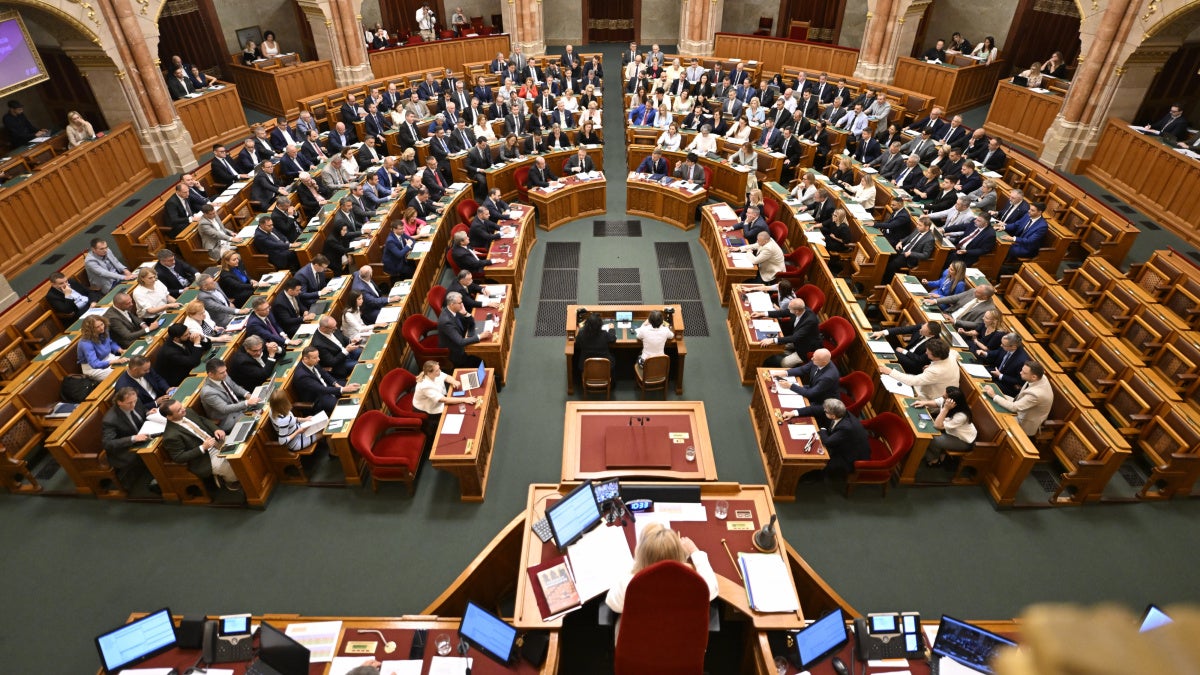
Hungary’s parliament on July 28 adopted legislation establishing the National Asset Recovery and Protection Office (Nemzeti Vagyonvisszaszerzési és Vagyonvédelmi Hivatal, NVVH), a key element of the government’s efforts to investigate mismanagement of public assets, recover assets allegedly transferred unlawfully under previous governments, and prevent future abuses. The final legislation incorporates important judicial safeguards for rights that were absent from the initial draft.
The office will have broad powers to investigate suspected misappropriation or unauthorized handling of public assets and, where appropriate, initiate civil asset recovery proceedings or refer matters for criminal investigation. Parliament is expected to elect the office’s president and deputy presidents by the end of August.
Civil society groups raised rule-of-law concerns that the initial draft, published for public consultation in June, failed to provide sufficient legal safeguards against misuse of the office’s broad powers. In particular, there was no judicial oversight of measures restricting individual rights and no independent mechanism to review complaints concerning the office’s activities. This created a risk that those subject to the office’s broad investigative powers would have little or no effective remedy against measures potentially violating their rights.
Before adopting the legislation, the Hungarian government and parliament addressed several of these shortcomings. Measures restricting individual rights will now be subject to judicial oversight, and the law establishes an internal human rights officer. While the officer will not be able to overturn decisions or issue binding orders, they can receive and investigate complaints, review the office’s activities from a human rights perspective, and issue public findings and recommendations.
The changes strengthen oversight of an institution entrusted with significant investigative powers and illustrate the value of meaningful public consultation, particularly where legislation affects human rights. Due process, including judicial oversight and independent review, is an essential safeguard against arbitrary interference with rights. It will help ensure that efforts to combat corruption in Hungary are carried out in accordance with the rule of law.
Institutions established to strengthen accountability are most effective when they themselves operate within a robust rule-of-law framework. As Hungary begins implementing the new legislation, the government should ensure that the office exercises its powers transparently and proportionately, respects due process and fundamental rights, and allows its oversight mechanisms to operate without interference. The government should also ensure that there is genuine public and civil society consultation on future legislation.