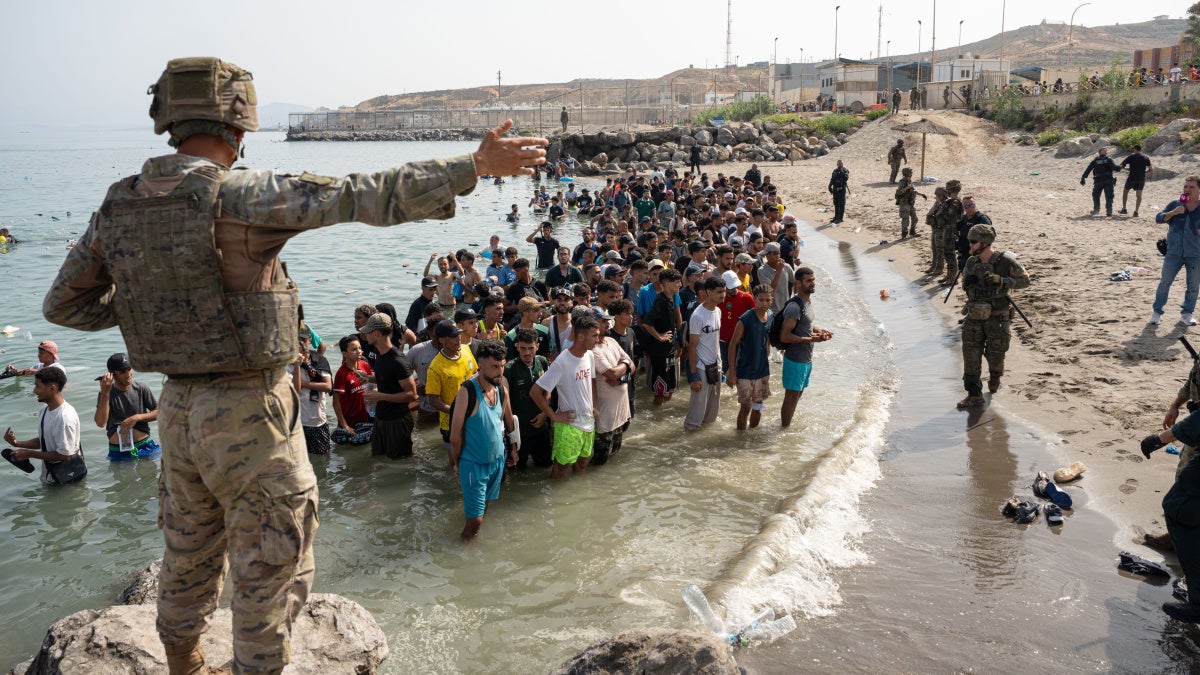
The arrival of an estimated 50,000 to 60,000 people in Ceuta, Spain’s enclave in North Africa, on July 30-31 was not only unprecedented but also tragic. At least 72 people died, including many who drowned while trying to swim from Morocco to Ceuta and others who were crushed while trying to climb a border barrier, according to Spanish authorities.
Most who crossed were Moroccan, with some from Sudan, Yemen, and several West and North African countries, the Moroccan Association for Human Rights (AMDH) reported. Many reportedly sought to migrate for economic reasons, but some were asylum seekers, including people who had fled the conflict in Sudan.
By August 2, most who crossed into Ceuta had returned to Morocco. The Spanish government said returns were voluntary, but AMDH, which spoke with some returnees, said that Spanish security forces carried out “mass pushbacks” without individual assessments. The group also alleged that some Ceuta residents used violence against people arriving and that Spanish and Moroccan forces used unnecessary force against people arriving in Ceuta or attempting to leave the Moroccan border town of Ben Ensar.
The borders of Ceuta and Melilla, Spain’s other North African enclave, are among the most fortified external European Union borders. They have long been the site of violence or excessive force by both Moroccan and Spanish security forces and collective expulsions by Spanish authorities. At least 15 people died in waters off Ceuta in 2014 when the Spanish Guardia Civil shot rubber bullets and tear gas at people attempting to swim to Spanish territory. At least 23 African men died in June 2022 at the Melilla-Morocco border amid the use of force and riot control tactics on both sides.
Moroccan and Spanish authorities should ensure that independent and impartial investigations are conducted into the circumstances surrounding the crossings to Ceuta and allegations of excessive force. They should also prioritize humane treatment and humanitarian assistance to people who arrived in Ceuta, returnees in Morocco, and others who attempted to leave.
Spanish authorities should uphold the rights of those remaining in Ceuta by individually assessing health and protection needs and ensuring access to asylum procedures.
On both sides of the border, it’s critical to ensure that any use of force is strictly necessary and proportionate. Summary expulsions are wrong, regardless of how people arrive.