- Pollution linked to the Democratic Republic of Congo’s only oil producer poses serious health risks to communities near its operations.
- Perenco, the oil company, has engaged in gas flaring and waste burning that have contributed to poor air quality and not prevented oil spills from wells and pipelines from leaking into the soil and riverbeds, contributing to health risks for nearby residents.
- The authorities should acknowledge the threat to people’s health in oil concession areas, immediately report on pollution levels, and act to reduce population exposure.
(Kinshasa) – Pollution linked to the Democratic Republic of Congo’s only oil producer poses serious health risks to communities near its operations, Human Rights Watch said today.
The Congolese government commissioned an environmental audit of the French-British oil and gas company Perenco’s operations in December 2024 because of longstanding reports of pollution. However, it has not provided a timeline for the publication of the final audit report, published any interim findings, or publicly disclosed vital information about air, soil, and water quality.
“The Congolese government should immediately publish the interim findings of the environmental audit of Perenco’s concession and disclose all environmental monitoring data,” said Agathe Bounfour, senior fossil fuel researcher at Human Rights Watch. “Residents of nearby communities have a right to know the extent of pollution in their environment and the risks to their health.”
In January 2026, a team of Human Rights Watch researchers interviewed 45 local residents, oil workers, health professionals, government officials, and environmental and public health experts in Muanda, where the operations are based, and in Kinshasa, the capital. Human Rights Watch also analyzed satellite imagery and geolocated videos and photographs received from local sources.
Perenco has engaged in gas flaring—the controlled burning of natural gas released during oil production—at five oil storage and processing sites close to residential communities. Human Rights Watch found that Perenco’s gas flaring and waste burning have contributed to poor air quality on its concession, creating health risks for local residents. In one location, flaring occurred less than 80 meters from housing. Residents with respiratory illnesses living near these flaring sites told Human Rights Watch that they believed air pollution from these operations was responsible. Residents also described acute health symptoms, such as chest pain and nausea, that they linked to smoke from burning at a waste treatment facility two kilometers from a village.
Perenco has also not prevented oil spills from wells and pipelines from leaking into the soil and riverbeds, based on a Human Rights Watch site visit and interviews with community members. Independent studies conducted in 2013 and 2025 documented serious environmental contamination associated with oil operations in the area that exposed residents to gases, heavy metals, hydrocarbons, and other compounds well-documented to be toxic and harmful to human health.
A villager in the Perenco concession area said: “Oil goes into the rivers where we swim.” A man in his mid-40s who lives near a tank farm—an oil storage and processing facility—said: “When gas is flared at the tank farm, our eyes burn and we experience headaches and dizziness.” The head of health personnel at a local hospital said that in his estimation, villages with oil infrastructure experienced “higher rates of respiratory conditions compared with areas where oil production is absent.”
The International Covenant on Economic, Social and Cultural Rights, to which Congo is a party, guarantees the right to “the highest attainable standard of physical and mental health.” The right to health obligates governments to ensure “the prevention and reduction of the population’s exposure to … harmful chemicals or other detrimental environmental conditions that directly or indirectly impact upon human health.”
The United Nations Committee on Economic, Social and Cultural Rights, the committee of experts that monitors the implementation of the covenant, has stated that this requires governments to take measures to prevent pollution by third parties, such as mining companies. A government’s “failure to enact or enforce laws to prevent the pollution of water, air and soil by extractive and manufacturing industries” can constitute a violation of human rights law.
Congolese environmental law prohibits certain oil production and waste management practices that may harm public health or safety. However, the government has not regularly monitored air, water and soil quality in the Muanda area. In November 2025, the minister of hydrocarbons announced a one-year extension of the December 2024 contract of the environmental and fiscal audit of damage caused by the company’s activities without providing a clear explanation for the renewal or committing to a specific release date.
Human Rights Watch wrote to the Congolese government in May 2026 seeking information on pollution prevention, remediation, monitoring, and oversight of Perenco’s operations in Muanda, including access to the environmental audit, but has not received a response.
Perenco, in response to queries from Human Rights Watch, denied that its operations “would cause air, soil and water pollution or detrimental acute health conditions.” The company stated that it considers scientific studies conducted on-site to be methodologically inadequate, and that it has invested in pollution prevention and local development initiatives, including health initiatives. It also said it had stopped flaring at 220 “flare points” within the concession and was fully cooperating with Congolese authorities in efforts to further reduce gas flaring.
The right to health obligates governments “to provide education and access to information concerning the main health problems in the community, including methods of preventing and controlling them.” The UN Human Rights Committee has clarified that the right to information includes the right of access to information held by public bodies and to ensure easy, prompt, effective, and practical access to government-held information that is of public interest. Such information would include the results of an environmental audit such as the government-commissioned audit of Perenco’s activities.
In its correspondence with Human Rights Watch, Perenco did not respond to questions regarding pollutant monitoring nor a request to share monitoring data. Likewise, the Congolese Ministries of Environment and Hydrocarbons did not respond to Human Rights Watch’s request for information on measures taken to monitor environmental conditions in the region.
“The Congolese government needs transparency on oil pollution levels to meet its obligations to uphold the right to health and to fully enforce its laws,” said Lewis Mudge, Central Africa director at Human Rights Watch. “The authorities should acknowledge the threat to people’s health in oil concession areas, immediately report on pollution levels, and act to reduce population exposure.”
Perenco’s Operations in Democratic Republic of Congo
The French-British oil and gas company Perenco is Congo’s sole oil operator. The company operates both onshore and offshore oil extraction in a region that stretches along the country’s narrow 37-kilometer coastline and encompasses dozens of villages and smaller informal settlements in the eastern part of Muanda city in Kongo Central province. The company retains exclusive exploration and production rights across nearly all onshore coastal blocks and the entirety of Congo’s maritime area.
Previously published independent studies documented serious environmental contamination associated with oil operations in the area. A 2013 investigation report by the Congolese Senate, to which Human Rights Watch gained access, found elevated concentrations of the air pollutants sulfur dioxide and nitrogen dioxide near gas flaring sites, as well as hydrocarbon contamination of groundwater and surface water and high concentrations of heavy metals.
A 2025 study by researchers from several universities in Congo and Cameroon found high levels of total petroleum hydrocarbons (TPHs) and volatile organic compounds (VOCs) in soil surrounding oil extraction sites in the villages of Kinkazi, Kitombe, and Tshiende, which the researchers attributed to oil spills.
Gas Flaring
Gas flaring involves burning gaseous byproducts generated during crude oil extraction. Flaring can take several forms: gas may be funneled into a vertical stack and burned at an elevation; directed through horizontal flare systems at hydrocarbon processing plants or refineries; or combusted at ground level in pits or near-surface installations, with burning occurring directly at the well site.
Gas flaring can produce several air pollutants that are detrimental to human health, including particulate matter, VOCs, carbon monoxide, sulfur dioxide, polycyclic aromatic hydrocarbons, nitrogen dioxide, and black carbon. The health impacts associated with exposure to these common air pollutants from gas flaring increase as proximity to flaring sites increases.
Gas flaring is prohibited under Congolese law unless under exceptional circumstances and only with prior authorizationfrom the Hydrocarbons Ministry. Neither Perenco nor the Ministry responded to a Human Rights Watch request for information about whether the company is authorized to conduct gas flaring and, if so, the conditions under which that authorization was granted. However, Perenco wrote that it considers gas flaring “operationally necessary to ensure the continuity of oil production in the region of Muanda” and that “the competent Congolese authorities are … fully aware of the situation.”
Human Rights Watch found, based on analysis of remote sensing data and witness accounts, that gas flaring occurred at five sites between January 2025 and March 2026 within Perenco’s concession associated with oil storage and processing infrastructure, either vertically through stacks or horizontally.
During this period, daily flaring activity was detected at Kinkazi Tank Farm at a Perenco pipeline gathering point four kilometers southeast of Muanda city, and at another site in a residential area in the city’s northeast. Signs of flaring were also detected at the Mibale Tank Farm near Tshiende and at the Liawenda Tank Farm. Several indications of ground flaring at the well level were also observed in 2025, while no evidence of ground flaring was identified from March to June 2026. Human Rights Watch was unable to conduct a remote sensing analysis of the flaring volumes at these sites due to the limitations of the data and heavy cloud cover of the area during this period.
The close proximity of gas flaring sites to villages and homes within Perenco’s concession exposes residents nearby to significant health risks, Human Rights Watch said. Most of the population of the concession lives within five kilometers of one of the five main flaring sites. Much of the densely populated urban area of Muanda is included in this zone, and in northeast Muanda city, the nearest residents live less than 80 meters from the flaring site. Several villages, including Liawenda, Tshiende, Kinkazi, Mamputu, Kitombe, and Kimini, are also within three kilometers of active flaring sites. In Tshiende village and Kinkazi village, the nearest residents live approximately 1.3 kilometers and 2.5 kilometers, respectively, from the tank farm flaring sites.
In correspondence with Human Rights Watch, Perenco wrote that “220 flare points have been permanently extinguished and the corresponding sites in the Kinkazi and Kitombe areas have been restored.” Perenco added that the company was “in discussions with the relevant Congolese authorities regarding gas valorization options [making use of the natural gas] that would, in due course, further reduce or eliminate gas flaring altogether.”
Oil Waste Burning
Perenco operates a 10-hectare waste treatment facility approximately two kilometers southeast of Kinkazi village. Human Rights Watch obtained, verified, and geolocated photographs and video footage of the facility and found that some oil waste is burned in open-air incinerators within the facility.
Congo’s 2011 Law on the Fundamental Principles of Environmental Protection prohibits the disposal of waste in locations where it may generate unpleasant odors or harm the environment, public health, or public safety.
Kinkazi villagers interviewed reported respiratory illnesses that they attributed to smoke from the facility. A resident in his mid-40s said: “When they burn the waste at night in the area, the smells drift toward the village when there’s wind,” and that he experiences ‘‘chest pain and a persistent cough.” Another person in their mid-40s said: “We smell a lot of smoke; we experience nausea and headaches.” Workers said that the company produces two main types of waste during oil drilling operations: oil mud, consisting mainly of drilling fluid residues, and paraffins, waxy hydrocarbon deposits from crude oil that accumulate inside pipelines and must be periodically removed. On-the-ground oil leaks also pollute the soil.
Photographs and videos from early 2026, verified by Human Rights Watch, show open burning tanks and incinerators within an area marked in a sign as a “paraffins treatment zone.” Workers said that these tanks and incinerators are used to burn paraffin waste to dissolve it. “We bring a quantity of paraffin to burn every night,” a Perenco worker said. “Gas-filled pipes are used, creating a flare, and after the paraffin is burned, it turns into sand.”
A video taken in early 2026 and verified by Human Rights Watch verifies the description, showing tall flames rising from an open incinerator inside the facility at night. Kinkazi residents also reported fires at the facility every night. A palm vine cultivator, 40, from Kinkazi said: “At night, we smell smoke drifting toward the village. There is the smell of smoke, and it smells bad.”
Daniel Bain, associate professor in the Geology and Environmental Science Department at the University of Pittsburgh, reviewed visual evidence collected by Human Rights Watch and noted that while “data on local air quality remains limited, areas around waste burning will have elevated volatile organic carbon and particulate matter content in the atmosphere.”
Water and Soil Pollution
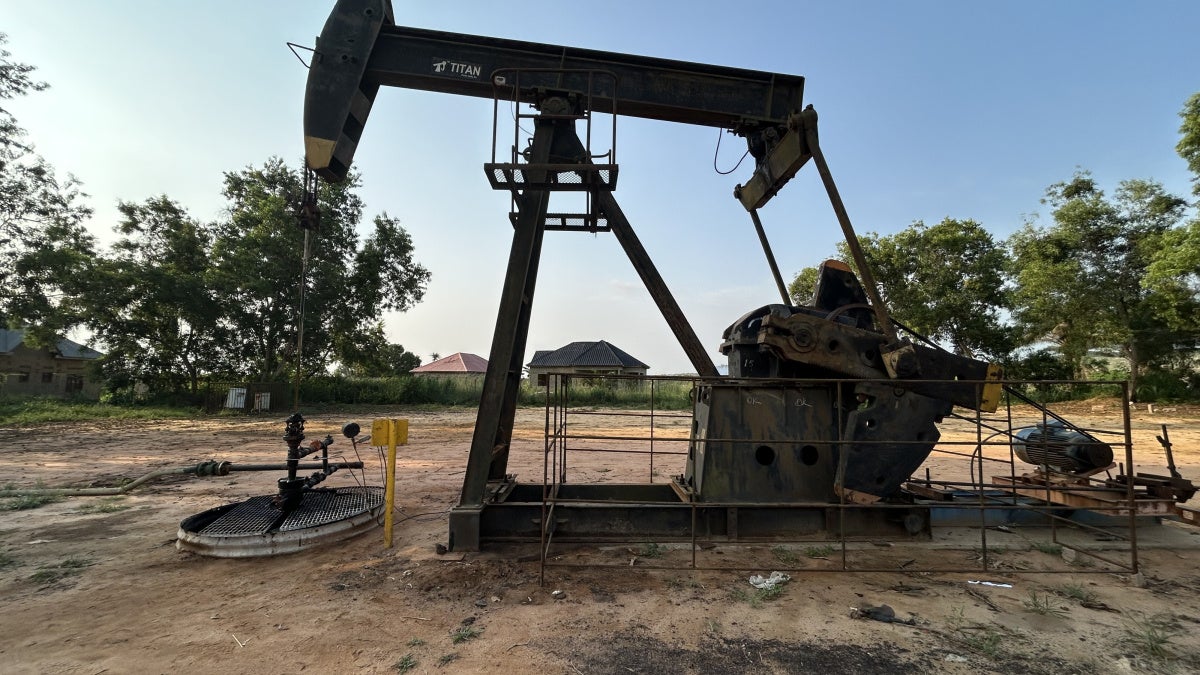
Human Rights Watch found that Perenco has not prevented oil wells from spilling and leaching crude oil into the soil. Crude oil drilled from the ground is a complex mixture of thousands of chemical compounds and heavy metals, many of which are toxic and can be harmful to human health.
The country’s 2011 Environmental Protection Law prohibits the discharge of waste or other substances that are likely to alter or degrade the quality of surface or groundwater, as well as any activity likely to cause pollution, erosion, or any other form of soil or subsoil degradation.
Several residents within the concession said that oil regularly overflows from wells during heavy rainfall, often near—and sometimes within—villages. “When it rains heavily and the water rises, oil spills next to it,” a Tshiende resident said.
In several locations within the concession area, Human Rights Watch researchers observed and photographed unprotected wellheads covered with what appeared to be crude oil residues and oil traces on the surrounding ground.
Human Rights Watch researchers also observed pipelines from Perenco’s oil extraction and processing facilities with visible signs of erosion, running beneath or alongside villages and agricultural land and sometimes crossing riverbeds. Nearby residents described past ruptures of these pipelines. “Pipelines cross rivers, and when one bursts, crude oil spills into the water,” a Kinkazi resident said.
Oil industry workers said that these frequent leaks and overflows are the result of inadequate maintenance of oil infrastructure. One former employee said: “There is no regular maintenance of the pipes, and they only clean the big pipes, not the small ones. In case of high heat, the density decreases and it explodes.” Bain, the University of Pittsburgh professor, also highlighted the lack of preventive measures, noting that drilling sites did not appear to be surrounded by earthen berms to contain spills.
The Congolese government does not undertake regular monitoring of environmental conditions in the region, Human Rights Watch said. However, a 2013 official Senate Committee investigation found contamination of groundwater and surface water in the region by hydrocarbons and heavy metals. Water samples from this investigation showed lead and mercury at levels exceeding the World Health Organization’s guidelines for drinking water quality. Lead is a particularly harmful heavy metal: chronic exposure can harm the kidneys, cardiovascular system, and reproductive health, and contribute to anemia and hypertension. Mercury can harm the nervous, digestive, and immune systems, as well as the lungs, kidneys, skin, and eyes, with serious health effects possible even at low levels of exposure.
A 2025 study by several universities in Congo and Cameroon reported elevated levels of volatile organic compounds and hydrocarbons in soil near oil wells in the villages of Kinkazi, Kitombe, and Tshiende. The authors concluded that these pollutants posed potential risks to both ecosystems and human health and recommended soil remediation measures, together with the establishment of a long-term monitoring system for soil and groundwater quality.
In correspondence with Human Rights Watch, Perenco said that “infrastructure integrity and pollution prevention” were “central to its operations” and “structured around ‘three fundamental principles’: the systematic inspection of equipment and infrastructure, the technical and structural assessment of assets following each inspection, and repair or replacement operations when necessary.” The company indicated that “since 2021, it had invested over [US]$100 million” in infrastructure integrity and maintenance operations and “decommissioned 35 km of onshore pipelines.”
Perenco also indicated that “many sources of environmental harm” should be considered, such as “the daily use by the local population of waterways and rivers for the large scale washing of motor vehicles” or “frequent acts of vandalism and sabotage of its installations,” as well as “the existence of extensive fuel trafficking between the DRC and Angola, involving the storage, transportation and sale of fuel in precarious conditions.”
Environmental Monitoring
A representative of the Congolese Control Office (Office Congolais de Contrôle, OCC), a government agency that works with the Environment Ministry on environmental monitoring of the oil concession, spoke with Human Rights Watch.
The representative said that while the OCC conducts occasional inspections using portable equipment to measure air pollutants and soil contamination in several communities—including Liawenda, Banana, Mibale, Nsiafumu, and Makelekese—there was no regular government monitoring program. He said that while Perenco had installed air-quality monitoring sensors in several villages, the OCC had no access to the data.
In 2025, a committee from the Kongo Central regional parliament urged national authorities to “acquire and install national monitoring sensors … at sites across the province that are susceptible to pollution,” and to “require all companies engaged in polluting activities to submit, on a monthly basis, monitoring data collected from surveillance sensors.” Two provincial assembly members said that Perenco holds pollutant monitoring data for the concession but has not given the members access.
The head of a Muanda-based environmental organization said: “There is no public data available on pollutant measurement, which is why local NGOs [nongovernmental organizations] are trying to commission their own analyses.”