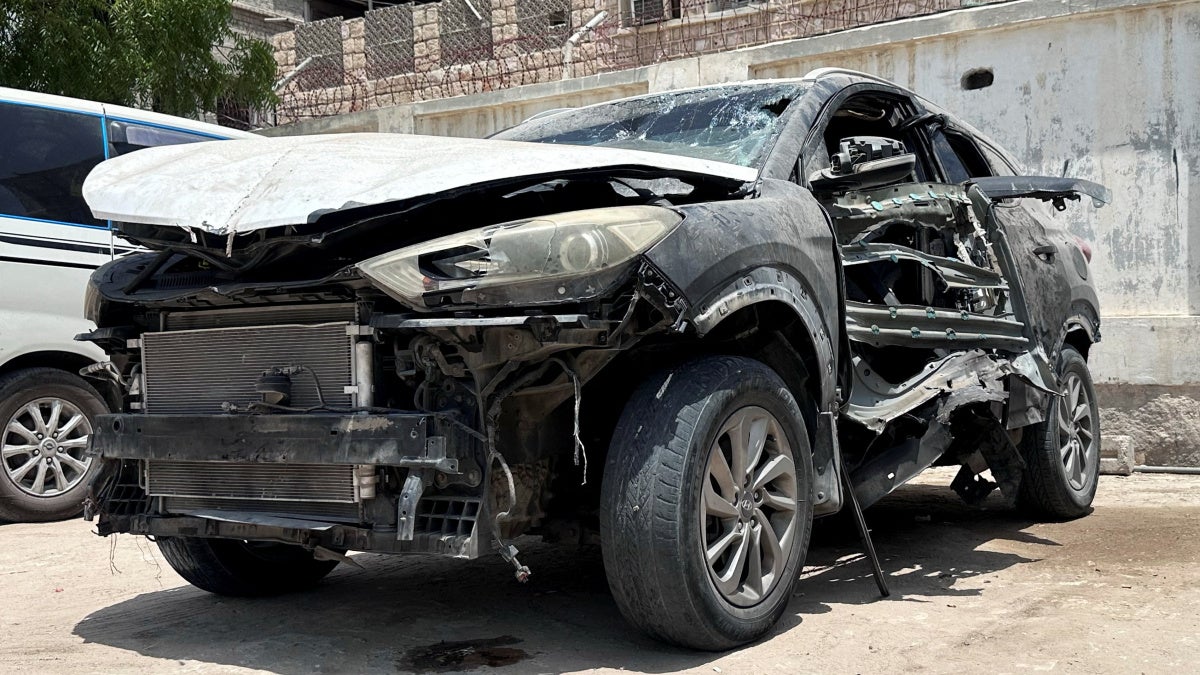
Journalist Muhammad Aidha, who had reported for the Saudi-owned Al Arabiya and Al Hadath channels since 2019, was killed in Mukalla in eastern Yemen on June 24 by an explosive device planted in his car.
Three days later, on June 27, Marib security forces detained journalist Hamoud Haza while he was covering a public event. Haza told Human Rights Watch that he was held incommunicado and released two days later, only after he signed a pledge to not criticize the internationally recognized government and its minister of information.
The Yemeni Journalists Syndicate condemned Aidha’s killing, saying the attack “added to a series of crimes and violations against journalists and media workers, including the assassination of journalists Rasha al-Harazi and Saber al-Haidari in Aden.” The National Organization of Yemeni Reporters said in a statement that over 90 journalists and media workers have been killed since Yemen’s conflict began in 2015, adding, “This bloody toll reflects the desire of the parties to the conflict to impose a complete media blackout and to entrench a culture of impunity.”
Government authorities are not alone in their abuses against journalists. In March, Houthi forces abducted journalist Salah al-Deen al-Rawhani from his home in Sanaa, and he has not been heard from since, according to the International Federation of Journalists.
In September 2025, Human Rights Watch documented warring parties’ systematic violations against Yemeni journalists, including killings, enforced disappearances, torture, and other ill-treatment. The report found all parties to the conflict, including the Houthis, the Southern Transitional Council, and the Yemeni government, have committed serious abuses with impunity against journalists and media workers.
International humanitarian law obligates all warring parties to protect civilians, including journalists, who are not taking a direct part in hostilities. International human rights law further protects journalists’ rights to liberty, security of person, and freedom of expression, and prohibits arbitrary detention and enforced disappearance.
The Yemeni government should conduct a prompt, impartial, and transparent investigation into the killing of Mohammed Aydah, and investigate all other attacks on journalists that have taken place within territories under their control, and hold those responsible to account. Houthi authorities should also release all detained journalists and media workers, including Salah al-Deen al-Rawhani.