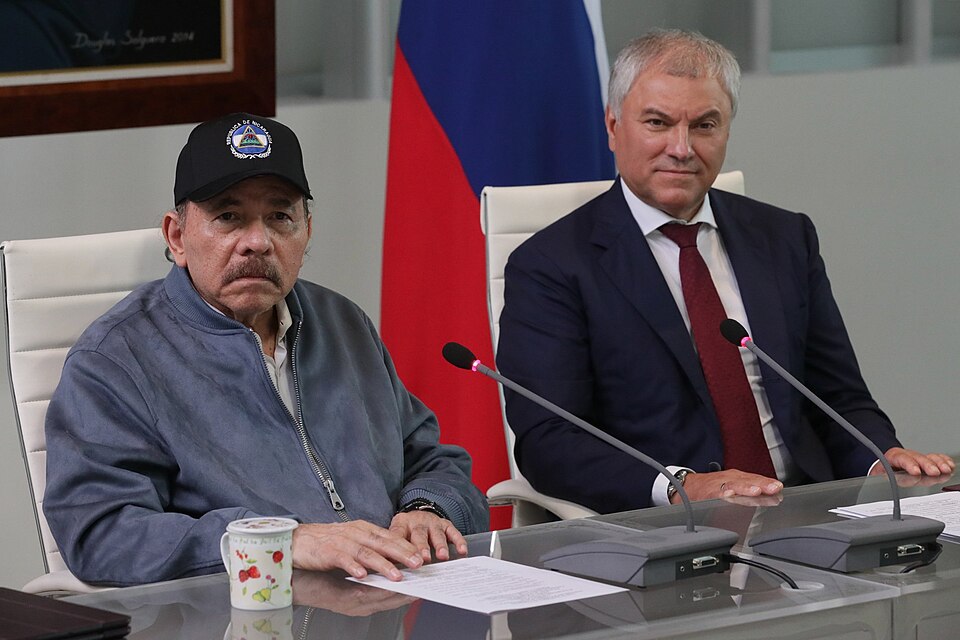
MANAGUA, Nicaragua — In a move that formally dismantles Nicaragua’s remaining democratic processes, President Daniel Ortega announced that the Central American nation will no longer hold general elections, shutting the door on future constitutional transfers of power.
Speaking at an official ceremony in Managua marking the anniversary of the 1979 Sandinista Revolution, the 80-year-old leader declared that electoral processes would be permanently suspended to prevent opposition groups from challenging his administration.
“There will be no more elections here so that they can try to seize the government or seize power,” Ortega told state employees and supporters during his address. He added that his administration would work alongside the Sandinista-controlled National Assembly to enact legislative barriers against political opponents, whom he accused of being backed by foreign powers.
Formalization of One-Party Rule
The announcement effectively cancels Nicaragua’s next scheduled presidential election, originally set for November 2027. International analysts and human rights observers view the statement as the formalization of an absolute, single-party framework.
Ortega, who first ruled Nicaragua in the 1980s following the overthrow of the Somoza dictatorship, returned to the presidency in 2007. Over the past two decades, his administration has systematically centralized executive control, rewritten constitutional limits, and dismantled independent oversight bodies.
The political shift reached a critical turning point during the 2021 presidential cycle, when government authorities arrested major opposition candidates, dissolved rival political parties, and curtailed independent media outlets prior to the vote—a process widely rejected as illegitimate by the international community.
Consolidation Under the Ortega-Murillo Regime
The decision to eliminate elections further solidifies power within the ruling dynasty. Ortega shares executive authority with his wife, Rosario Murillo, who was elevated to official “co-president” following structural constitutional amendments designed to institutionalize their joint governance.
Following mass civil protests in 2018, which were met with a severe state crackdown that left over 350 people dead according to United Nations figures, the regime has systematically eliminated domestic opposition. Hundreds of political leaders, journalists, and civic activists have since been imprisoned, forced into exile, or stripped of their Nicaraguan citizenship.
Legal analysts and human rights organizations note that while recent elections in the country were heavily compromised, Ortega’s declaration represents a fundamental structural shift—transitioning Nicaragua from a system of controlled voting to an explicit, permanent ruling apparatus.
This video report details Daniel Ortega’s public announcement during the Sandinista anniversary address and highlights the initial international reactions to the cancellation of future Nicaraguan elections: Daniel Ortega Declares No More Elections in Nicaragua.