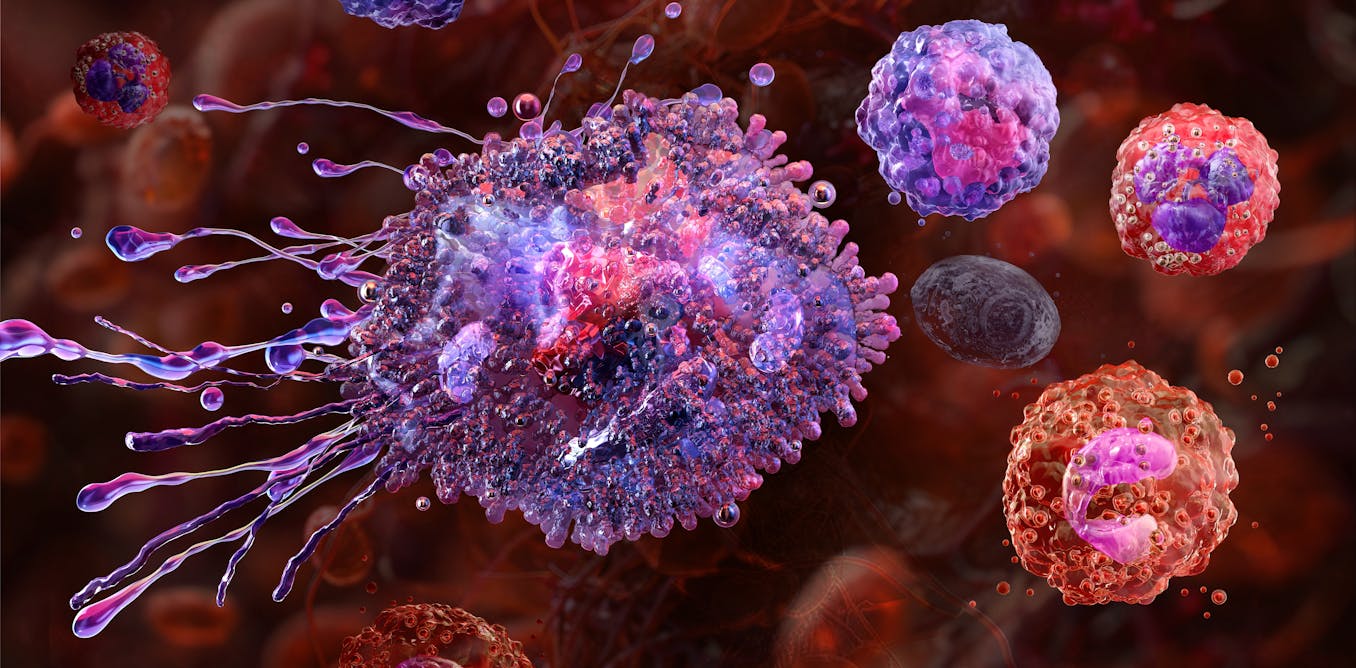
Understanding inflammation – and above all, how to regulate it – is one of the great medical challenges of modern medicine. Its role as the first line of defence is crucial. It occurs when the presence of infectious agents triggers an inflammatory response. As well as hindering the entry of viruses and bacteria, this acts as a distress signal, attracting other components of our immune system.
But excessive inflammatory response can be harmful. Indeed, poor regulation of inflammation plays a central role in the way many illnesses develop.
One example of this is COVID, where illness becomes more severe not so much because of the virus itself, but because of our inflammatory response to it. At the height of the pandemic, treatments that worked best in the most seriously ill patients included inhibitors that control the excessive inflammation associated with infection.
Controlling inflammation is not just vital in fighting infections. It is also a cornerstone of immunotherapy, fighting cancer, and treating autoimmune diseases. Additionally, poor inflammation control may be associated with coronary illness, cellular ageing, and neurodegeneration linked to Alzheimer’s or Parkinson’s.
Read more:
Some coronaviruses kill, while others cause a common cold. We are getting closer to knowing why
Inflammation’s accelerator and brake
The STING protein is one of the main controllers of inflammation. It is located in the endoplasmic reticulum of our cells, and can be regulated in several ways.
STING activation can go one of two ways. In oncology the outcome varies depending on the type of cancer, but in infection it can either offer protection or trigger an exaggerated response, depending on the virus and the patient’s pre-existing condition. Certain STING mutations are also responsible for interferonopathies, a type of rare chronic inflammatory disease that is especially prevalent in children.
Understanding which factors trigger or suppress STING activation is essential for preventing or controlling diease-related inflammation.
Unexpected genetic material
STING is most widely studied for its role in triggering inflammation when it detects misplaced DNA. DNA contains the essential instructions for our cells to function properly, and it is tightly guarded within the cell nucleus.
DNA storage is similar to a library that safeguards old books of great value. When the cell needs to use the information, the cell carefully makes a copy of the original — in the form of RNA – and only that “photocopy” is allowed to leave. This ensures the valuable original text remains safe.
If a DNA book turns up outside the library, it means something is seriously wrong. Either the facilities have suffered serious damage, or a virus or bacterium is trying to sneak its own DNA in. That is when STING sounds the alarm to warn of the danger.
Other ways of activating STING
Our study, published in April 2026, found that there are other ways to activate the STING protein within cells. Specifically, an increase in calcium in the cytoplasm, coupled with stress stimulation in the endoplasmic reticulum, can trigger an antiviral and inflammatory response via STING, without the need for DNA detection.
This previously unrecorded activation of STING shows that it is not just a specialised security team that detects misplaced DNA. It can also act as a complex and multifaceted inflammatory platform, which can detect a wide range of cellular stress states and responding accordingly.
The two mechanisms that we found – intracellular calcium imbalance and endoplasmic reticulum stress – occur in many different biological processes and diseases. These range from the activation of the immune system during cancer to infections.
We can understand this through another analogy. Think of the cell as a kitchen. Calcium, in this context, is a very potent spice, like cayenne pepper. A tiny pinch at just the right moment enhances a dish, but too much can easily ruin it.
When there is an accident in the kitchen and the pepper is spilled all over the food, it makes the dish toxic, meaning the chef has no choice but to throw it away. Similarly, an overreaction to calcium-induced cellular stress can lead to cell death.
To make the immune response work more effectively, it needs that initial “spark” provided by controlled activation of inflammation. Calcium-mediated STING activation could therefore help to improve protection against infections or autoimmune inflammatory processes.
A weekly e-mail in English featuring expertise from scholars and researchers. It provides an introduction to the diversity of research coming out of the continent and considers some of the key issues facing European countries. Get the newsletter!