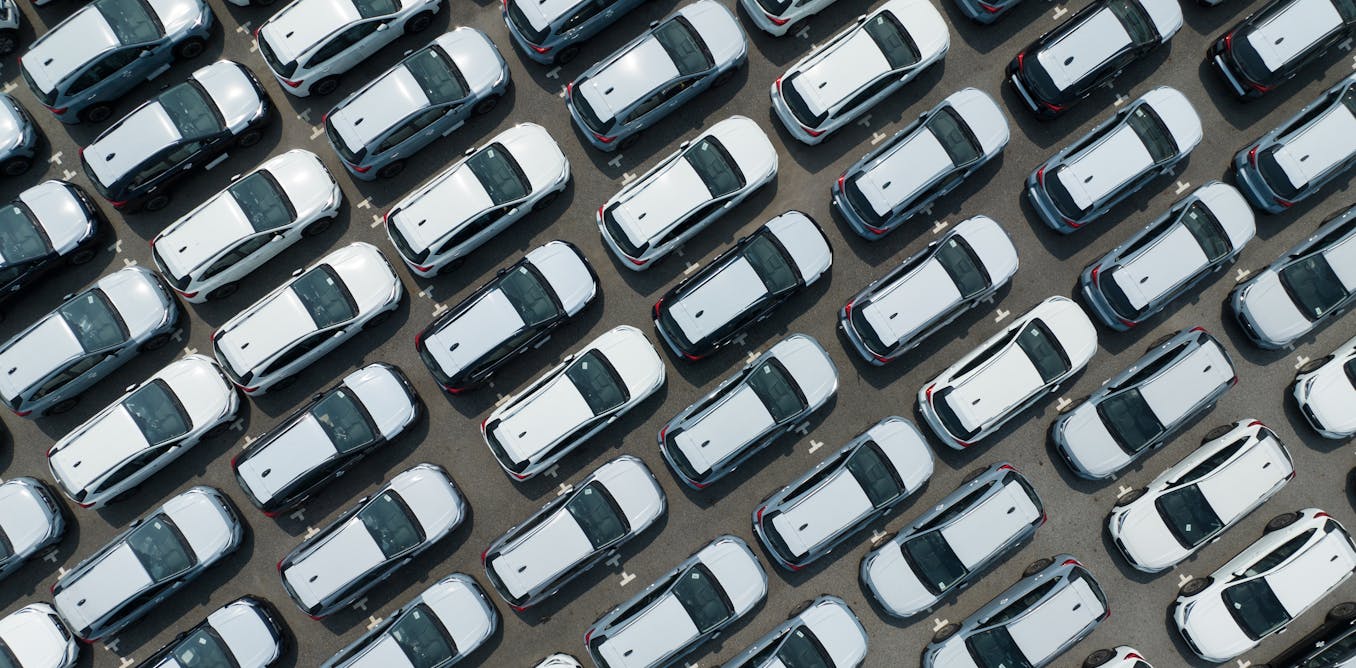
Governments and car manufacturers sell electric cars as the future of green transport. But a less visible trend is challenging this story: many electric cars are getting bigger.
The International Energy Agency recently reported that larger models, including sports utility vehicles (SUVs), are taking up a major share of electric car markets.
In China, electric SUVs accounted for more than 60% of electric car sales in 2025. In Europe, SUVs accounted for almost 75% of electric models in 2025. In the US, the figure was even higher, at more than 85%.
SUV emissions are now so large that, if all SUVs were a country, they would be one of the world’s five biggest CO₂ emitters. The problem with SUVs is not only their tailpipe emissions. It is also their size, weight, cost and the way they reinforce car-dependent lifestyles.
Read more:
Why surging sales of large electric vehicles raises environmental red flags
Electric SUVs may reduce tailpipe emissions compared with petrol and diesel SUVs, but they still need larger batteries, more raw materials, more energy and more road space than smaller electric cars. Their greater weight can also contribute to pollution from tyre, brake and road wear, including fine particulate matter linked to respiratory and cardiovascular diseases.
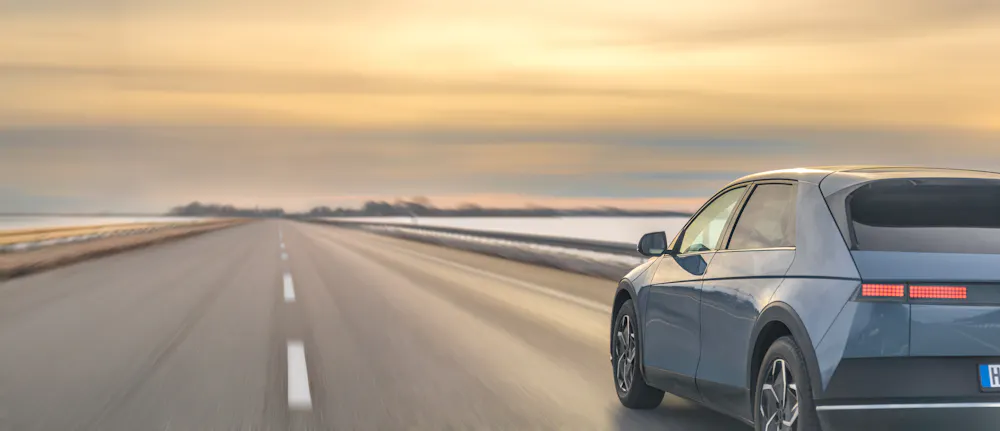
Larger vehicles can also make streets more dangerous, especially for children. A study using Great Britain crash data found that children aged 0-18 hit by SUVs, rather than passenger cars, had 77% higher odds of fatal injury. For children under nine, the odds were more than three times higher.
PV productions/Shutterstock
When roads are dominated by heavy privately owned cars, walking and cycling become less attractive, even for short everyday journeys. This matters because active travel (such as walking and cycling) is one of the easiest ways to build physical activity into daily life while producing little or no direct carbon emissions.
Car-dominated streets affect people unequally. Lower-income households are less likely to own new electric cars, but they still experience the traffic, danger, noise and pollution created by them. This is why the green transport transition needs to be judged by more than the number of electric cars sold. It should also be judged by whether it reduces car dependency and creates healthier, fairer streets.
Avoid, shift, improve
Our new research in the journal Energy Economics uses the avoid-shift-improve framework to assess transport decarbonisation. Avoid means reducing the need for unnecessary car journeys through measures such as teleworking, compact development, and better access to local services. Shift means moving remaining trips to lower-carbon, healthier modes such as walking, cycling, public transport, and bike and car sharing. Improve means making the vehicles that are still needed cleaner, lighter and more energy efficient, including through electrification.
This order matters. If policy jumps straight to improve, it can reduce emissions per mile while leaving the wider system unchanged. A city full of electric SUVs may have no exhaust emissions, but it can still suffer from congestion, road danger, inactive travel, unequal access, non-exhaust pollution and streets dominated by large private vehicles.
Too big to be green?
In our study, the proposed model uses registrations of SUVs as an undesirable indicator of transport decarbonisation. Their growth works against the move towards smaller, lighter and more energy-efficient cars. Larger, more expensive vehicles can deepen car dependence: once people have invested in a costly car, switching to non-car modes of transport can feel like a loss.
The SUV boom illustrates this. Larger vehicles are marketed as safer, more comfortable and more desirable. Advertising presents them as symbols of freedom, family protection and status, helping to make large cars appear normal and necessary even when smaller cars and better transport options could meet many everyday needs.
This conflicts with UK and EU climate goals, which prioritise reducing emissions, improving public health and making sustainable transport more accessible.
There are practical alternatives. Policy can support smaller, lighter and more affordable electric cars where cars are still needed. It can also make walking, cycling and public transport the easiest choices for everyday journeys. This means protected cycle lanes, safe pavements, reliable buses, lower traffic neighbourhoods, and road pricing that reflects the space, weight and pollution costs of larger vehicles.
These measures are not about blaming drivers. They are pro-health, pro-equity and pro-climate. Many people require cars, especially in rural and poorly connected areas. But the goal should be to reduce unnecessary car dependence, not to replace every petrol SUV with an electric SUV.
The future of transport should not only be electric. It should be lighter, healthier, more affordable and less car dependent.

The authors do not work for, consult, own shares in or receive funding from any company or organisation that would benefit from this article, and have disclosed no relevant affiliations beyond their academic appointment.