(Nairobi) – Regional authorities in Ethiopia’s Tigray region should withdraw a proclamation that purports to grant them sweeping powers to compel military service and punish dissent, Human Rights Watch said today.
Tigray’s main political party, the Tigray People’s Liberation Front (TPLF), issued the proclamation in early June 2026 after driving out regional leaders appointed by the federal government and initiating an intensive conscription drive that bears similarities to Eritrea’s abusive national service system.
“Tigrayans are still reeling from a devastating two-year conflict and its aftermath,” said Laetitia Bader, deputy Africa director at Human Rights Watch. “Authorities in the region should not respond to ongoing political tensions by forcing civilians into military service while simultaneously punishing criticism of such forced conscription.”
The security and mobilization proclamation contains vague and overly broad language that is open to abuse, and stipulates imprisonment and the death penalty as punishment for a range of offenses. The proclamation was adopted amid increasing tensions between the TPLF and the Ethiopian federal government, sparking fears of further atrocities against Tigrayan civilians.
During the 2020-2022 armed conflict in northern Ethiopia, Tigrayan forces fought against Ethiopian federal forces and their allies, before signing a truce in November 2022. The conflict was marked by serious atrocities, including war crimes and crimes against humanity. Although the truce, known as the Pretoria Agreement, ended active hostilities, rights abuses have persisted in the region.
Since 2025, the federal government and the TPLF have disputed both how to carry out the truce and to govern the region. Each side has accused the other of mobilizing forces and warned of a possible return to armed conflict. A significant rift also emerged within the TPLF leadership that split the party into two factions in 2024, deepening instability.
On May 5, 2026, the TPLF reasserted control over Tigray and ousted the federal-government-backed interim administration. The TPLF claimed that the federal government was provoking armed conflict by withholding the region’s budget, including for civil servant salaries, and unilaterally extending the tenure of the interim administration president.
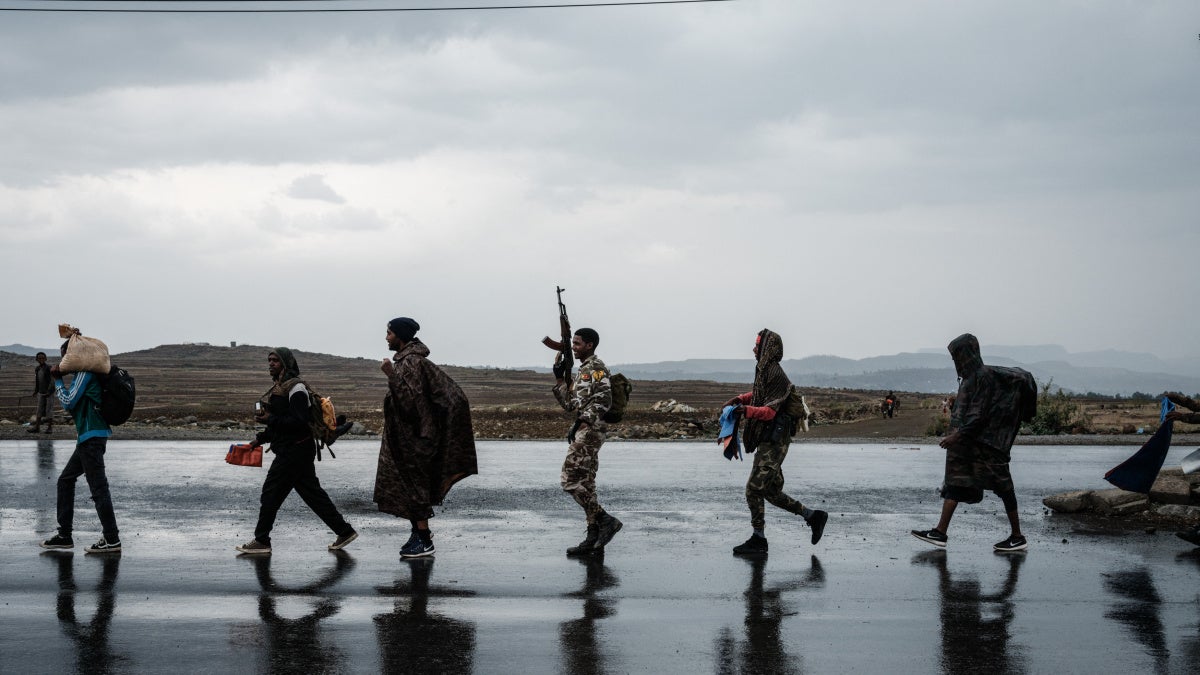
As part of the current conscription drive, local authorities and Tigrayan forces have ordered former fighters to report to their units and are going door-to-door and carrying out mass, forced round ups of potential fighters, including children, according to reports from local human rights organizations and the media.
Human Rights Watch also received reports that local authorities and Tigrayan security forces are punishing parents and young children of those evading mobilization. As a result, those fearing forced conscription and renewed hostilities have been fleeing the region.
The new proclamation, seen by Human Rights Watch, which was reportedly adopted without public scrutiny, establishes a framework for compulsory military mobilization for those whose “health and age permit.”
The proclamation imposes the death penalty for a range of vague or broad offenses, including causing damage or harm to strategic defense supplies, seriously threatening the peace and security of Tigray, collaborating with the enemy, or undermining or dissolving the unity and territory of Tigray irrespective of citizenship. Human Rights Watch opposes capital punishment under all circumstances, as a practice unique in its cruelty and finality.
It also grants authorities sweeping powers to suppress and criminalize desertion and evasion of service, as well as prison sentences of up to 25 years for those who criticize or advocate resistance to the recruitment campaign. It imposes fines of up to 50,000 Ethiopian Birr (roughly US $315) for those who evade mobilization orders or desert from service.
The TPLF had already cracked down on independent journalists and media outlets in the region and declared a “zero tolerance” policy toward media outlets that it decides fuel division and “push[es] the enemies’ agenda.”
The proposed mobilization system bears troubling similarities to aspects of Eritrea’s national service system, which United Nations investigators and human rights organizations have rightly criticized for coercive recruitment, indefinite military service, restrictions on freedom of movement, and punishment of those who evade conscription and their families, Human Rights Watch said.
The African Union (AU), and other governments that have supported the implementation of the November 2022 truce, including Kenya, South Africa, the United States, and European Union member states, should publicly and privately press Tigrayan authorities to halt forced recruitment and urgently withdraw the proclamation.
An AU monitoring mechanism was established specifically to monitor compliance with the Pretoria Agreement, including commitments related to disarmament, demobilization, and civilian protection. It should urgently assess the allegations of forced recruitment and the remobilization of former combatants and publicly report on its findings.
“Tigrayan authorities should not be forcing Tigray’s vulnerable population to support their military cause or exposing them to further abuses,” Bader said. “Concerned governments should use their influence now to help prevent a renewed cycle of atrocities.”