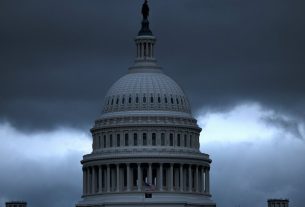
American political leadership skews decidedly older than the population as a whole. President Donald Trump turned 80 years old on June 14, 2026. The median age for senators is nearly 65, and the median age for House of Representatives members is almost 58.
But are those older people in office a sign that the U.S. government is turning into a “gerontocracy” that is giving younger generations short shrift?
No – many older Americans are becoming worse off.
We are experts in elder law who have been following the legal treatment of older Americans for decades. One of us writes a leading elder law casebook, and we are co-authors of a book on aging that will be published in January 2027. Through our research, we have observed a series of federal policy changes that will make life harder for many Americans of modest means as they age.
In our view, those policies show why, more than ever, it is wrong to assume that rich and powerful older people will protect all older adults, including those who aren’t wealthy.
Social Security cuts loom
Perhaps the most publicized of these policy failures is that the federal government hasn’t taken steps to stave off Social Security benefits cuts.
The program will have to cut the benefits it provides by roughly 22% starting in 2032 unless Congress steps up. That would affect a lot of people: Currently, Social Security pays benefits to more than 60 million retired workers, as well as survivor benefits for the spouses of workers who have died and their eligible children.
But instead of taking steps to shore up the program, Congress has sped up that expected moment of reckoning.
A tax break included in the big tax and spending package Trump signed into law in summer 2025 that benefits some older people will actually weaken Social Security for everyone by reducing the tax revenue that funds the program.
Social Security’s revenue is further compromised by the declining number of immigrants in the workforce who contribute to the program through the payroll tax, even though many of them will never be eligible to receive its benefits. More immigrants departed the U.S. than arrived in 2025 due to the Trump administration’s policies, which are supported by funding for immigration enforcement approved by the Republican majority in Congress.
These changes will hit some older adults harder than others. Social Security keeps millions more women than men out of poverty, as well as more Blacks and Latinos than whites.
Jim Watson/AFP via Getty Images
Long-term care concerns ramp up
Older adults in need of long-term care also face new risks.
In December 2025, the Trump administration rescinded regulations that would have required nursing homes that receive Medicare or Medicaid funding to meet new minimum staffing standards.
At the same time, just as the number of older adults who need long-term care is rising, the White House’s immigration crackdown has threatened the supply of paid care workers, as they are disproportionately from other countries. This labor shortage will impact older adults receiving care in institutional facilities like nursing homes. But it will likely have an even more significant effect on those hoping to receive care at home, as 1 in 3 home care workers are immigrants.
In addition, the federal cuts to Medicaid that Trump signed into law in July 2025 are expected to make it harder for older adults who require paid caregivers to remain in their own homes.
Federal law requires states to pay for nursing home care for older adults who qualify for Medicaid’s long-term care coverage. But the federal government does not require states to cover the cost of home-based care, which is what most older people prefer to institutional settings.
When Medicaid benefits are cut, states need to make up that lost money. Evidence from past Medicaid cuts suggests that services to help older people remain at home are among the first to be cut.

O2O Creative/E+ via Getty Images
Support for older adults in poverty
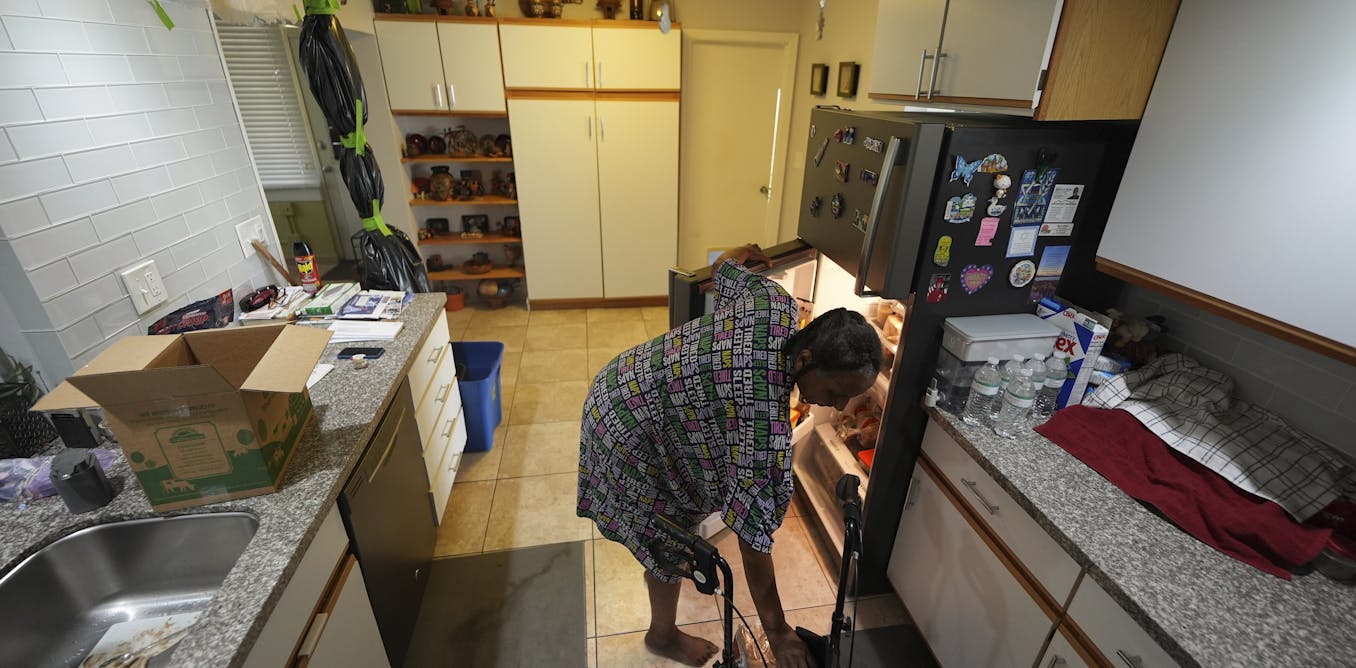
Benefits that many low-income older Americans rely on are facing substantial reductions. The big legislative package Trump signed in 2025 cut federal funding for the Supplemental Nutrition Assistance Program, through which more than 6 million people 65 or older get benefits that help them buy groceries.
Due to the federal cuts, states – which administer SNAP – will need to absorb more of the program’s costs. The number of people who get benefits is already declining.
Many older adults also get other government benefits through programs that are being scaled back, including one that helps them pay for their energy bills.
This thinning out of the safety net troubles us in part because of another trend: More Americans over 65 are becoming homeless.
While homelessness declined from 2024 to 2025 for most age groups, it rose for those 65 and up, according to the Department of Housing and Urban Development. That agency estimates that nearly 45,000 Americans age 65 or older were homeless. Nearly 104,000 Americans age 55 to 64 were homeless, too.

O2O Creative/iStock via Getty Images Plus
Meanwhile, as the number of older Americans has soared – it grew 13% from 2020 to 2024 – funding for important social services for people 65 and over has not kept up.
For example, on a per-older-person basis, funding for the Older Americans Act has decreased. That statute funds a broad range of core services for older adults, such as the Meals on Wheels program, transportation assistance, adult day centers and legal assistance.
In short, although many American political leaders are themselves over 65, programs that millions of older Americans of modest means rely on to stay out of poverty and make sure they can get the care they need are becoming less reliable and providing less support.