
In our ‘Field Diaries’ series, The Applied Ecologist is sharing stories from a range of different fieldwork experiences.
About the author
Mallika Sardeshpande, She/her
Affiliation:
- Ashoka Trust for Research in Ecology and the Environment, India
- During the field work: Institute of Natural Resources, South Africa
Ecology interests:
Agroecology, Urban ecology, Green infrastructure
Overview of fieldwork
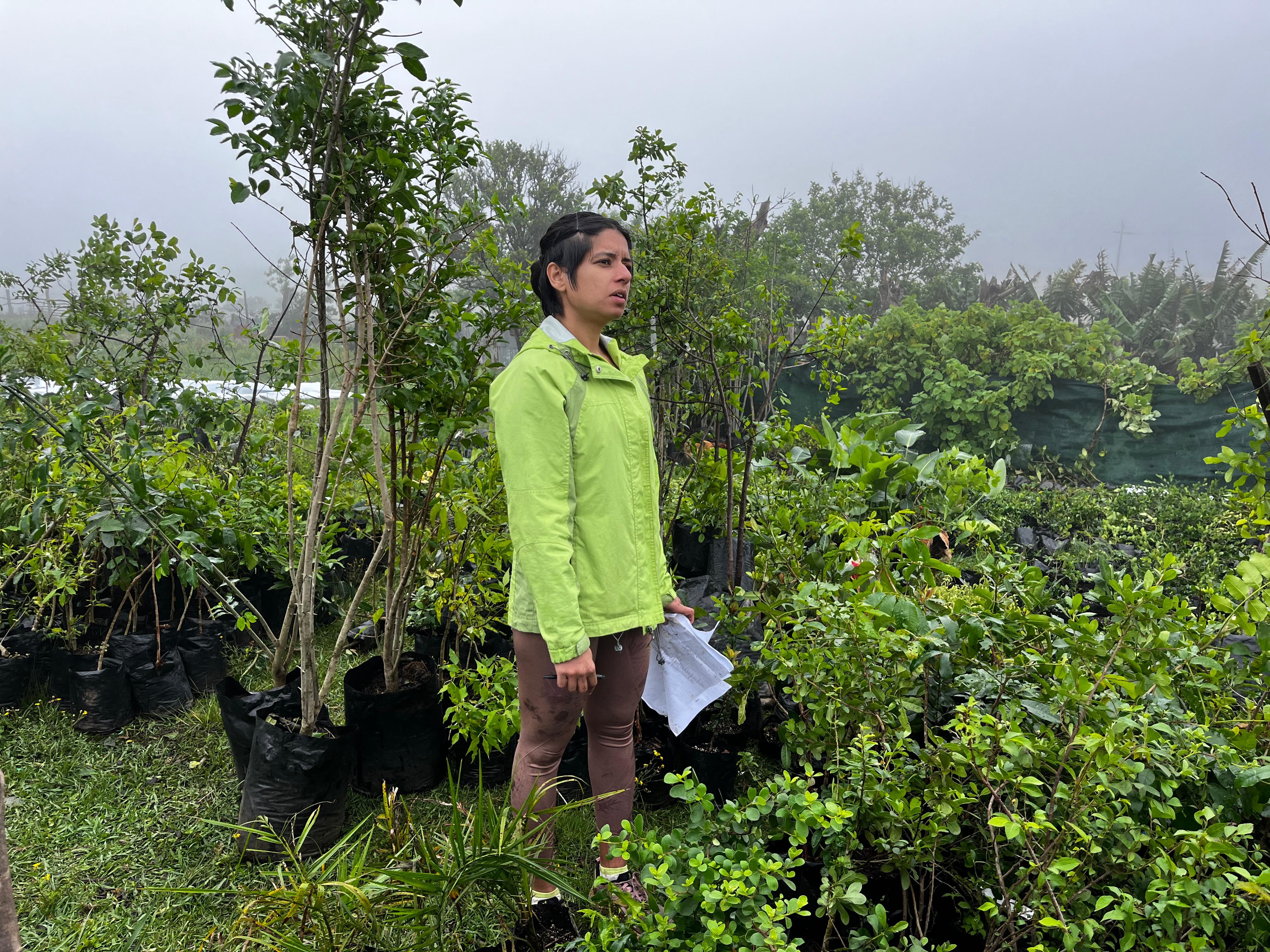
In 2024, I secured my first applied project grant, to work on indigenous agroforestry in the Mpondoland Centre of Endemism in South Africa. The project was a collaboration between the indigenous people’s organisation Sustaining the Wild Coast, the agricultural non-profit Siyasisiza Trust, and the environmental non-profit Institute of Natural Resources, and was funded by the Global Environment Facility Small Grants Programme implemented by the United Nations Development Programme (UNDP). Together, we co-designed and planted indigenous agroforestry stands in the project area, to improve landscape functioning for people and for nature. The project area, Amadiba, is home to the indigenous amaMpondo people, and it is among the few places in South Africa where traditional indigenous farming is still practiced. However, rapid demographic, developmental, and environmental changes are threatening this way of life and indigenous knowledge. Our project sought to revisit this local ecological knowledge, reconcile it with scientific know-how, and plant these indigenous stands to propagate the plants, practices, and ecosystem services associated with them.
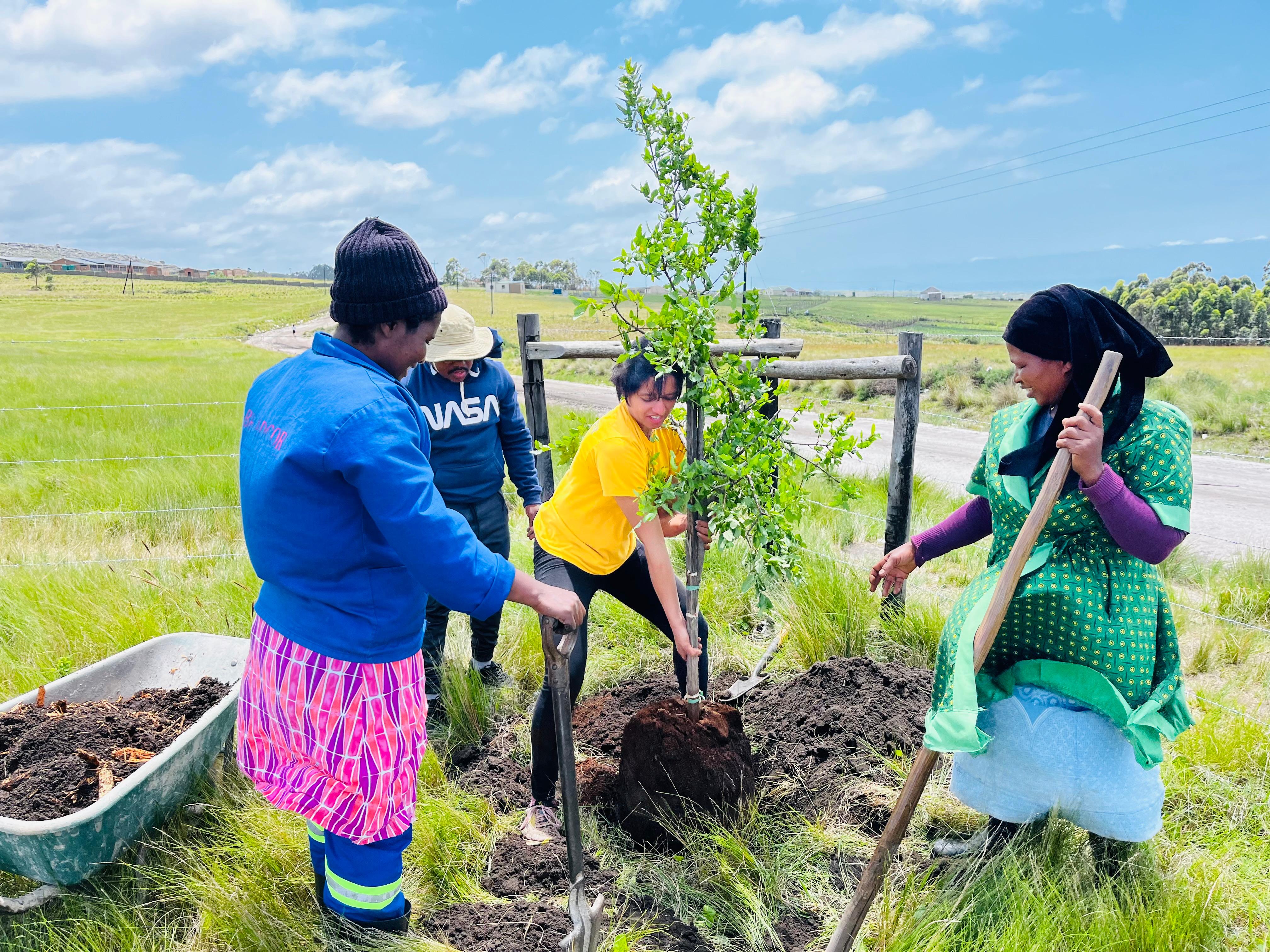
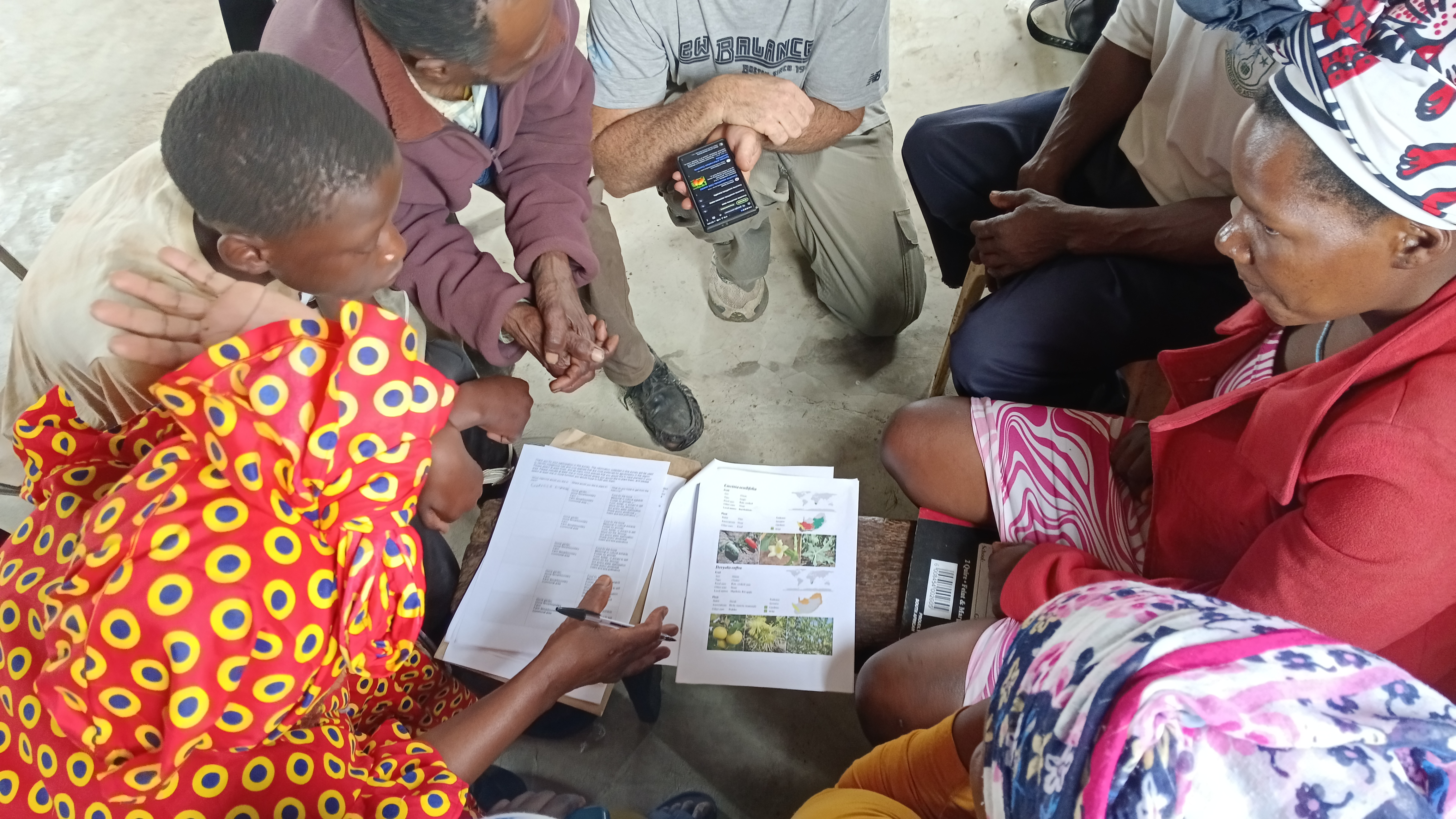
We had a tight time frame of 12 months to design, plant, and monitor the survival and growth of the indigenous plants. In spring, we consulted six villages in Amadiba, prioritising the spaces where people would like to have planting, and the ecosystem services they would like to enhance. For example, schools needed shade, community gardens needed windbreaks and fencing to protect the crops, and so on. These discussions usually lasted until lunch time, when we all paused and enjoyed a feast of local delicacies. Food has a way of bringing people together on so many levels, as it embodies care for our selves, our communities, and our lands. After lunch, we would freelist the species that people would like to plant in these priority spaces, based on local ecological knowledge, and also prompted by a picture catalogue we brought with us. The picture catalogue was the first output of my PhD research, so to have it used for a real-life project was life-affirming!
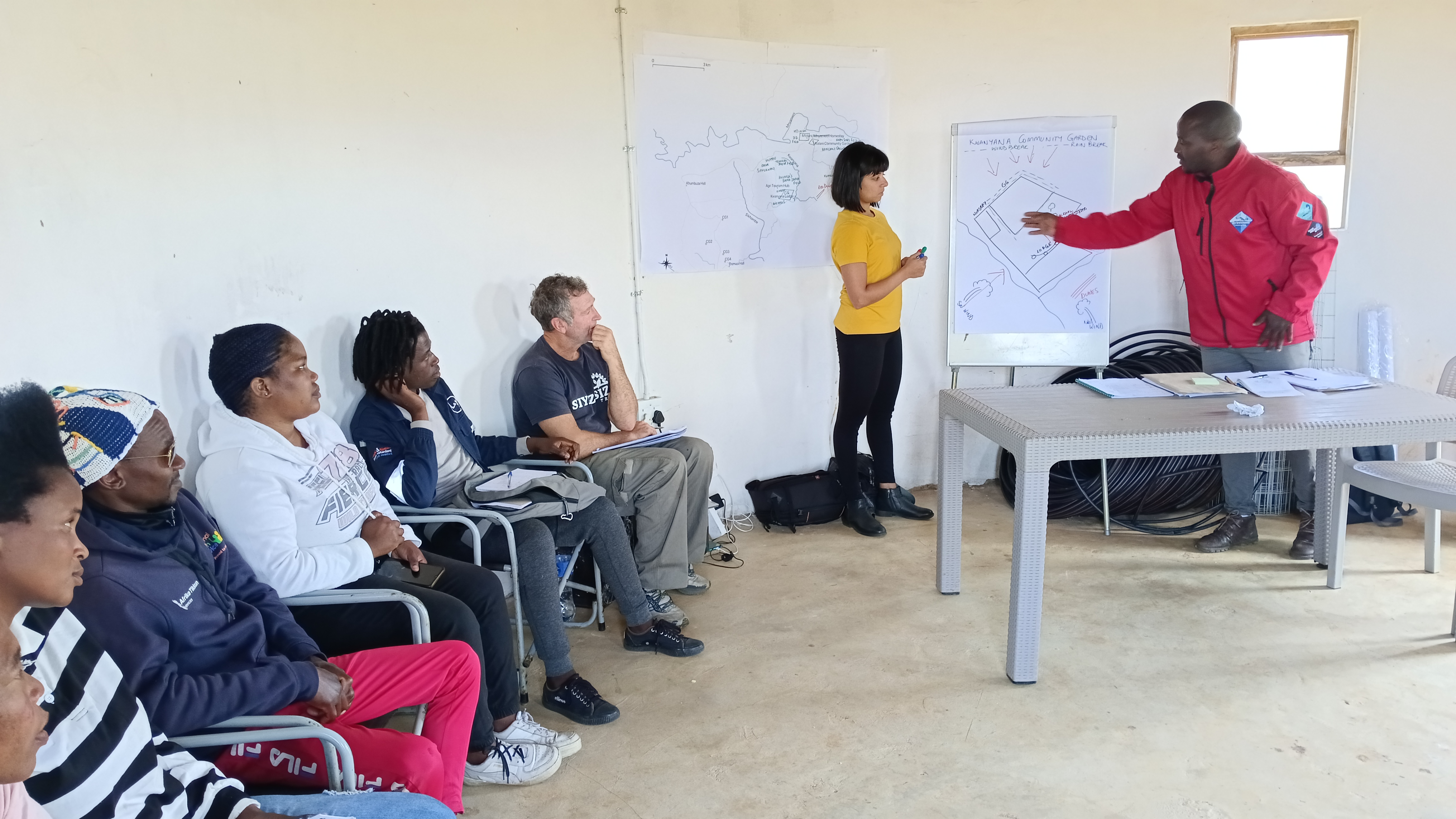
The workshop participants voluntarily pledged to take responsibility to prepare the ground for planting (talking to people, erecting fences) and for the survival of the plants (watering, protection) beyond the lifetime of the one-year project. In keeping with customs, workshops were opened and closed with an address by the local headman, and prayers for the well-being of all. Most workshops also included a session of song and dance in the local Mpondo tradition – what a wonderful way to celebrate coming together for a shared cause!
Following the planning workshops, we placed an order for about 2700 indigenous plants belonging to 32 species, sourced expeditiously by the Indigenous Nursery from various regional nurseries. We formed a human chain to inspect the plants for their health, keep count of species and numbers, and load a big trailer truck with all of these plants, for a journey to Amadiba. Then we made our way there, along roads the consistency of molten chocolate under the onslaught of rain. The truck offloaded at a central site, where a small army of amaMpondo people and project personnel gathered to distribute plants allocated to the village sites. We sent the plants to 22 sites including schools, homesteads, community halls and food gardens, and even some sites facing soil erosion by wind and water.
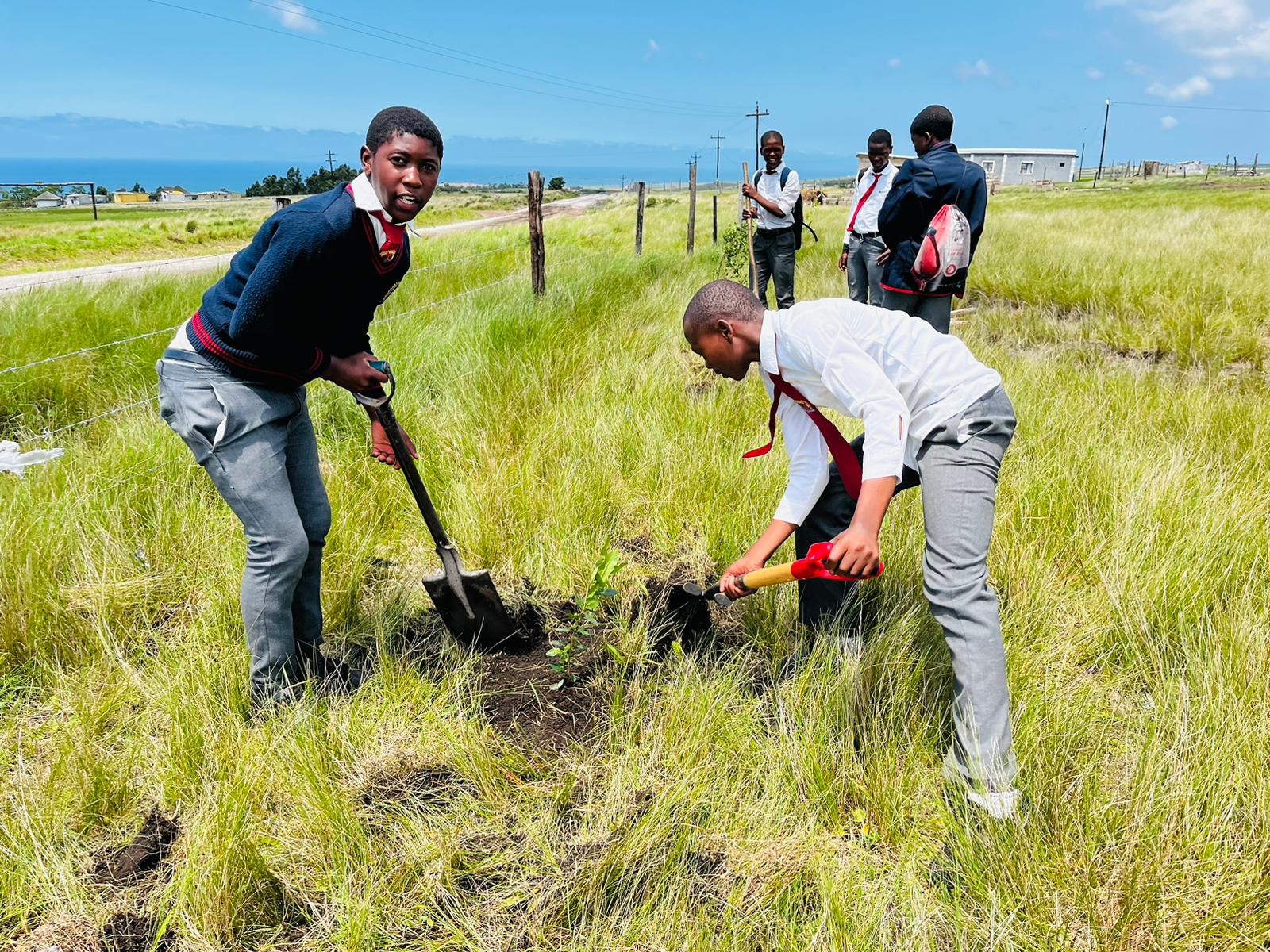
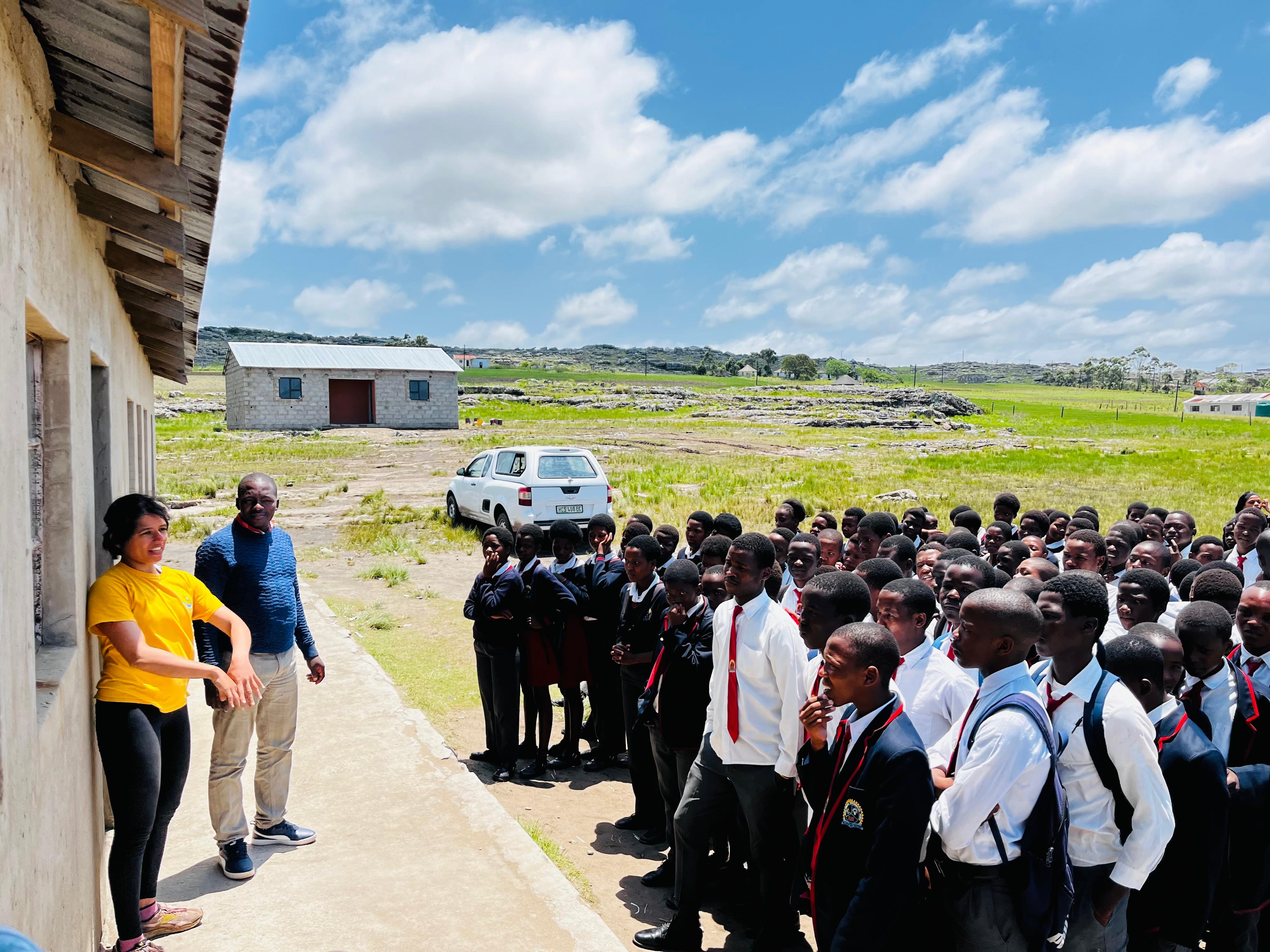
The next day, we started planting the delivered plants at the sites, with teams of local residents present to consult and coordinate with. We checked with the people to ensure that what we had planned on paper made sense on the ground. When planting around schools, we talked to the students about why were doing this, what they could expect, and how they could be part of this project going forward. For the sake of monitoring, we marked one plant of each species planted at each site, and measured its height and root collar diameter, and planned to revisit these marked plants periodically in the future.
Key outcomes
The amaMpondo communities were greatly enthusiastic and involved in the design and planting of indigenous agroforestry stands. The workshops surfaced indigenous knowledge on plant use and land use traditions, as well as recent changes. There was a commitment to reconnect and renew these traditions, by bringing the indigenous plant species back into the landscape and closer to people, especially in schools and community areas, where people would interface with them more consistently.
Members of the community now track the survival of all plants, and growth of the plants marked for long-term monitoring. These measurements give the amaMpondo people a quantitative yardstick to measure the success and contribution of the project to Amadiba. Not much recent information exists on the survival and growth rates of these indigenous species in scientific literature. So these measurements can also fill a knowledge gap on the feasibility of indigenous agroforestry, with Amadiba as a field site.
For me, this journey traces the arc of an idea from research concept to living example, weaving scientific and indigenous knowledge, and participatory action. It embodies the spirit of regenerative research that gives back to people and creates opportunities for livelihoods and learning. It has been my honour to work with the amaMpondo people and witness their spiritual connection with their land.
Next steps
Over the course of the project, the amaMpondo people and project team reconvened to discuss successes and challenges, troubleshooting problems like grazing and grass crowding around the indigenous agroforestry stands. We developed a catalogue and a plant care manual with general guidelines on how to protect, propagate, and harvest these indigenous plants sustainably. At the time of project completion, over three quarters of the plants had been detected as surviving. The amaMpondo people will continue to care for the plants, enjoy their shade, fruits, and other benefits, and propagate them for use around Amadiba and beyond.
As a researcher, I would hope to generate insights on long-term survival and growth trends for these indigenous species. I would also like to observe the yields from these indigenous agroforestry groves, and the social-ecological dynamics surrounding them. I continue to explore opportunities for further research and development in Amadiba.
More information can be found at the project repository https://zenodo.org/communities/amadiba/records?q=&l=list&p=1&s=10&sort=newest
Discover more posts from our Fieldwork Diaries blog series here.








