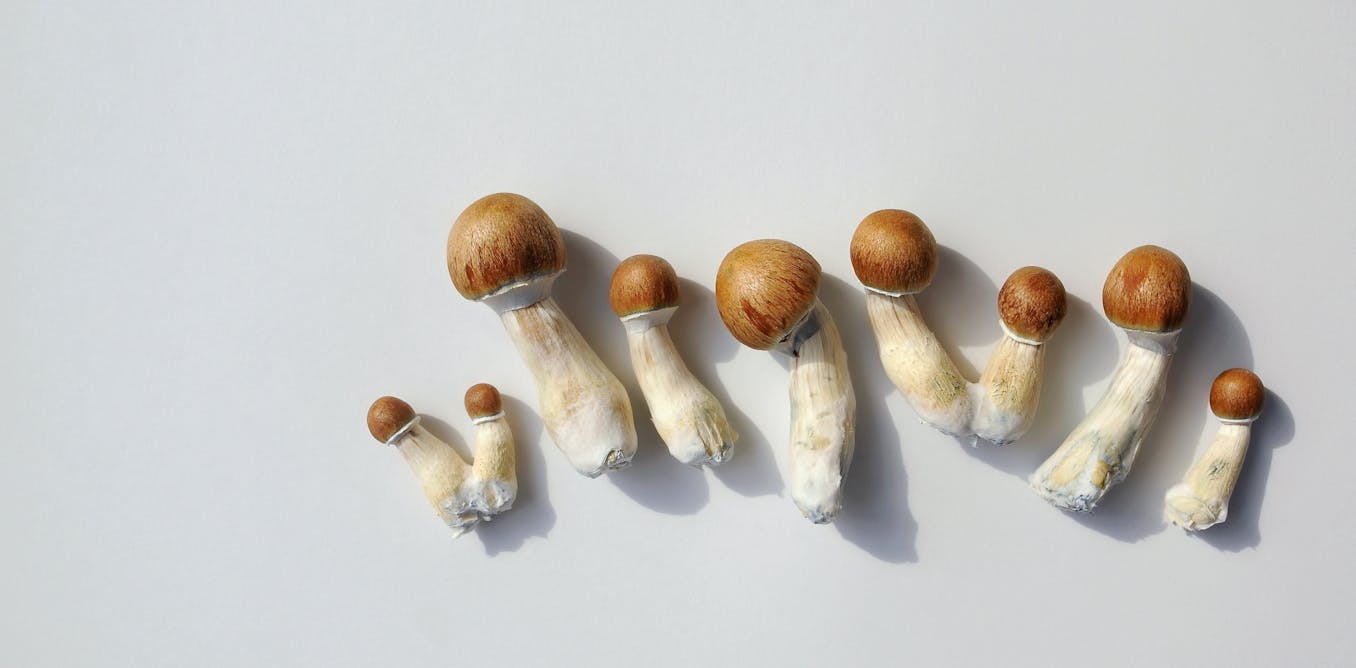
A single dose of psilocybin eased symptoms of depression within days, with benefits lasting for more than three months compared to placebo, our new study has found.
The study, published in the journal JAMA Network Open involved 35 people with recurring depression. We randomly assigned participants to either receive psilocybin or a placebo. The placebo (vitamin B3) mimicked some physical effects of the psychedelic, such as temporary skin flushing.
Both groups also received psychological support before, during and after dosing.
Although several studies have explored psilocybin for depression, many have focused on people whose symptoms had not responded to other treatments (so-called “treatment-resistant depression”). We wanted to test whether the drug could also help people with more common forms of depression.
At just eight days, those who received psilocybin showed noticeable improvements in mood. And by the end of the six-week follow-up period, more than half of participants in the psilocybin group no longer met the criteria for depression. In the placebo group, only one person showed the same level of improvement.
The treatment was generally well tolerated, although two participants experienced anxiety that lasted for several weeks.
We followed participants for a full year to understand how long the benefits might last. The benefits in the psilocybin group lasted for just over three months on self-rated outcomes. After that, the gap between the two groups began to narrow as the placebo group also improved. This is not unusual. Depression often comes in waves, and symptoms can ease over time without treatment.
Just over a third of participants in both groups started antidepressant medication in the follow-up period, on average about four months after the start of the trial.
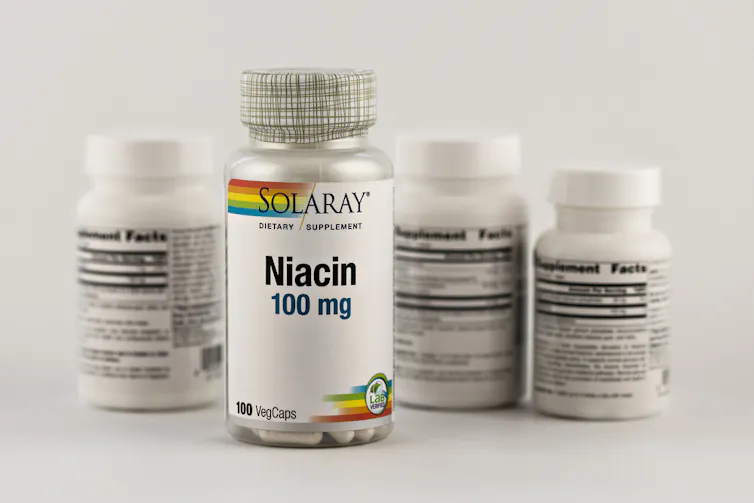
photo gonzo/Shutterstock.com
The problem of blinding
One major challenge was “blinding” – preventing participants from knowing whether they had received psilocybin or a placebo. Despite using identical capsules and an active placebo, almost all participants correctly guessed which treatment they had received, largely because psilocybin produces a distinctive and unmistakable altered state.
That matters because expectations can shape outcomes. For participants who received psilocybin, the strong effects on the dosing day may have amplified hopes that the treatment would help. For those who received a placebo and felt no such effects, expectations may instead have turned into disappointment. Neither response is neutral when people later report their mood and symptoms.
People generally feel somewhat better simply from taking part in a trial, even if they are in the placebo group. They receive attention, support and regular follow-up. But previous research suggests that people given a placebo in psilocybin studies often improve less than people given a placebo in traditional antidepressant trials. We saw a similar pattern.
If placebo groups in psilocybin trials do not improve in the usual way, the gap between psilocybin and placebo can become larger, making the drug’s effect look bigger than it really is.
Taken together, our findings add to evidence that psilocybin may offer a fast-acting and relatively long-lasting treatment for depression, including for people with more common forms of the condition, not only those with treatment-resistant depression. These are qualities that could make a real difference for patients.
At the same time, they underline a central challenge for the field: how to disentangle the drug’s biological effects from the powerful role of expectation and experience. Answering that question will be crucial for understanding where psilocybin fits into future mental health care.

The trial was funded by the Swedish Research Council and the Foundation Norrsken Mind.
Johan Lundberg receives funding from The Swedish Research Council, The Swedish Brain Foundation, The Swedish Cancer Society and Norrsken Mind. Dr Lundberg reported receiving a personal fee from Jansen Cilag outside the submitted work.