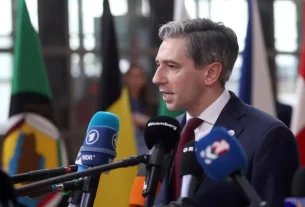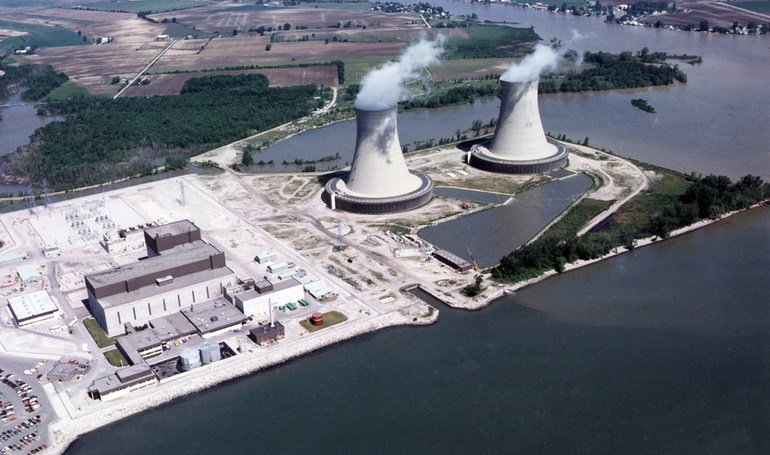
“Nuclear energy is at the intersection of energy demands, technological innovation, and the evolving security landscape. This creates a huge opportunity,” says Shota Kamishima, Senior Coordination Officer at the International Atomic Energy Agency (IAEA).
Sustainable supply
“When developed properly, nuclear energy can support sustainable development, enhance energy resilience, and even serve as a platform for regional cooperation.”
The revival of this power source, which took a hit after the 2011 Fukushima nuclear accident, was demonstrated at the 2023 UN Climate Change Conference, where nuclear energy was officially recognized as a low-emission technology whose promotion must be accelerated.
33 countries supported the goal of tripling their nuclear power capacity by 2050, including the United Arab Emirates, where the Barakah nuclear power plant meets about 25 per cent of the nation’s domestic energy needs.
Currently, 416 nuclear reactors in 31 countries provide nearly 10 per cent of the world’s electricity. Another 63 reactors are under construction, and about 60 countries are considering or planning to introduce nuclear power, including small modular reactors.
Egypt is bullish about nuclear power as part of its comprehensive energy strategy.
Alongside renewable energy projects, including the Benban Solar Park and the Gulf of Suez Wind Farm, the country is close to completing the El Dabaa nuclear power plant, which will have a total installed capacity of 4,800 megawatts.
The Egyptian authorities believe that this will help them to build a stable and efficient system that also enables them to sell clean electricity abroad.
“Energy demand in the Middle East and North Africa region has tripled from 2000 to 2024 and will continue to rise, driven by AI and economic transformation,” says Almuntaser Albalawi, a researcher at the United Nations Institute for Disarmament Research (UNIDIR). “The region has a unique need for desalination and cooling, making the reliance on stable energy sources even more urgent.”
Inside the cooling tower at the Chernobyl Nuclear Power Plant in northern Ukraine.
Security, climate and long-term uncertainty
Despite all of these demands, the geopolitical environment in the Middle East raises questions about the safety of developing and operating nuclear energy in the region.
“When we talk about a nuclear power plant, a reasonable unit of time should be its life cycle – about 75 years from construction to decommissioning,” argues Professor Zia Mian, senior research scholar at Princeton University and co-director of the Science and Global Security Program.
“All of these discussions must revolve around a central question: What has the Middle East been like in the past 75 years?
“How do we expect it to develop in the future?” he asks, pointing to the Arab Israeli wars of 1967 and 1973, the Iran-Iraq war from 1980 to 1988, then the US-Iraq wars followed by the Syrian civil war.
“Are you willing to bet on that the next 75 years will be fundamentally different from the past 75 years?”
In addition to safety and political considerations, there are also concerns that the climate and environment for the development of nuclear energy are unsuitable in the Middle East.
According to the World Meteorological Organization’s (WMO) first State of the Arab Climate Report released in 2024, the Middle East is warming twice as fast as the global average.
By the end of this century, temperatures could rise by five degrees Celsius, directly affecting the operation of nuclear power plants.
“In other words,” says Professor Mian, the Middle East will be virtually uninhabitable for people to live outdoors.
“Also, the heat exchange needs of nuclear power plants are extremely large, and their cooling water needs are also extremely large. Every summer, for example, when people need electricity most for cooling, France has to shut down nuclear power plants because the outside temperature is too high.”
A flying carpet?
According to Professor Mian, the fastest and cheapest way to generate electricity is renewables. “Instead of waiting 10 years for nuclear power, you can get a decade of solar or wind power at a fraction of the cost. Therefore, in terms of climate benefits for every dollar spent, the two are simply not comparable.
“I have seen many narratives of the so-called ‘nuclear revival’,” he says. “This is actually an old idea. Every generation tries to sell the same flying carpet. That kind of technological determinism of ‘buy my reactor, tomorrow is the golden age’ is the worst. The world doesn’t work that way. Politics, people, systems and history are the key.”