The African Court on Human and Peoples’ Rights is poised to issue an advisory opinion on states’ human rights obligations in the climate crisis. This is an opportunity to strengthen protections for people displaced by climate change and to call for a rights-respecting approach.
A petition filed in May 2025 by the Pan African Lawyers Union and the African Climate Platform asked the court to interpret states’ obligations under the African Charter on Human and Peoples’ Rights in light of climate change. This comes amid a surge in such legal clarifications by international and regional tribunals.
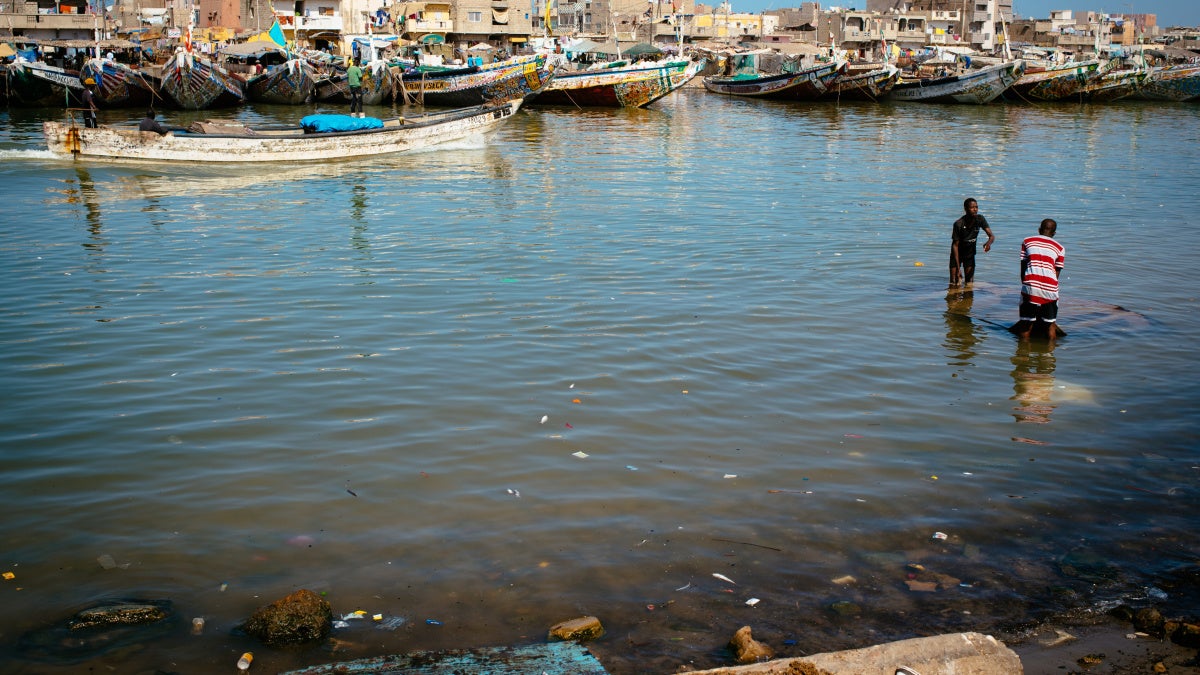
Human Rights Watch submitted an amicus brief to the court drawing on our August 2025 report, “‘Waiting for God’: Flood Displacement and Planned Relocation of Fisherfolk in Saint-Louis, Senegal.” Coastal flooding in 2015 and 2016 displaced fishing families from the Langue de Barbarie peninsula in Saint-Louis to Khar Yalla, a site that government and World Bank officials acknowledge is unsuitable for permanent habitation.
We found that nearly a decade after the floods, families experienced severe overcrowding, most houses lacked electricity, there was no waste collection, and seasonal flooding sent septic water into homes. These families are excluded from a World Bank-funded planned relocation of others displaced by coastal floods, and are desperate for the kind of protections this advisory opinion could make clear are state obligations.
Based on data from the Internal Displacement Monitoring Center, the number of people internally displaced by floods and other natural hazards has risen nearly sixfold across African continent in the last 15 years, to 6.3 million in 2023. Planned relocations are already happening across Africa with 39 cases identified in a global mapping.
The 2025 decisions by the International Court of Justice and the Inter-American Court of Human Rights cemented the notion that climate policy must respect human rights, be guided by the best available science, and reflect a state’s highest level of ambition. But no international tribunal has comprehensively clarified how national policies can protect the rights of climate displaced communities awaiting planned relocations.
The court should address this critical gap for communities like Khar Yalla by clarifying that states parties to the African Charter have binding obligations to protect people displaced by climate change including through rights-respecting planned relocation as a last resort.