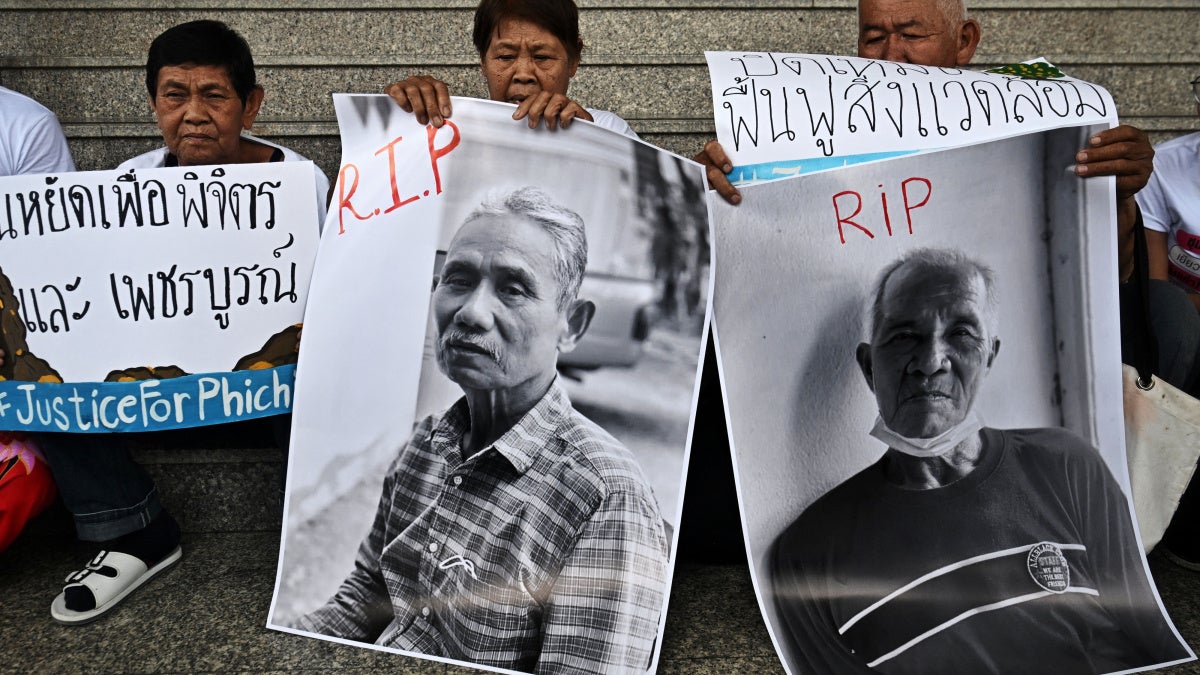
In a landmark class action lawsuit in Thailand, a court held a multinational corporation accountable for contamination from a gold mine and recognized the right of villagers in affected areas to effective remedies.
On March 24, the Bangkok Civil Court ordered Akara Resources, a subsidiary of Australia-based Kingsgate Consolidated Ltd., to pay up to THB200,000 (US$6,250) per person to 382 villagers affected by land and water contamination from the Chatree Gold Mine. The mine operator was also ordered to clean up the affected areas and take other measures.
The Chatree mine, about 280 kilometers north of Bangkok, is Thailand’s largest gold mine.
Blood tests conducted on hundreds of villagers living near the mine in 2014 and 2015 found that the majority of children and adults tested had unsafe levels of arsenic, manganese, and cyanide. These common byproducts of gold-mining operations can profoundly affect the health of those exposed. Akara Resources did not endorse the test results.
In 2017, Thailand’s then-military junta ordered gold-mining operations temporarily suspended across the country. Kingsgate subsequently began legal proceedings, alleging that the mine’s closure violated the Thailand-Australia Free Trade Agreement. In March 2023, Thai authorities allowed the Chatree mine to resume operations, and in November 2025, the Thai government and Kingsgate agreed to end the legal dispute.
Akara Resources had initially contested the class action and lost. Following the court’s decision this week, the company reportedly said it would consult its team “before taking any further action.” Promptly taking the steps ordered in the judgment and paying compensation without delay would best serve the harmed villagers.
Consistent with its human rights responsibilities, Kingsgate should disclose detailed summaries of the outcome of the case that led to the reopening of Chatree mine. Kingsgate should ensure that its resumed operations respect the rights of affected communities, including their right to a healthy environment. Villagers continue to express concerns about water quality and potential contamination of their crops.
Australia should heed the recommendations of the 2024 inquiry by the Joint Standing Committee on Trade and Investment Growth that called on the “Australian Government [to] seek to include human rights, labour and environmental chapters in its trade agreements.”
The ruling is a strong signal to other companies operating in Thailand that local communities can seek legal remedies through Thai courts for harms related to their business operations.