A meningitis outbreak in Kent has been caused by a strain of bacteria that appears to be genetically distinct from anything scientists have seen before. Health officials are working urgently to understand what that means.
As of March 23, 23 young people have been confirmed as cases or considered probable cases of invasive meningococcal disease linked to the outbreak. Two have died. The majority attended a nightclub in Canterbury called Club Chemistry in the first week of March, and almost all are students or young people in education, with an average age of 19.
The strain belongs to a well-known family of meningococcal bacteria called clonal complex 41/44, which accounts for around 40% of invasive meningococcal disease in the UK. Within that family, it sits in a subgroup that has been circulating in England since 2020. But when scientists at the UK Health Security Agency sequenced its genome – essentially reading its genetic code – they found it was slightly different from its closest known relatives, with around 80 genetic differences between it and the most similar strains on record.
One differences is in the pilX gene, which affects structures on the surface of the bacterium that are known to play a role in how infectious it is. Scientists are cautious about reading too much into this at this stage – genetic differences do not automatically translate into changes in disease-causing properties – but it is one of several features that need to be investigated further.
What does this mean in practice? Officials are not yet sure why this outbreak is larger and spreading faster than usual. Three possible explanations are on the table. The bacteria may be more transmissible or virulent than usual. The population of young people affected may have lower immunity than expected. Or social and environmental factors, such as crowded venues, close contact and shared drinks, may have driven the spread. Most likely, say officials, it is a combination of all three.
The good news is that the strain responds to standard antibiotics. Tests have confirmed it is sensitive to penicillin, ciprofloxacin, rifampicin and cefotaxime, the drugs routinely used to treat and prevent meningococcal disease. Anyone who has been in close contact with a confirmed case has been offered preventative antibiotics.
Sonis Photography/Shutterstock.com
The vaccine question
There are two vaccines in the UK that protect against MenB – the strain causing this outbreak – called Bexsero and Trumenba. But the situation around vaccines is not straightforward. Both work by triggering the immune system to recognise proteins on the surface of the bacteria.
Testing suggests the outbreak strain is likely to be covered by at least one component of Bexsero, which is encouraging. However, a full assessment is still underway, and none of the people who fell ill would have been eligible for MenB vaccination through the standard childhood programme, which was introduced in 2015 and given to babies at eight weeks old.
Read more:
Kent’s meningitis outbreak was years in the making – here’s why
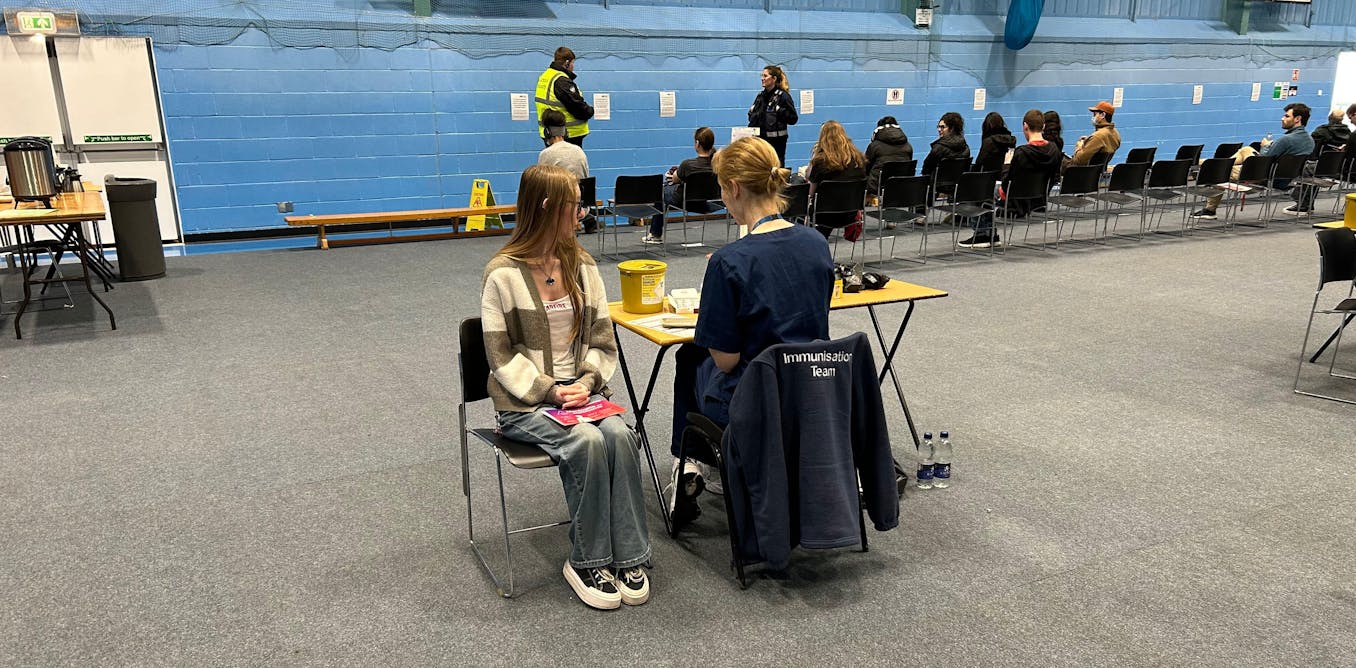
Vaccination has been offered to students and close contacts linked to the outbreak, and health officials say this remains an important protective measure.
The outbreak is currently classified at its lowest active level – a known cluster with cases directly linked to one another, all in Kent, with no sign of wider spread across the country. However, officials consider it likely that a few cases connected to the cluster but outside Kent will emerge in the coming weeks, as some of those who attended Club Chemistry may have returned to other parts of the country.
The chance of this outbreak spreading nationwide is currently considered remote. But officials are urging increased vigilance. Risk assessments will be updated as new evidence comes in.
Several studies are now underway. Researchers are examining blood samples from young people to understand how much natural immunity exists against this particular strain. A separate study will look in detail at what happened at Club Chemistry on the nights of 5 to 7 March, in an effort to understand exactly how transmission occurred.

Mark Fielder has received funding from JPIAMT/MRC