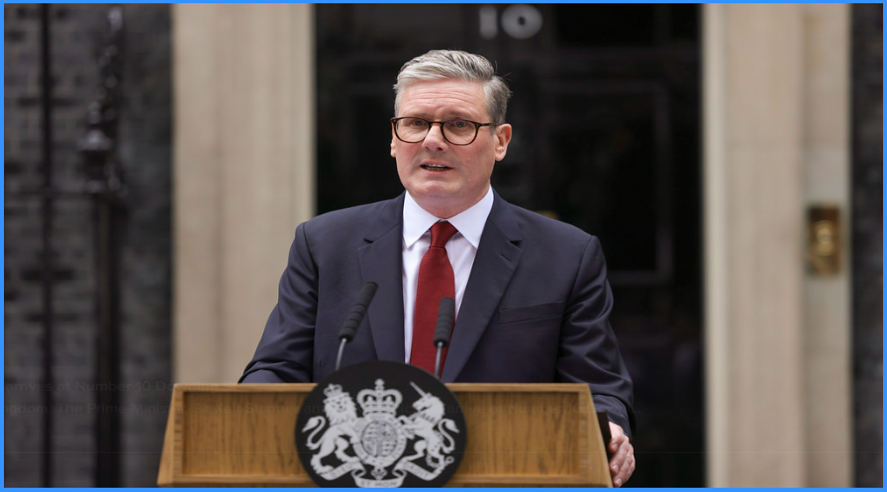
LONDON — Prime Minister Keir Starmer made an urgent appeal for “calm discussion” on Monday, January 19, 2026, as he sought to de-escalate a rapidly intensifying trade row with the United States.2 Speaking from 10 Downing Street, Starmer addressed the nation following President Donald Trump’s weekend ultimatum: a wave of punitive tariffs on European allies unless a deal is reached for the U.S. to purchase Greenland.3+1
While labeling the tariff threat “completely wrong,” Starmer pointedly ruled out immediate retaliatory levies, warning that a transatlantic trade war is “in no one’s interest” and would only serve to undermine the core of the NATO alliance.4
The UK Strategy: Principled Pragmatism
The Prime Minister’s address signaled a delicate balancing act. He reaffirmed the UK’s “non-negotiable” stance on Greenland’s sovereignty while simultaneously attempting to salvage the “Special Relationship” that has been a pillar of his foreign policy.5
- Sovereignty First: Starmer reiterated that any decision regarding the future of Greenland belongs solely to the people of the island and the Kingdom of Denmark.6
- Rejecting Retaliation: Unlike some European counterparts who have called for the activation of the EU’s “Anti-Coercion Instrument,” Starmer argued that “throwing away” decades of cooperation on intelligence and defense would be a strategic error.
- Unified European Front: Despite his conciliatory tone toward Washington, Starmer joined seven other nations—including France, Germany, and Norway—in a joint statement warning that tariff threats risk a “dangerous downward spiral.”7
Economic Stakes: The 10% Shadow
The U.S. proposal would see a 10% import tax applied to all UK goods starting February 1, 2026, rising to 25% by June if the Greenland impasse continues.8 For the UK economy, which had recently returned to a period of modest growth, the implications are severe.
| Industry | Potential Annual Loss | Strategic Vulnerability |
| Automotive | £2.4 Billion | Risk to high-value electric vehicle exports. |
| Scotch Whisky | £800 Million | Vulnerable to targeted “luxury” retaliatory duties. |
| Aerospace | £1.2 Billion | Disruptions to critical transatlantic supply chains. |
Defense and Arctic Security
At the heart of the dispute is President Trump’s assertion that European troop deployments to Greenland for the “Arctic Endurance” exercises are a “national security concern.”9 Starmer refuted this, stating that the deployments are symbolic and essential for monitoring Russian and Chinese activity in the High North.
“Alliances endure because they are built on respect and partnership, not pressure,” Starmer noted.10 He emphasized that rather than annexing territory, the U.S. and its allies should focus on strengthening existing NATO frameworks in the Arctic.
The Bottom Line
Keir Starmer’s 2026 “Downing Street Doctrine” rests on the hope that quiet diplomacy can resolve what public threats cannot.11 By acting as a “bridge” between the U.S. and a wary Europe, Starmer is betting that a pragmatic, fact-based dialogue will eventually lead to a White House climbdown. However, with the February 1 tariff deadline looming, the window for a “calm discussion” is narrowing.
Sir Keir Starmer Flickr Picture by Kirsty O’Connor