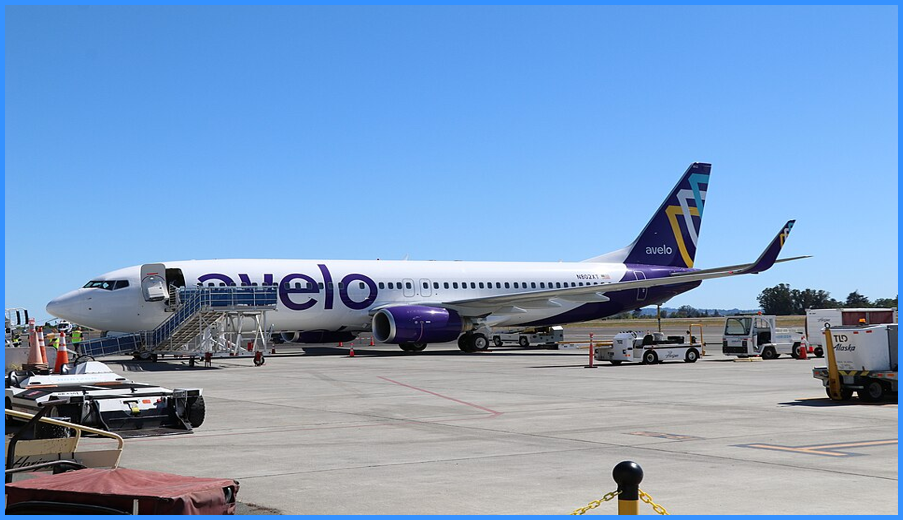
MESA, ARIZ. — In a significant strategic pivot, Avelo Airlines has announced it will terminate its controversial involvement in U.S. government deportation flights by late January 2026. The Texas-based carrier, which had been a key subcontractor for U.S. Immigration and Customs Enforcement (ICE) air operations, confirmed it will permanently close its operational base at Phoenix-Mesa Gateway Airport on January 27, 2026.
The decision concludes a nine-month foray into federal chartering that began in May 2025. Despite initial projections that the government contract would provide a stable revenue stream, Avelo executives now admit the program’s complexity and indirect costs outweighed its financial benefits.
The Decision: Complexity Over Compensation
In an internal memo to employees, Avelo CEO Andrew Levy acknowledged that while the program offered “short-term benefits,” it ultimately failed to provide the consistent revenue necessary to justify the operational strain.
- Financial Volatility: The airline cited “unpredictable and inconsistent revenue” as the primary driver for the exit.
- Operational Burden: The specialized nature of deportation charters—often involving rapid rescheduling and strict security protocols—created significant logistical friction for the budget carrier.
- Strategic Realignment: Avelo is currently restructuring its network to focus on high-demand leisure markets, including the opening of a new base in Dallas-McKinney later this year.
Navigating a “Political Crossfire”
Avelo’s involvement with the Department of Homeland Security (DHS) had made it a focal point for intense public scrutiny and nationwide protests. Activists in cities like New Haven, Connecticut, and Wilmington, Delaware, led boycott campaigns and pressured local authorities to cut ties with the airline.
| Concern | Impact on Avelo Operations |
| Public Backlash | Coordinated boycotts and protests at commercial hubs like Tweed-New Haven. |
| Reputational Risk | Internal emails revealed the CEO’s concern over being at the “center of a political controversy.” |
| Labor Friction | Flight attendant unions raised concerns regarding safety training and the “sensitive” nature of the missions. |
Despite the controversy, Avelo reported a record 2.6 million scheduled passengers in 2025—an 11% year-over-year increase—suggesting that while the ICE contract was a public relations challenge, it did not significantly erode the airline’s core commercial growth.
Broader Impact on ICE “Mass Deportations”
Avelo’s exit comes at a critical time for federal immigration enforcement. The airline had utilized three Boeing 737-800 aircraft for these missions, primarily flying deportees to Mexico.
The withdrawal of a commercial partner like Avelo leaves the government seeking “lift capacity” just as the administration seeks to expand its removal operations. While other subcontractors like CSI Aviation and GlobalX continue to support the agency, the loss of the Mesa-based Avelo fleet represents a notable logistical hurdle for the “ICE Air” network.
Avelo Airlines Flickr Picture by Timothy Powaleny