Shortlisted for the 2025 Southwood Prize
About the research
Overview
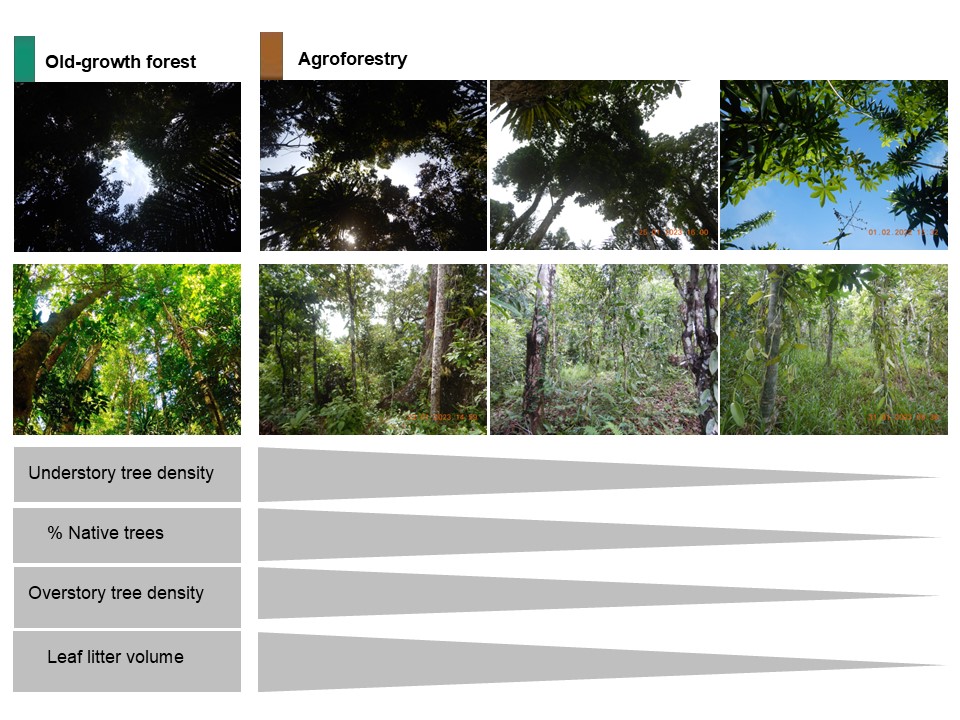
Agricultural expansion is the main driver of forest loss in many tropical regions including Madagascar, leading to increasingly fragmented habitats and forcing many species to persist in human-dominated landscapes. This creates a major challenge: how can we conserve biodiversity while supporting local livelihoods? Agroforestry is widely promoted as a solution to reconcile conservation and agriculture, but its effectiveness for biodiversity remains poorly understood. Using amphibians, highly sensitive indicators of environmental change, we asked whether agroforestry can help bridge this gap by comparing amphibian communities in old-growth forests and agroforests, and identifying management practices that enhance the agroforests’ conservation value.
Surprises and challenges
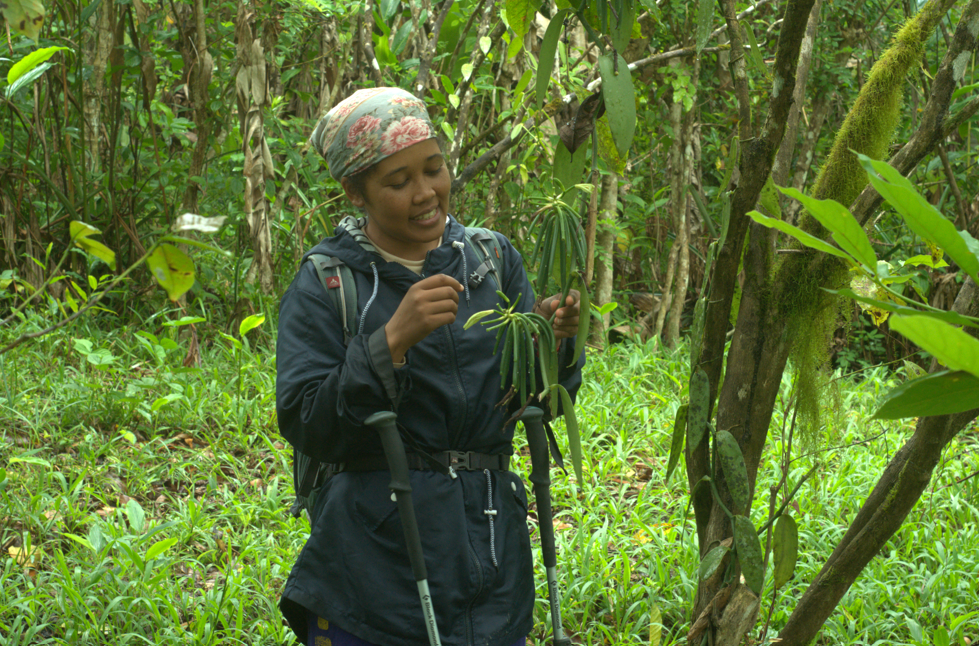
The biggest challenge was trust. We worked in agroforests where farmers grow highly valuable vanilla, meaning that farmers are extremely protective and some initially feared we were there to steal or damage their crops. We held meetings with local leaders and landowners, explained the project clearly, and sometimes brought landowners with us during surveys.
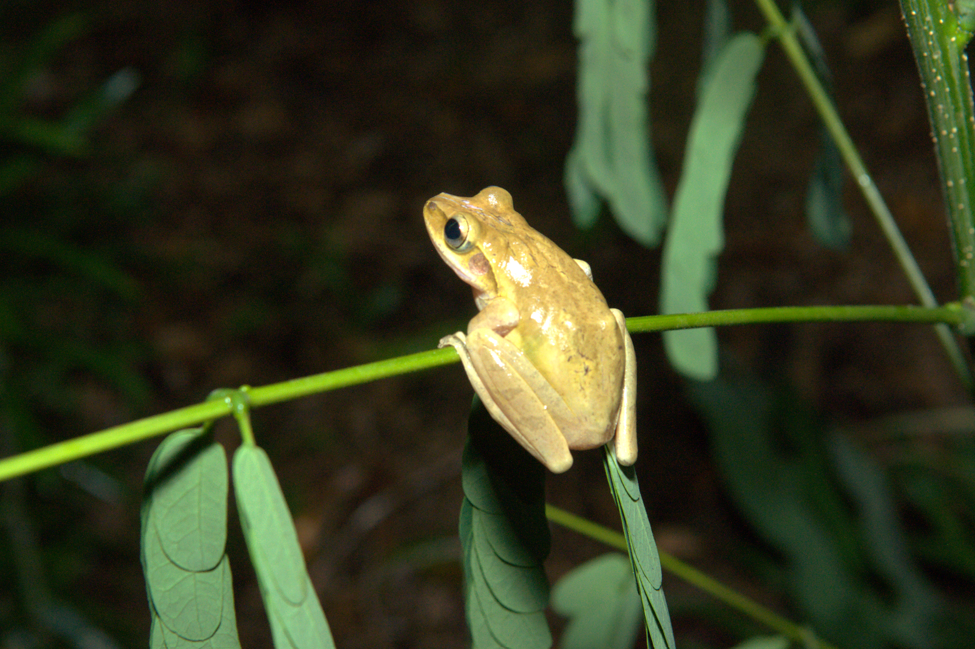
Scientifically, I was surprised by how many frogs we found in agroforests. Some nights, we collected so many individuals that we had to work until dawn, carefully identifying each species before releasing them exactly where we had found them. These moments were exhausting but revealed unexpected biodiversity in landscapes shaped by people.
Next steps and broader implications
The next step is moving beyond “how many species” to understanding which ecological roles persist in human-modified landscapes. Species can disappear functionally long before they go extinct, so I am investigating whether agroforests maintain high functional diversity, and which environmental factors filter or favour key traits. I am also exploring whether amphibian populations in these landscapes remain genetically viable, whether they are connected and maintain genetic diversity across fragmented habitats. In highly dynamic landscapes with forests, agroforests, and agricultural land, this is essential to understand long-term persistence.
Our results highlight that old-growth forests remain irreplaceable, but agroforests can still play a critical role in conservation if managed appropriately. Rather than promoting agroforestry as a substitute for forests, our work shows how improving habitat complexity, especially maintaining large native trees and leaf litter, can enhance their conservation value. This provides clear guidance for policy and practice, including strengthening biodiversity criteria in vanilla certification, supporting farmer training, and offering economic incentives. By promoting tree retention and restoring structural complexity, agroforests can create habitats for biodiversity while reducing pressure for further forest conversion.
About the author
Current position
I’m in the final year of my PhD at the University of Zurich and am currently looking for postdoctoral opportunities in ecology and conservation.
Getting involved in ecology
I grew up in Madagascar surrounded by extraordinary biodiversity, and time in nature has always made me feel grounded, physically and spiritually. Studying conservation biology felt like a way to protect what gives me strength. Over time, ecology became the deeper “why”: fieldwork in remote forests raises questions about how species interact with their environment and how these relationships change under human pressure. I enjoy fieldwork most: my office is the rainforest, hiking through the jungle, doing night surveys with a headlamp on, rain falling, and frogs calling. These moments inspire my research and motivate me to contribute to conservation.
Current research focus
This paper forms the first chapter of my PhD. I am now working on a second chapter that explores how land-use change shapes amphibian functional diversity and which traits allow species to persist in agroforestry systems. My third chapter focuses on population genetic connectivity and long-term viability, investigating whether amphibian populations in fragmented landscapes remain genetically connected and resilient. Together, these studies aim to better understand not only how many species persist in human-modified landscapes, but also their ecological roles and long-term survival.
Advice for fellow ecologists
Never forget that conservation is about people as much as biodiversity. Human activities drive environmental change, but people are not only the problem, but also the solution. Work across disciplines, collaborate widely, and listen to local communities; they hold essential knowledge. Interdisciplinary approaches strengthen the evidence for action. It is normal to feel fear, doubt, or uncertainty during research, especially in challenging field conditions. That does not mean you are failing; it means you are discovering. Stay curious, ask for help, adapt when needed, and keep learning and discovering. Science is a journey, and every step matters.
Read the full article ‘Lurking in the leaves: How large native trees and leaf litter promote amphibian diversity in Malagasy agroforests’ in Journal of Applied Ecology.
Find the other early career researchers and their articles that have been shortlisted for the 2025 Southwood Prize here!