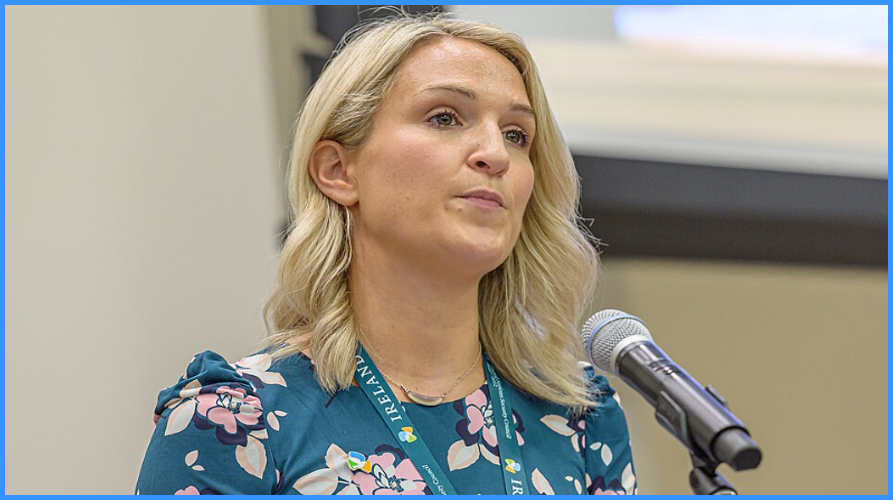
DUBLIN — In a move signaling a potential turning point for Middle Eastern stability, Minister for Foreign Affairs and Trade Helen McEntee has formally welcomed the commencement of Phase Two of the Gaza Peace Plan.1 Announcing the development on Friday, January 16, 2026, McEntee described the shift as a “long-awaited moment of hope” following years of devastating conflict.2
The transition to Phase Two follows a high-stakes regional tour by the Minister, during which she held direct consultations with community leaders and diplomatic partners in Egypt and Jordan.3 The plan, largely brokered by the United States with critical mediation from Egypt, Türkiye, and Qatar, now shifts from a fragile ceasefire toward a structured political and administrative transition.4+1
The Architecture of Phase Two
While Phase One focused on the cessation of hostilities and initial hostage-prisoner exchanges, Phase Two introduces a transitional governance structure intended to replace years of conflict with civilian administration.5
- Technocratic Governance: The establishment of a 15-member Palestinian National Committee for the Administration of Gaza (NCAG), led by civil engineer Ali Abdel Hamid Shaath.6
- Administrative Oversight: The committee will operate under the supervision of a “Board of Peace,” chaired by U.S. President Donald Trump and composed of international heads of state.7
- Security & Demilitarization: This phase mandates the full demilitarization of the enclave, including the disarmament of unauthorized personnel and the training of a vetted Palestinian police force.8
- Reconstruction Planning: Initiatives are being drafted for a $50 billion reconstruction effort, though funding commitments from the international community remain in their infancy.9
Humanitarian Crisis Remains “Fragile”
Despite the diplomatic progress, Minister McEntee issued a stark warning regarding the living conditions on the ground.10 “The humanitarian situation remains extremely fragile,” she stated, noting that current aid flows are failing to meet the basic needs of Gaza’s two million residents.11+1
To address these systemic failings, Ireland has committed €42 million in assistance for 2026—a significant increase from previous years.12 This package includes:
- €20 million in core funding for UNRWA to maintain education and health services.13
- €2 million for the Red Crescent Societies to support emergency medical responses.14
- Winterization Support: Direct aid for the nearly 800,000 displaced people currently facing severe flooding and winter weather in makeshift camps.
| Funding Category | 2026 Commitment | Recipient |
| Core Refugee Support | €20 Million | UNRWA |
| Emergency Medical | €2 Million | Red Crescent |
| Flexible Response | €20 Million | Various UN Partners |
A Sovereign Path Forward
The Irish government’s stance remains rooted in the Two-State Solution, with McEntee emphasizing that the peace plan must be implemented in a manner that respects the Palestinian people’s right to self-governance.15
“Ireland will continue to play its part,” the Minister concluded, calling on all parties to negotiate in good faith to ensure that the Comprehensive Plan moves from a “declaratory move” to a “just and lasting peace.”