SAN DIEGO, CA — Semiconductor titan Qualcomm has announced a massive $20 billion share repurchase program, signaling a robust shift in its capital allocation strategy as the company aggressively pivots beyond its traditional smartphone stronghold. Announced on Wednesday, March 18, 2026, the buyback initiative is coupled with a significant hike in the company’s quarterly cash dividend, marking a high-stakes play to bolster shareholder value amid a transformative era for the U.S. chip giant.
The move comes as Qualcomm seeks to redefine itself not merely as a mobile modem provider, but as a diversified powerhouse in Automotive AI and Edge Computing.
The $20 Billion Bet: Strengthening the Balance Sheet
The new repurchase authorization replaces the remaining balance of the company’s previous program, providing the Board with a fresh mandate to reduce share count and increase earnings per share (EPS).
- Aggressive Buybacks: The $20 billion commitment represents one of the largest capital return programs in the semiconductor sector this year, designed to offset stock-based compensation dilution and signal that management views the current share price as undervalued.
- Dividend Growth: Accompanying the buyback is a quarterly cash dividend increase, continuing Qualcomm’s decade-long streak of annual payout growth.
- Liquidity Position: Despite the massive outlay, Qualcomm CFO Akash Palkhiwala confirmed that the company maintains a “fortress balance sheet,” supported by strong free cash flow from its dominant licensing (QTL) and chipset (QCT) divisions.
Beyond the Handset: The Diversification Catalyst
The timing of this financial maneuver is intrinsically linked to Qualcomm’s “One Technology Roadmap,” which aims to reduce the company’s historical reliance on the volatile smartphone market.
- The Automotive Surge: Qualcomm’s Snapdragon Digital Chassis has secured a design-win pipeline exceeding $45 billion, as automakers from BMW to General Motors integrate Qualcomm’s AI-driven cockpit and ADAS (Advanced Driver Assistance Systems) platforms.
- The “AI PC” Revolution: With the rollout of the Snapdragon X Elite series, Qualcomm has successfully entered the Windows PC market, challenging the long-standing Intel-AMD duopoly with superior power efficiency and integrated NPU (Neural Processing Unit) capabilities.
- Industrial IoT: The company is aggressively expanding into “the intelligent edge,” providing connectivity and processing for smart factories, retail automation, and private 5G networks.
Market Sentiment and Economic Headwinds
While the $20 billion buyback has been greeted warmly by Wall Street, analysts note that the company is navigating a complex geopolitical and macroeconomic landscape.
“This capital return program is a clear message to the market: Qualcomm believes its diversification strategy is working,” said Dan Ives, Senior Equity Analyst at Wedbush Securities. “By returning $20 billion to investors, they are proving that they can fund massive R&D in AI and Automotive while still rewarding those who stay the course.”
However, Qualcomm remains sensitive to the ongoing “chip war” dynamics. As the U.S. continues to tighten export controls on high-end AI silicon, Qualcomm’s ability to maintain its 25% revenue share in the Chinese market remains a key variable for long-term growth.
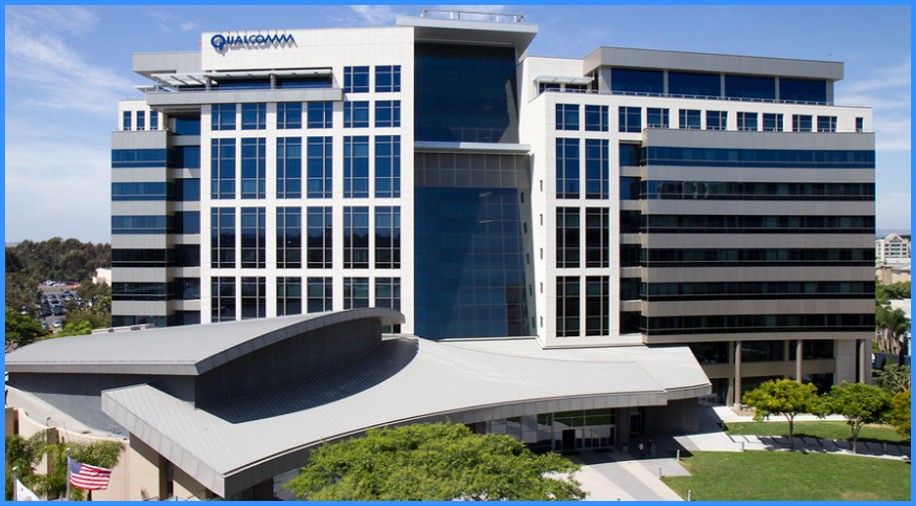
Qualcomm Hq Campus Building N by Nathan Rupert of San Diego Shooter