Henrique Augusto Mews, Universidade Federal de Rondonópolis in Brazil, discusses his article: Unravelling the drivers of island species richness in tropical savannas
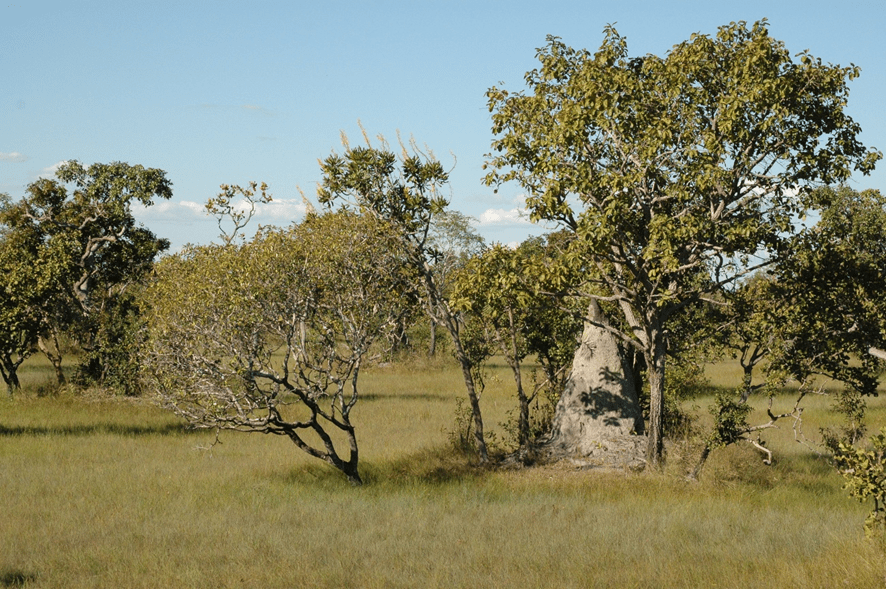
Many landscapes contain “island-like” habitats: patches of suitable conditions surrounded by an inhospitable matrix. How species diversity is regulated in these systems remains surprisingly poorly understood. In tropical savannas, such as the Cerrado of central Brazil, one striking example is the campos de murundus (literally “fields of earth mounds”). These landscapes are dotted with thousands of small earth mounds built and maintained by termites. During the rainy season, the surrounding grasslands are flooded, while the mounds remain dry, functioning as true islands for plants and animals that cannot tolerate waterlogged soils. This natural mosaic offers an exceptional opportunity to test whether classic island biogeography concepts, habitat availability, or landscape-scale processes best explain patterns of biodiversity.
What we did
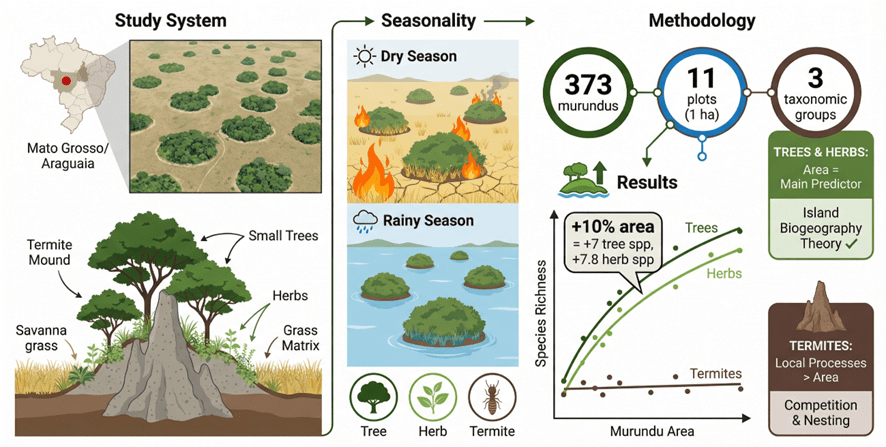
We studied 373 earth mounds distributed across 11 one-hectare plots in a large, protected area in central Brazil. These mounds vary greatly in size, height, and spacing, providing an ideal natural laboratory to test classic and modern ecological ideas. We focused on three key groups that dominate and shape these systems: woody plants (trees and shrubs), herbaceous plants, and termites. We combined detailed field inventories with spatially explicit statistical models to test how island area, isolation, and habitat heterogeneity affect local diversity, and how landscape-scale processes shape broader biodiversity patterns.
Key results
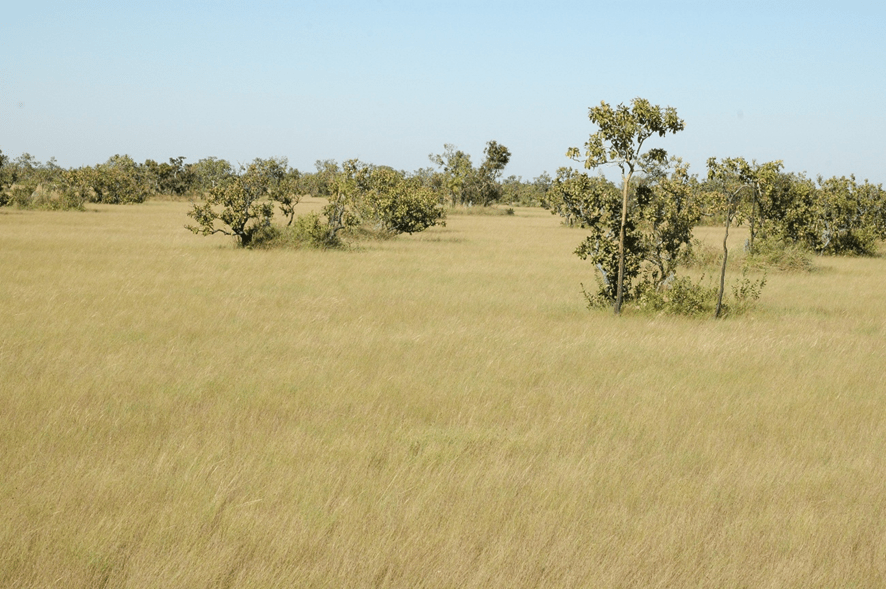
Earth mound size was the dominant driver of plant diversity. Both tree and herb species richness increased consistently with mound area, closely matching predictions from island biogeography theory. Isolation had little effect. Contrary to classic expectations, the distance between mounds did not influence species richness, suggesting that seasonal connectivity and dispersal across the landscape reduce isolation effects. Habitat heterogeneity played a minor role. Structural differences among mounds did not substantially increase local species richness once we accounted for area. Termites followed different rules. Termite species richness was weakly related to earth mound size or isolation, indicating that local nesting conditions, stochastic processes, and species-specific behaviours are more important for this group. Landscape processes mattered for trees. At broader scales, tree diversity reflected the total amount of habitat and how species were distributed across mounds, linking local patterns to metacommunity dynamics.
Main conclusions and why they matter
Our study shows that, in hyperseasonal savannas, area really matters, but not equally for all forms of life. For plants, earth mounds behave much like classic islands: larger “islands” host more species. For termites, however, biodiversity appears to be governed by different, more localised mechanisms, such as nesting conditions, stochastic processes, and species-specific behaviours.
This matters for three main reasons. First, it confirms that simple ecological rules can still explain biodiversity patterns in complex, natural landscapes. Second, it highlights that different organisms respond in different ways to habitat size and configuration, cautioning against one-size-fits-all conservation strategies. Finally, by focusing on a savanna system in the Brazilian Cerrado that is widespread yet poorly studied, our work helps to improve understanding and protection of one of the world’s most threatened biomes.