KABUL / ISLAMABAD — The military confrontation between Pakistan and Afghanistan intensified on Friday, March 13, 2026, as the Pakistan Air Force (PAF) conducted a series of overnight strikes on the Afghan capital and several border provinces. Afghan authorities confirmed that at least four people were killed and 15 others wounded in the bombardment of Kabul, while residential areas and critical infrastructure in the southern and eastern regions also reported significant damage.
The strikes represent a deepening of the “open war” declared by Islamabad in late February, following months of cross-border clashes and insurgent attacks.
The Targets: From Kabul to Kandahar
The overnight operation, confirmed by Pakistani security sources as an extension of Operation Ghazab-ul-Haq (“Wrath for the Truth”), spanned multiple key locations across Afghanistan:
- Kabul: Strikes hit residential districts in the capital, resulting in four civilian deaths. Kabul police reported that the bombardment targeted areas in the city’s outskirts, leaving 15 injured.
- Kandahar & the Border: Taliban spokesperson Zabihullah Mujahid stated that strikes also hit the southern province of Kandahar—the movement’s spiritual center—as well as the eastern provinces of Paktia and Paktika.
- Critical Assets: In the south, the Taliban reported the destruction of a fuel depot belonging to the private airline Kam Air near Kandahar airport.
- Border Outposts: Concurrently, Pakistan’s state radio reported the destruction of several Afghan Taliban positions along the frontier near the Tal area, claiming the “neutralization” of militant hideouts.
The Strategic Rationale: Targeting the TTP
Islamabad maintains that its operations are strictly “intelligence-based” and aimed at the Tehreek-e-Taliban Pakistan (TTP), also known as the Pakistani Taliban.
“These were accurate targets involving the TTP,” a Pakistani security official told AFP. “We have repeatedly warned that Afghan soil is being used as a safe haven to launch deadly attacks inside Pakistan.”
The current offensive is a direct response to a surge in domestic terrorism in Pakistan, including a February suicide bombing at a Shia mosque in Islamabad and repeated assaults on border posts in Balochistan. Pakistan’s Defense Minister Khawaja Asif previously characterized the situation as a state of “open war,” vowing that Pakistan “would not hesitate” to strike wherever militants are sheltered.
The Humanitarian Toll
The conflict is rapidly creating a humanitarian crisis on both sides of the Durand Line.
- Civilian Casualties: According to the United Nations mission in Afghanistan (UNAMA), at least 56 civilians were killed in the first week of the escalation alone (Feb 26 – March 5). Friday’s deaths in Kabul and Khost bring the unofficial toll significantly higher.
- Mass Displacement: The UN refugee agency (UNHCR) reports that approximately 115,000 people have been forced to flee their homes in Afghanistan due to the aerial and artillery bombardment.
- Border Closures: Key transit points, including the Torkham border crossing, remain intermittently closed, disrupting the flow of essential food aid and commercial goods.
A Region on the Brink
The Taliban government in Kabul has categorically denied harboring TTP militants and condemned the Friday strikes as a “blatant violation of territorial integrity.” Taliban Defense Ministry officials have vowed a “calculated response,” while border clashes involving heavy artillery and rockets continue to be reported in the Khost and Kunar provinces.
With the international community largely focused on the U.S.-Iran conflict to the west, regional powers including Turkey, China, and Russia have offered to mediate. However, as the PAF continues its sorties over Afghan cities and the Taliban mobilizes ground forces toward the frontier, the window for a diplomatic de-escalation appears to be closing.
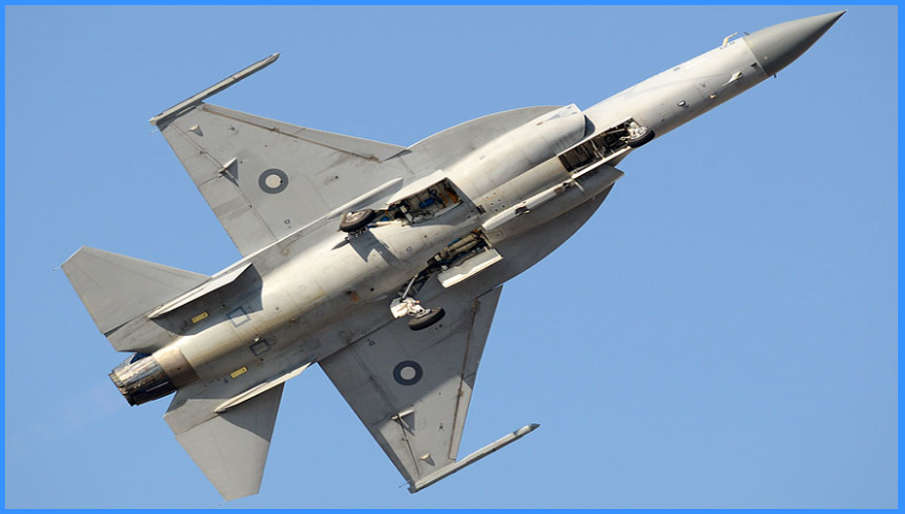
Pakistan Air Force JF17 Jet, Flickr Picture by Global Ranger