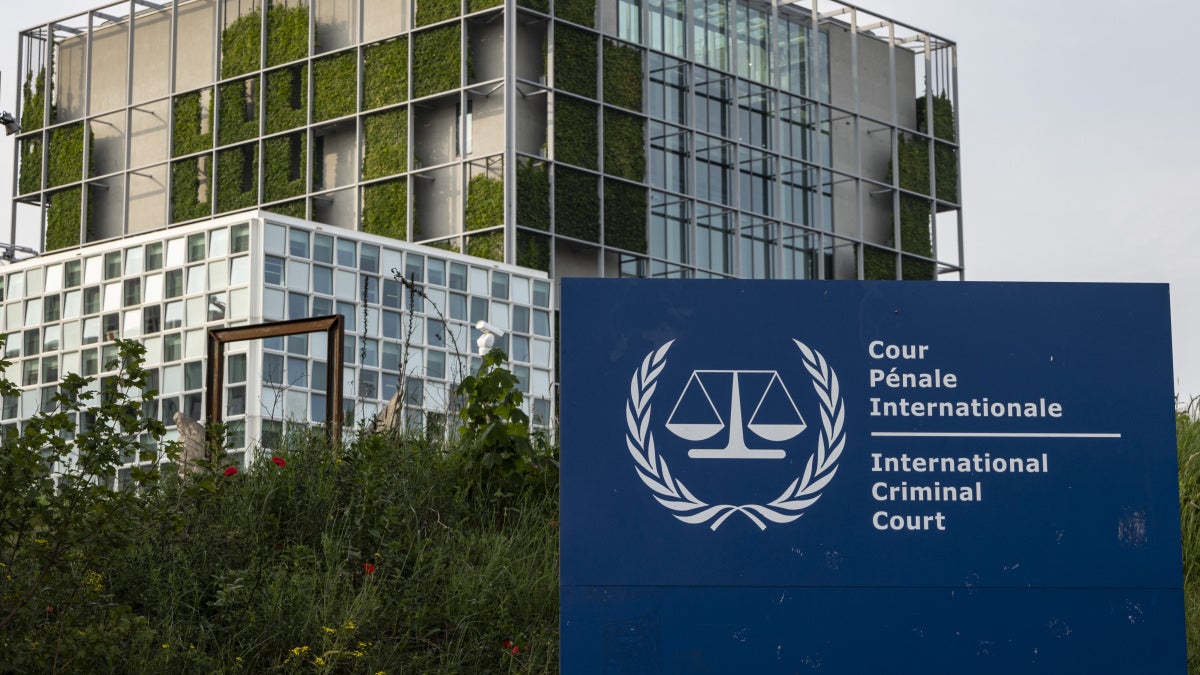
(The Hague) – Libyan authorities should urgently surrender Osama Elmasry Njeem to the International Criminal Court (ICC), where he is wanted for serious crimes, Human Rights Watch said today. The authorities should also ensure full cooperation with the court for other ICC suspects believed to be in Libya.
Njeem is a senior member of the Deterrence Apparatus for Countering Terrorism and Organized Crime, a Tripoli-based militia affiliated with the Presidential Council. He is wanted by the ICC on charges of crimes against humanity and war crimes, including murder, torture, and rape, committed in Mitiga Prison since 2015. Seven other Libyans remain fugitives of the ICC, and Libyan authorities are obligated to arrest and surrender those who are in Libya to the Hague.
“Those responsible for grave abuses in Libya have long been allowed to evade accountability,” said Hanan Salah, associate Middle East and North Africa director at Human Rights Watch. “Njeem’s reported arrest in Libya is a chance for authorities to demonstrate a genuine commitment to justice by cooperating with the ICC.”
Libyan authorities reportedly arrested Njeem in Tripoli on November 5, 2025, to face charges domestically, but his location remains unknown and authorities have not taken any public steps to surrender him to the ICC.
Human Rights Watch wrote to Libya’s general prosecutor in December requesting information on the charges against Njeem, his location, Libya’s cooperation with the ICC, and the status of other suspects believed to be in Libya, but has received no reply.
The ICC is a court of last resort, stepping in only when national authorities do not conduct genuine proceedings. Although Libya is not an ICC member, it is legally required to cooperate under the terms of the 2011 United Nations Security Council resolution referring the situation in Libya to the ICC prosecutor. In addition, Libyan authorities in May 2025 accepted the court’s jurisdiction over crimes within its jurisdiction committed in Libyan territory or by Libyan nationals from 2011 until the end of 2027.
Libya is required to surrender Njeem to the ICC. There is no public indication that Libya has filed a challenge with the court on the basis that it is pursuing similar charges in Libya. Only ICC judges can decide on such a challenge.
There has already been a missed opportunity to bring Njeem to justice, Human Rights Watch said. On January 19, 2025, Njeem was arrested in Turin, Italy, but Italian authorities sent him back to Libya instead of surrendering him to the ICC. In January 2026, ICC judges asked the court’s member countries to hold Italy to account for refusing to cooperate with the court.
The ICC opened an investigation into the Libya situation in 2011, following a referral by the UN Security Council. It has issued arrest warrants against 14 people for crimes committed during the 2011 revolution, during hostilities between 2014 and 2020, and in detention facilities, including against migrants. Nobody has yet faced trial before the ICC in the Libya situation.
Pretrial proceedings in the first case to come to the court are moving ahead following Germany’s December 2025 surrender of Khaled Mohamed Ali El Hishri, on an ICC warrant for crimes allegedly committed in the same detention facility as Njeem.
Saif al-Islam Gaddafi, the son of Libya’s former leader Muammar Gaddafi, long wanted by the ICC for crimes against humanity and war crimes during the 2011 uprising against his father’s government, was killed in Libya by unidentified armed men on February 3, 2026. Gaddafi had been living near the town of Zintan, under the protection of members of the same armed group who detained him in 2011 and subsequently released him in 2017, citing an amnesty law. On March 5, the general prosecutor’s office announced they had identified three suspects in Gaddafi’s killing and ordered their arrest.
The Libyan general prosecutor should ensure a transparent investigation into the assassination of Gaddafi, make the findings public, and hold those responsible accountable, Human Rights Watch said.
Of the seven other ICC fugitives in the Libya situation still believed to be alive, Saif Suleiman Sneidel, a member of the Libyan Arab Armed Forces (LAAF) wanted for war crimes of murder, torture, and outrages upon dignity, remains at large in LAAF-controlled eastern Libya. ICC Deputy Prosecutor Nazhat Khan called for his surrender to The Hague in her address to the UN Security Council on November 25, 2025. The others wanted for war crimes are Abdurahem Khalefa Abdurahem Elshgagi, Makhlouf Makhlouf Arhoumah Doumah, Nasser Muhammad Muftah Daou, Mohamed Mohamed Al Salheen Salmi, Abdelbari Ayyad Ramadan Al Shaqaqi, and Fathi Faraj Mohamed Salim Al Zinkal.
Human Rights Watch has documented inhumane conditions in migrant detention centers and prisons across Libya, many run by abusive and unaccountable armed groups nominally affiliated with the authorities. Detainees face severe overcrowding, torture, and other ill-treatment; prolonged arbitrary detention and enforced disappearance; as well as unlawful killings, beatings, forced labor, sexual violence, and deprivation of adequate food and water.
Human Rights Watch has found that Libya’s fragmented justice sector remains marred by serious due process violations and laws that breach international norms, and that the judiciary is unwilling and unable to meaningfully investigate serious crimes.
Nongovernmental organizations, including Human Rights Watch, have also criticized Libyan authorities’ lack of effective cooperation with the ICC and the absence of international oversight following the end of the UN Independent Fact-Finding Mission on Libya’s mandate in March 2023. The UN Security Council has failed to respond to previous requests from ICC judges for support to ensure Libya’s cooperation.
The justice minister of Libya’s Government of National Unity, Halima Ibrahim Abdelrahman, told Human Rights Watch in 2024 that “as a matter of principle,” she was against extraditing any Libyan national to be tried abroad, and that she had conveyed this message to the court’s prosecutor, Karim Khan, during his visit to Tripoli in April 2024.
UN Security Council and ICC members should press Libyan authorities to cooperate, including by promptly turning over Njeem and arresting and surrendering other suspects on Libyan territory subject to ICC arrest warrants. They should make clear they back the ICC’s mandate in Libya, including by enforcing judicial findings of noncooperation, said Human Rights Watch.
“Over 15 years after the ICC’s referral, abuses continue behind the locked doors of Libya’s prisons, enabled by the shortcomings of its judicial institutions,” Salah said. “To stop the cycle of crimes and impunity, other countries should press Libya to cooperate with the court, so that those responsible are finally held to account.”