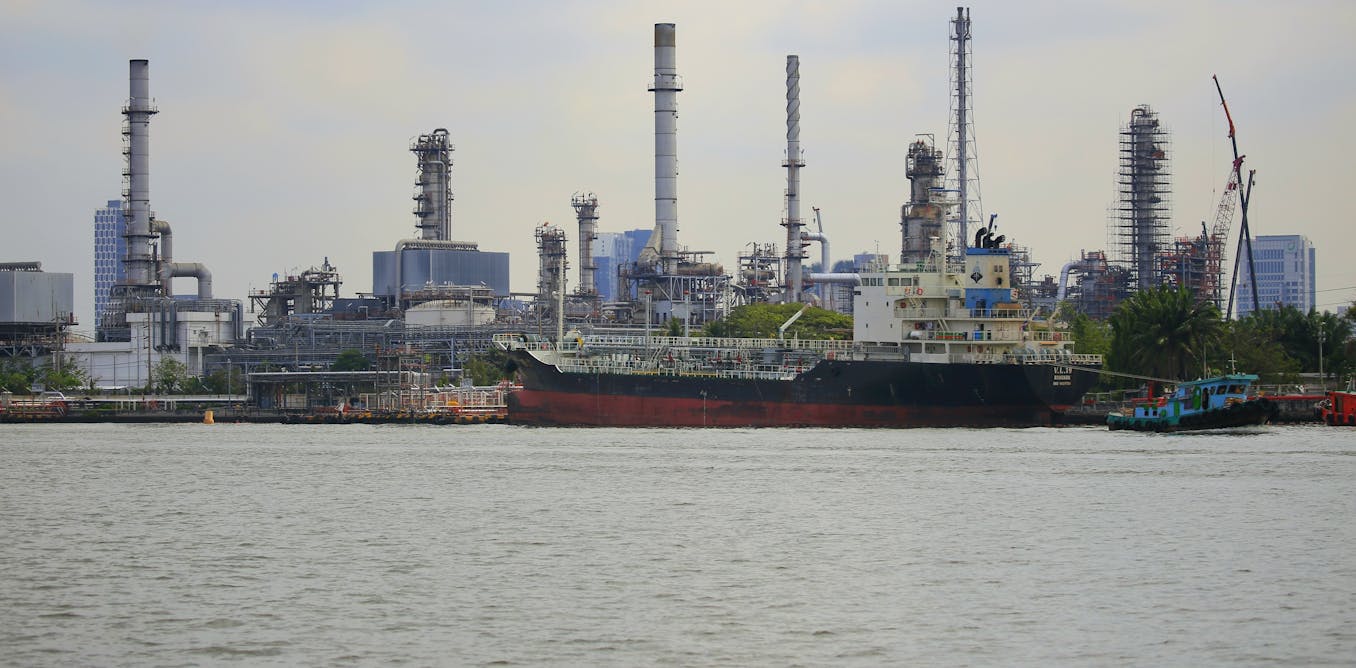
After the US and Israel began their military strikes on Iran on February 28, oil and gas markets were plunged into chaos and energy prices shot up. As of today, Brent Crude Oil prices are 20% higher than in late February. They went from around $70 a barrel in late February to quickly surpassing $100, before falling to around $90 on March 10. The main reason for the fall was Donald Trump’s market-calming announcement that the war will end “very soon”.
The fall in oil prices is reminiscent of events that followed the April 2025 “Liberation Day” tariffs. After the announcement, stock markets plummeted, but when Trump paused the tariffs just days later, the stock market responded by rising again – just as oil prices have fallen in response to his reassurances about the war ending.
If the war is indeed drawing to a close, markets may be right to start pushing prices down, but there is a caveat to this optimism. War is not tariffs – the US administration can impose and pause tariffs, but if Iran rejects potential terms for ending the conflict, it will continue.
Despite Trump’s announcement, it remains very unclear when the Middle East’s production – and the vital Strait of Hormuz shipping route, which 20% of the world’s oil passes through – will get back to business as usual. It’s therefore extremely difficult to predict when prices will go down to February-like levels. This is a major cause for concern in Europe, which depends heavily on imported energy sources.
How oil shocks hit Europe
An increase in oil prices is different from other economic shocks because it has a direct, immediate effect. For consumers, it means instantly higher petrol and energy prices. For producers, it means an immediate increase in the cost of manufacturing and delivering goods.
To understand potential damage to the EU economy, we can take a look at the bloc’s oil consumption and production patterns.
The EU imports most of its oil and gas, and this means that, in addition to rising prices, access and supply may also be constrained by the war in the Middle East. On the positive side, however, Europe has seen a steady decline in overall energy use, and an increase in renewable energy production. With electric and hybrid cars becoming more common, many consumers will be shielded from immediate impacts like a price hike at the pump.
Diversity of energy sources and more efficient technology all mean that we are better protected than we were during, for example, the oil crisis of the 1970s. Nevertheless, some countries and industries will be more affected than others.
The EU’s main energy consumers are its biggest economies: Germany, France, Italy and Spain. These countries will be the most interested in controlling the increase in retail oil prices. Road transportation makes up the lion’s share of oil consumption (around half), while the continent’s other high energy consumption industries include chemical, paper and steel.
What can Europe do?
In February 2022, Russia’s invasion of Ukraine disrupted the continent’s gas supplies, subsequently pushing up electricity prices. To understand what’s on the table today, it’s worth looking at what the European Central Bank (ECB) and European Commission did to help EU citizens during the continent’s last energy crisis.
After an oil shock, both inflation and unemployment tend to rise, and this presents any Central Bank with a conundrum. It can reduce inflation by increasing interest rates, but this also creates more unemployment – higher borrowing costs slow growth and business activity, resulting in layoffs.
The Central Bank therefore needs to choose which objective is more important: its primary goal of keeping inflation in check (around 2% in Europe), or protecting jobs.
In July 2022, the ECB opted to raise interest rates (which were then at -0.5%) and kept raising them until they reached 4% in September 2023. But the situation then was very different, as the economy was still recovering from the large spike in inflation (9% in June 2022) caused by the Covid pandemic.
Today, interest rates stand at 2%, and the ECB will need to decide which risk is bigger: an increase in inflation (which was 1,9% in February, below the ECB’s target of 2%) or an increase in unemployment.
Beyond monetary policy
The European Commission and national governments have more direct and effective ways of dealing with the oil shock. During the 2022-2023 energy crisis, the Commission rolled out several initiatives to stabilise energy prices, including recommendations to minimise consumer energy use.
Perhaps most importantly, there were also price caps, and measures that allowed national governments to directly help their citizens, such as continent-wide joint gas purchases.
On the national level, governments have the option of borrowing to fund subsidies, as many did in 2022. However, this is a less viable option than it was in 2022, as global interest rates are now higher. Investors will be wary that many EU countries – including France, Italy and Spain – have government debt that is above 100% of their GDP. These governments were some of the most active during the last energy crisis, and also those most exposed to the oil shock today.
The EU now faces a real risk of recession. If there’s any silver lining, it may give the continent a much-needed push towards renewable energy development, but even this will depend on how national governments tackle the crisis over the coming months.
A weekly e-mail in English featuring expertise from scholars and researchers. It provides an introduction to the diversity of research coming out of the continent and considers some of the key issues facing European countries. Get the newsletter!