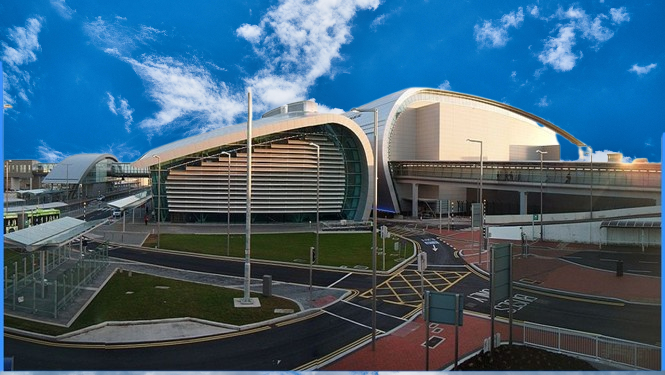
DUBLIN AIRPORT — For the second consecutive evening, the Terminal 2 arrivals hall erupted in cheers and emotional reunions as a second direct flight from Dubai landed in Dublin on Thursday, March 5, 2026. The arrival of several hundred more passengers—comprising long-term Irish expats and traumatized holidaymakers—marks a critical breakthrough in the government’s efforts to repatriate an estimated 24,000 citizens currently scattered across a Middle East on the brink of total war.
The flight follows the first successful commercial rotation since the February 28 escalation, which saw a nearly week-long closure of regional airspace after U.S.-Israeli strikes on Iran.
A Birthday to Remember—and Forget
Among those walking through the arrivals doors was Dymphna Mackin from Mayobridge, Co. Down. What was meant to be a 40th birthday celebration in the UAE transformed into a “traumatising” ordeal.
“I’m shaking; it’s just so good to be home,” Mackin said through tears as she embraced her children. Having been due home last Monday, this was her third attempt to secure a seat on a flight out of the region. Her sentiment was echoed by Colette Cummins from Malahide, who was greeted by colleagues after days of uncertainty. “Unbelievable,” she added. “I’ve missed the children so much.”
The “Twin-Track” Rescue Operation
While commercial flights have resumed on a limited basis, the Department of Foreign Affairs (DFA) is leaving nothing to chance. Minister Helen McEntee confirmed on Thursday that a “twin-track” strategy is now in full effect:
- Commercial Resumption: Emirates and other carriers are rebuilding their schedules, though capacity remains extremely tight. The DFA estimates over 1,000 Irish citizens will have returned via commercial routes by the end of the week.
- Government Charter: For those unable to secure commercial tickets, particularly the vulnerable, a state-funded charter flight is scheduled to depart from Muscat, Oman, on Friday. This flight will ferry 280 passengers who are being transported by bus from the UAE to the Omani capital—a six-hour journey across a guarded border.
- Shelter in Place: Despite the departures, the official advice for the thousands remaining in the Gulf remains: “shelter in place” and stay registered with the DFA’s Consular Crisis Team.
A Conflict in the Skies
The stories from the tarmac in Dubai underscore the peril of the past five days. Passengers described a city under a state of high-alert, with sirens echoing in the middle of the night and the visible trails of intercepted missiles and drones over landmarks like the Fairmont Hotel.
“Everyone clapped when the plane landed,” said Norita Geary from Limerick, who arrived on Wednesday night’s flight. “It was just magic. Dublin is the most beautiful city in the world when you’ve been through that.”
The Road Ahead
While the mood at Dublin Airport is one of celebration, the crisis is far from over. With the Strait of Hormuz still a theater of active hostilities and reports of explosions near Dubai International Airport earlier this week, the window for safe travel remains narrow.
As families head home to every corner of Ireland tonight, the focus shifts to the Friday charter—a flight that many hope will be the final piece of a complex puzzle to bring “the most vulnerable” safely back to Irish soil.
Dublin_Airport_Ireland_by_Doyler79