
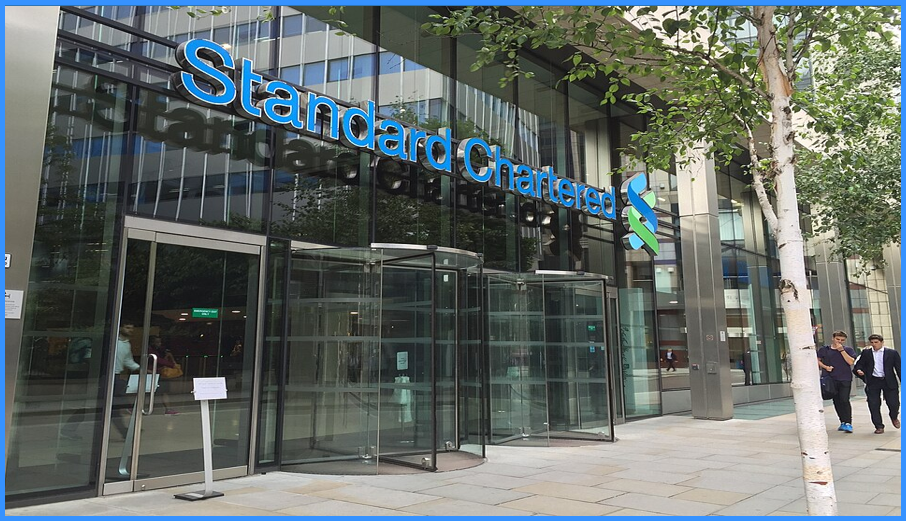
LONDON — Standard Chartered has crossed a critical threshold in its evolution into a “transition bank,” announcing on March 3, 2026, that it has officially surpassed its target of $1 billion in annual sustainable finance income. The achievement, detailed in its 2025 full-year results, coincides with the bank reaching net zero in its own operations, marking a successful conclusion to its initial five-year climate roadmap.
The bank reported $1.07 billion in sustainable finance income for 2025—a 9% year-on-year increase—driven by surging demand for green capital across its core markets in Asia, Africa, and the Middle East.
From Pledges to Portfolios
Standard Chartered’s strategy has shifted from high-level commitments to a “portfolio management” approach. Since 2021, the lender has mobilized a cumulative $157 billion in sustainable finance, placing it past the halfway mark toward its $300 billion by 2030 goal.
- Sector-Wide Targets: Standard Chartered remains one of the few global institutions to have set and validated interim 2030 targets for all 12 high-emitting sectors defined by the Net-Zero Banking Alliance (NZBA), including oil and gas, shipping, and aviation.
- Capital Markets Surge: The bank’s Banking unit saw an 11% rise in sustainable income, fueled by a 42% jump in advisory and capital markets activity as corporate clients in emerging markets seek structured transition products.
- Operational Excellence: By sourcing 100% renewable electricity and retrofitting its global property portfolio, the bank reduced its Scope 1 and 2 carbon footprint by 96% since 2018, achieving its internal net-zero target on schedule.
Navigating the Emerging Market Gap
A central pillar of the bank’s updated Transition Plan is its focus on the “financing gap” in developing economies. With an estimated $2.4 trillion needed annually by 2030 for climate-related investments in emerging markets, Standard Chartered is positioning itself as a primary bridge for private capital.
“The transition to a low-carbon economy is both more compelling and crucial than ever,” said Marisa Drew, Standard Chartered’s Chief Sustainability Officer. “This milestone underscores that the commercial opportunity of the transition is now a fundamental driver of our business growth.”
Accountability and Nature-Positive Goals
To address “greenwashing” concerns and ensure scientific integrity, the bank became the first Global Systemically Important Bank (GSIB) to have its targets externally confirmed by EY. Moving into 2026, the bank is expanding its lens beyond carbon, becoming an early adopter of the Taskforce on Nature-related Financial Disclosures (TNFD). This move integrates biodiversity and water security into its risk management framework, acknowledging that a “just transition” in Africa and Asia requires more than just emissions reductions.
While competitors have recently moderated their climate timelines, Standard Chartered’s 2025 performance suggests that for banks deeply embedded in the world’s fastest-growing regions, the green transition has moved from a “corporate social responsibility” metric to a core engine of profit.
Standard Chartered Bank London Picture by Cobaltblue25








