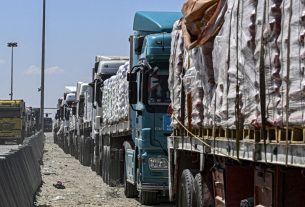
The United Nations has issued a sharp condemnation of Israel’s decision to suspend the operations of 37 international aid agencies in the Gaza Strip. UN Human Rights Chief Volker Türk described the move as “outrageous,” warning that the mass revocation of licenses will cripple the humanitarian response during a winter already marked by catastrophic suffering.
The suspension, which officially took effect on January 1, 2026, follows a new Israeli registration mandate requiring international non-governmental organizations (INGOs) to provide exhaustive personal identification data for all staff, including local Palestinian employees.
The “Security” Pretext and Aid Paralysis
The Israeli Ministry of Diaspora Affairs notified prominent organizations—including Doctors Without Borders (MSF), the Norwegian Refugee Council (NRC), Oxfam, and CARE—that their licenses would not be renewed for the new year. Israel justifies the crackdown as a security necessity to prevent militant infiltration, alleging that some staff members have ties to Hamas or Islamic Jihad.
However, the humanitarian community argues the requirements are a pretext for obstruction.
- The Deadline: While licenses were revoked on New Year’s Day, organizations have until March 1, 2026, to finalize the cessation of their activities and vacate offices in Israel and East Jerusalem.
- Legal Deadlock: Agencies claim they cannot comply with the data demands without violating international privacy laws and neutral humanitarian principles. MSF specifically noted that sharing sensitive staff lists with a party to the conflict could put their workers at direct risk.
- Humanitarian Cost: These agencies currently support roughly 60% of Gaza’s field hospitals. Their removal threatens to collapse the remaining fragile pipelines for medicine and food.
Stakeholder Perspectives
The United Nations: “Such arbitrary suspensions make an already intolerable situation even worse for the people of Gaza,” stated Volker Türk, reminding Israel of its obligation under international law to ensure essential supplies.
The Israeli Government: Diaspora Affairs Minister Amichai Chikli defended the move, stating that the exploitation of humanitarian frameworks for “terrorist purposes” is unacceptable and that Israel will protect its sovereignty.
International Community: A coalition of ten foreign ministers—including those from the UK, France, and Canada—issued a joint statement emphasizing that without these INGOs, it will be “impossible to meet all urgent needs at the scale required.”
Strategic Outlook
The suspension follows the December 2025 passage of Israeli legislation that further restricted UNRWA, cutting off its access to water, fuel, and electricity. By targeting both UN agencies and independent INGOs simultaneously, the Israeli government is fundamentally re-engineering the humanitarian landscape in the Palestinian territories. As the March 1st “exit” deadline approaches, the diplomatic pressure on Jerusalem is expected to intensify, with the EU already warning that the registration law “cannot be implemented in its current form.”