ISLAMABAD/KABUL — In a staggering breakdown of regional security, Pakistan’s Defence Minister, Khawaja Muhammad Asif, declared a state of “open war” with the Taliban government in Afghanistan following a weekend of unprecedented cross-border violence. The declaration on Friday, February 27, 2026, follows a massive Pakistani military offensive dubbed “Operation Ghazab Lil-Haq” (Righteous Fury), which saw airstrikes penetrate deep into Afghan territory, targeting the political and military hubs of Kabul and Kandahar.
The escalation marks the definitive collapse of a fragile, Saudi-mediated ceasefire established in late 2025 and represents the most significant conventional conflict between the two neighbors in decades.
A Rapid Descent into Total Conflict
The transition from simmering border skirmishes to open warfare was triggered by a chain of tit-for-tat strikes that began in late February.
- The Trigger: On February 21, Pakistan conducted “intelligence-based” strikes in Nangarhar and Paktika provinces, claiming to target Tehrik-e-Taliban Pakistan (TTP) hideouts following a devastating suicide bombing at a Shia mosque in Islamabad.
- The Taliban Offensive: On the night of February 26, Afghan Taliban forces launched a large-scale offensive along the Durand Line, attacking Pakistani military posts in six border provinces. Kabul described the move as a “calculated response” to Pakistani aggression.
- Operation Ghazab Lil-Haq: Within hours, Pakistan responded with wide-scale aerial bombardments. Strikes hit the 313 Central Corps HQ in Kabul and several military compounds in Kandahar. Pakistan’s Information Ministry claims to have killed over 400 Afghan personnel and destroyed more than 100 armored vehicles, while Islamabad confirmed the loss of 12 soldiers.
Context: A Decades-Long Alliance Shattered
The current “open war” is the culmination of three years of deteriorating relations following the Taliban’s return to power in 2021. Historically, Islamabad viewed the Taliban as a strategic partner to secure its western flank. However, that relationship has curdled over three critical issues:
- The TTP Safe Haven: Islamabad insists that the Afghan Taliban provide sanctuary to the TTP, allowing them to launch increasingly lethal attacks inside Pakistan.
- Border Sovereignty: The Taliban has never formally recognized the British-era Durand Line as a permanent border, leading to frequent clashes over fence construction and border management.
- Nationalist Tensions: As the Taliban transitioned from an insurgency to a state government, they adopted a more nationalist stance, often clashing with Pakistan over trade transit and the mass deportation of Afghan refugees from Pakistani soil.
Global Plea for Restraint: UN Warns of “Uncontrollable Conflagration”
The international community has reacted with alarm as the conflict threatens to destabilize an already volatile region. United Nations Secretary-General António Guterres has issued an urgent plea for “maximum restraint,” warning that the Middle East and South Asia are currently standing on the precipice of a total, uncontrollable conflagration. In an emergency session, Guterres emphasized that neither the region nor the world can afford another full-scale war.
As of Monday, March 2, 2026, Afghanistan has claimed to have conducted retaliatory drone strikes on the Nur Khan Air Base in Rawalpindi. With both nations refusing to blink, the risk of a protracted ground war continues to mount, even as major powers like China and Turkey scramble to offer mediation.
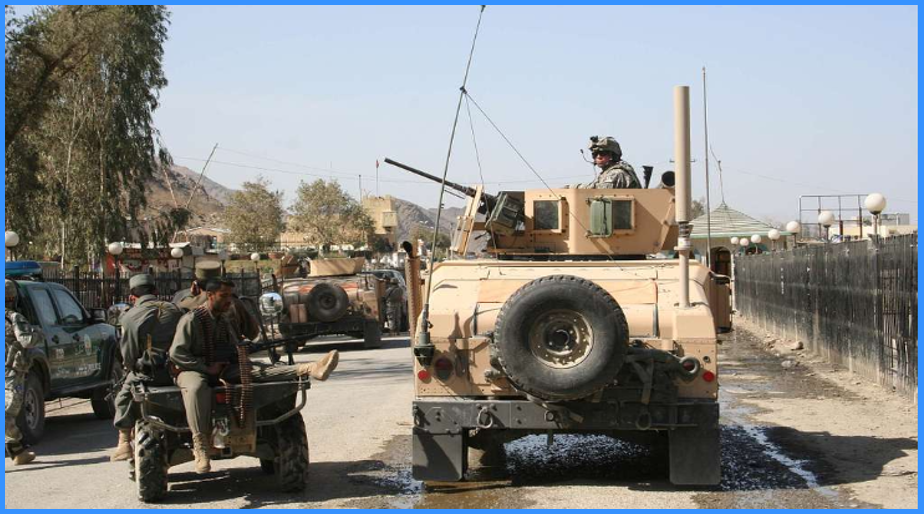
173rd Airborne’s Special Troops Battalion Paratroopers and Afghan border police patrol Picture from Nara