Kacper Foremnik, Department of Forest Biodiversity of the University of Agriculture in Krakow in Poland, discusses his article: Century-long trends in plant diversity of temperate mountain vegetation are modulated along elevation gradient
One hundred years ago, a group of outstanding researchers carried out pioneering phytosociological surveys in the Polish part of the Tatra Mountains. At the time, these studies were among the first of their kind in Europe and provided a detailed picture of local vegetation. For Poles, the Tatra Mountains have always been a special place. They are the country’s only mountains with an alpine character and they host many rare, threatened, and endemic plant species.
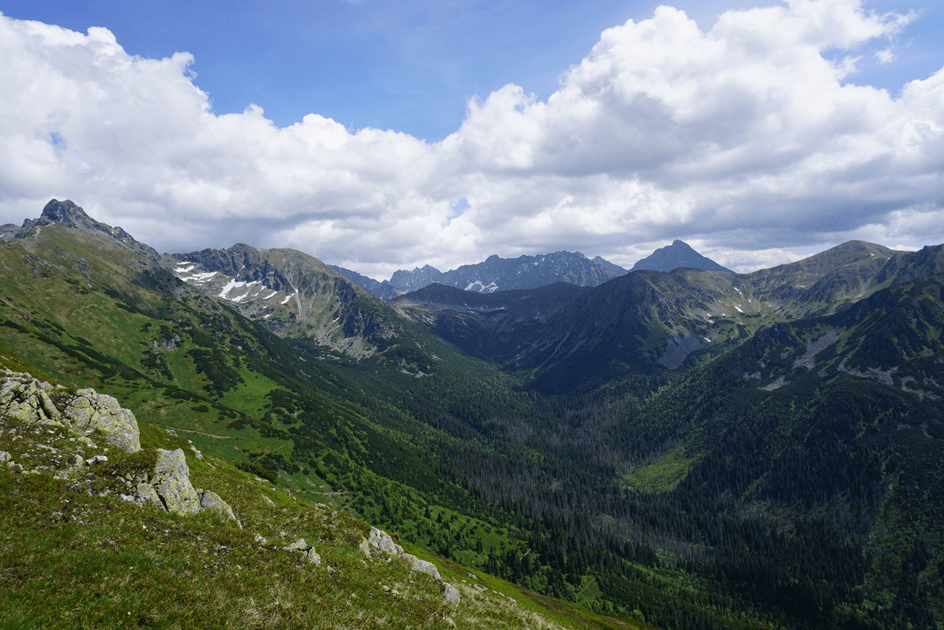
Plant species in the Tatra Mountains occur across a wide range of vegetation zones, from mixed forests, through subalpine forests, to dwarf pine scrub, alpine grasslands, and the rocky summit zone. Today, the Tatra Mountains are the most popular tourist destination in Poland, attracting around 5.3 million visitors in 2025. People are drawn by wild forests and dramatic mountain landscapes, all protected within a national park. The Tatra National Park was established in 1955 and celebrated its 70th anniversary in 2025. However, a century ago the situation in the Tatra Mountains was far less straightforward.
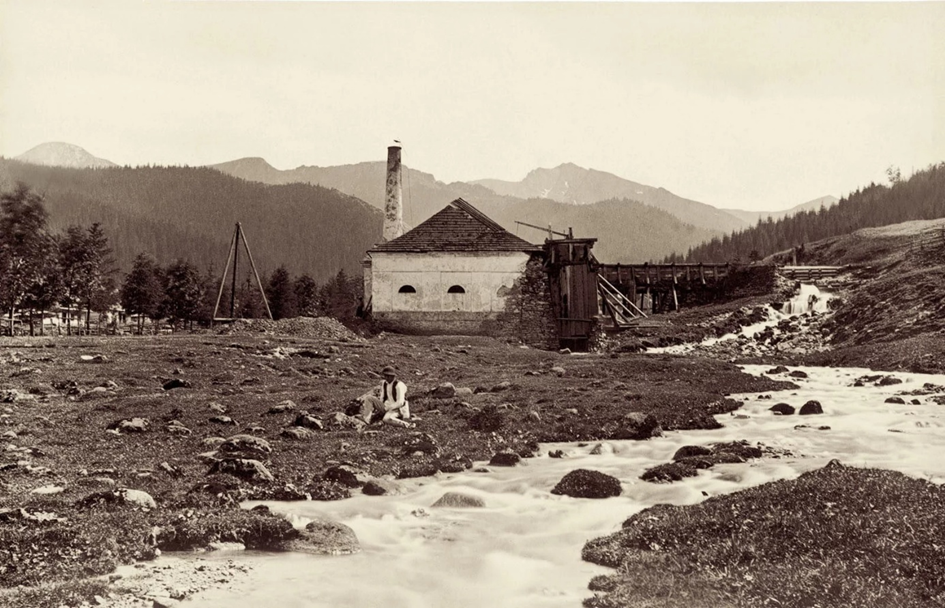
History of human pressure on the Tatra Mountains
At the time of the historical surveys, the Tatra Mountains were subject to intense human pressure. Lower elevations were shaped by industrial activities, particularly iron ore mining and metallurgy. Livestock grazing was also widespread, especially in spring, when snow still covered higher parts of the mountains. These activities caused major changes in forest composition. Tree species typical of lower mountain zones, such as European beech (Fagus sylvatica) and silver fir (Abies alba), were gradually replaced by fast-growing Norway spruce (Picea abies). Forests were also heavily affected by intensive pastoralism. Historical records suggest that more than 30,000 sheep grazed in the Tatra Mountains at its peak.
Global changes
Today, the Tatra Mountains face additional pressures related to global environmental change. Over recent decades, average temperatures in the region have increased by more than 2 °C, the growing season has lengthened by nearly a month, and nitrogen deposition has risen substantially compared to pre-1950 levels. Although nitrogen inputs peaked in the 1980s and have declined since then, they remain far higher than pre-1950. Together, these changes have the potential to alter mountain plant communities.
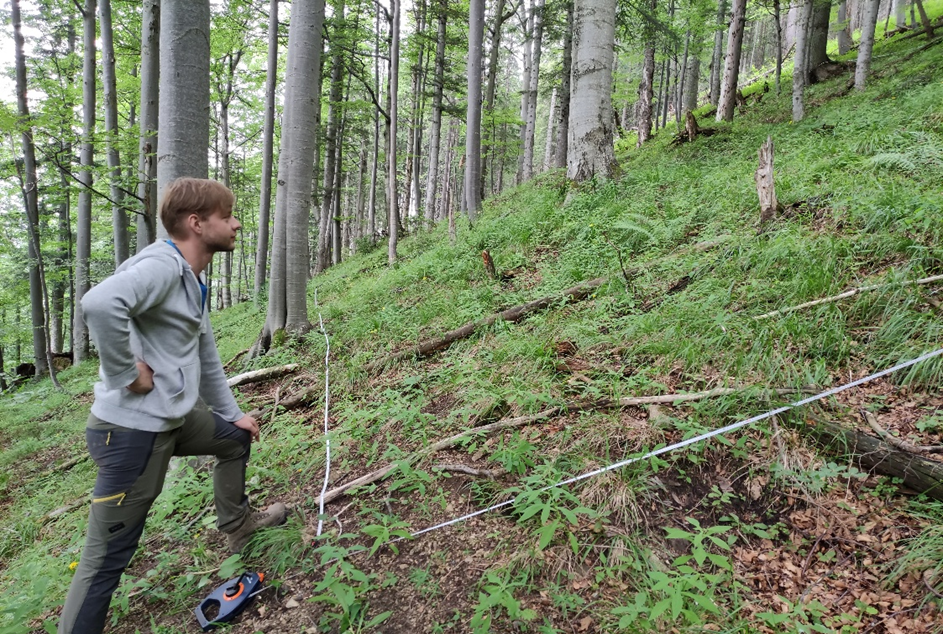
Vegetation resurvey
Given these environmental changes, and the long history of protection within the national park, we wanted to understand how forests in the Tatra Mountains have changed over the last century. To do this, we resurveyed the historical vegetation plots after 100 years. We expected climate warming and nutrient enrichment to reduce forest plant diversity and shift species optima upward.
Our results were very different from these expectations. Most notably, we observed a strong increase in plant species richness over the last century. However, this increase was not uniform: changes were much more pronounced at lower elevations than higher ones. A similar pattern was observed for nitrogen (estimated using Ecological Indicator Values for European flora). These indicator values reflect how strongly plant species are associated with specific environmental conditions, such as light availability, moisture, or temperature. Nitrogen levels increased more markedly at lower elevations. In contrast, we detected surprisingly few changes that could be clearly attributed to climate warming. Species shifts along the elevation gradient did not follow the expected upward trend; instead, more species shifted their elevational optima downwards. These were mainly species typical of mixed forests that naturally occur in lower mountain zones. Interestingly, grazing pressure (estimated using Disturbance Indicator Values assigned to each species based on their association with different type of disturbances and their severity or frequency) significantly decreased in the study area.
Why history matters
Overall, these findings changed how we interpret vegetation change in the Tatra Mountains. Instead of climate change being the dominant driver, the prevailing process appears to be natural recovery. In other words, forests seem to be responding more strongly to the end of intensive management than to recent climatic warming. There is no doubt that plant species are experiencing rising temperatures in the Tatra Mountains; however, the legacy of historical management over the last century appears to overshadow these climatic effects. This highlights how important it is to consider past management when planning conservation in protected areas.
Looking at the forests of the Tatra Mountains today also means looking into their past. This perspective reminds us that changes in the forest herbaceous layer may respond to events occurring on timescales far longer than a human lifetime.