Washington DC – In a day of rapid-fire legal and economic upheaval, President Donald Trump has unilaterally re-imposed a 10% global tariff on nearly all U.S. imports. The executive move, signed Friday evening from the Oval Office, comes just hours after a landmark U.S. Supreme Court ruling struck down his previous, more expansive tariff regime as a violation of the separation of powers.
The President’s defiant pivot marks a new chapter in his administration’s “America First” agenda, shifting from a strategy of “national emergencies” to one based on international payment deficits.
The Judicial Blow: Reclaiming the Power to Tax
On Friday morning, the Supreme Court ruled 6-3 in Learning Resources Inc. v. Trump that the President exceeded his authority under the International Emergency Economic Powers Act (IEEPA). Chief Justice John Roberts, writing for the majority, clarified that while the President can “regulate” commerce during emergencies, the power to levy taxes—including tariffs—remains a core constitutional prerogative of Congress.
The ruling effectively invalidated the “reciprocal” tariffs and fentanyl-linked levies that had generated an estimated $160 billion in revenue since early 2025. The decision has left the federal government facing a potential refund crisis, as thousands of U.S. importers prepare to reclaim billions in duties now deemed illegal.
The Executive Pivot: Section 122
Refusing to concede, President Trump signed a new proclamation under Section 122 of the Trade Act of 1974. This rarely-used statute allows a president to impose temporary import surcharges of up to 15% to address “large and serious” balance-of-payments deficits.
- Effective Date: The new 10% global duty takes effect at 12:01 a.m. ET on Tuesday, February 24, 2026.
- Duration: Under the law, these tariffs are limited to 150 days unless Congress acts to extend them—setting a deadline of July 24, 2026.
- Exemptions: The administration has maintained broad exemptions for certain agricultural products, critical minerals, pharmaceuticals, and goods compliant with the USMCA trade agreement with Canada and Mexico.
“Disloyal to the Constitution”
In a fiery press conference following the ruling, the President lashed out at the justices he previously nominated, calling the decision “disloyal” and “unpatriotic.” He argued that the court’s interference would weaken American manufacturing and empower foreign competitors.
“I wanted to be a good boy,” Trump remarked, referring to his use of previous statutes, “but the Supreme Court’s decision today actually made a president’s ability to regulate trade more powerful and crystal clear.”
Economic and Legal Fallout
While Treasury Secretary Scott Bessent assured markets that the new measures would keep tariff revenue “virtually unchanged” for 2026, global trade experts warn of renewed volatility. Unlike the previous IEEPA tariffs, Section 122 has never been tested in modern courts, and legal challenges from retail groups and manufacturing coalitions are expected within days.
For the international community gathered here in Geneva, the message is clear: the U.S. trade war is entering a more technical, but no less aggressive, phase. With the “emergency” justification stripped away, the battle has moved to the fine print of 1970s trade laws—and the clock is ticking toward a summer showdown in Congress.
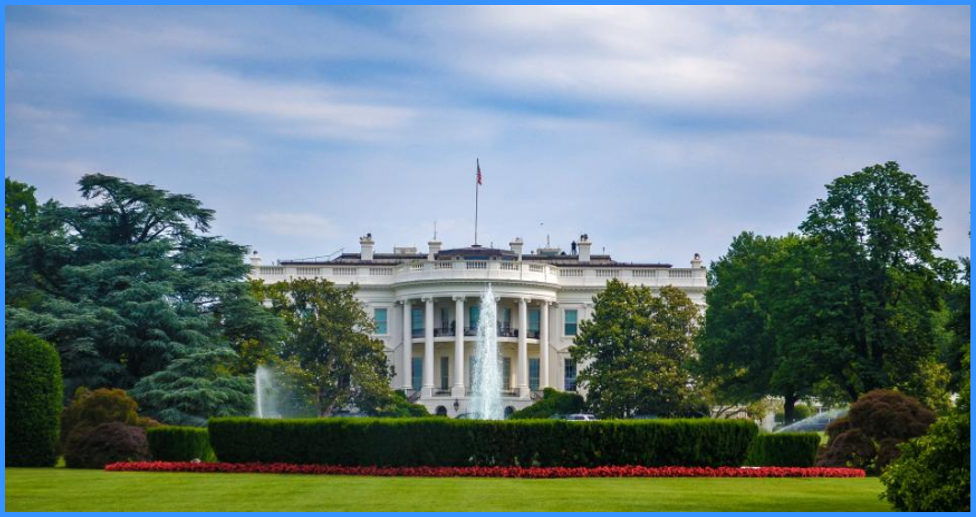
US White House Picture on stocksnap by David Everett Strickler.