From Mandate to Monument: Benita Diop and Africa’s Unstoppable March to End Violence Against Women
The history of international human rights is a testament to the fact that progress is never given; it is legally, politically and socially fought for. Nowhere is this struggle for juridical equity more apparent—and more advanced—than in the African context, which has consistently translated global human rights aspirations into binding regional law. Although the journey is mired with challenges both internal and external to the Continent; the relentless drive towards social, political and economic equity of all peoples has been the bedrock and foundation of the African human rights struggle.
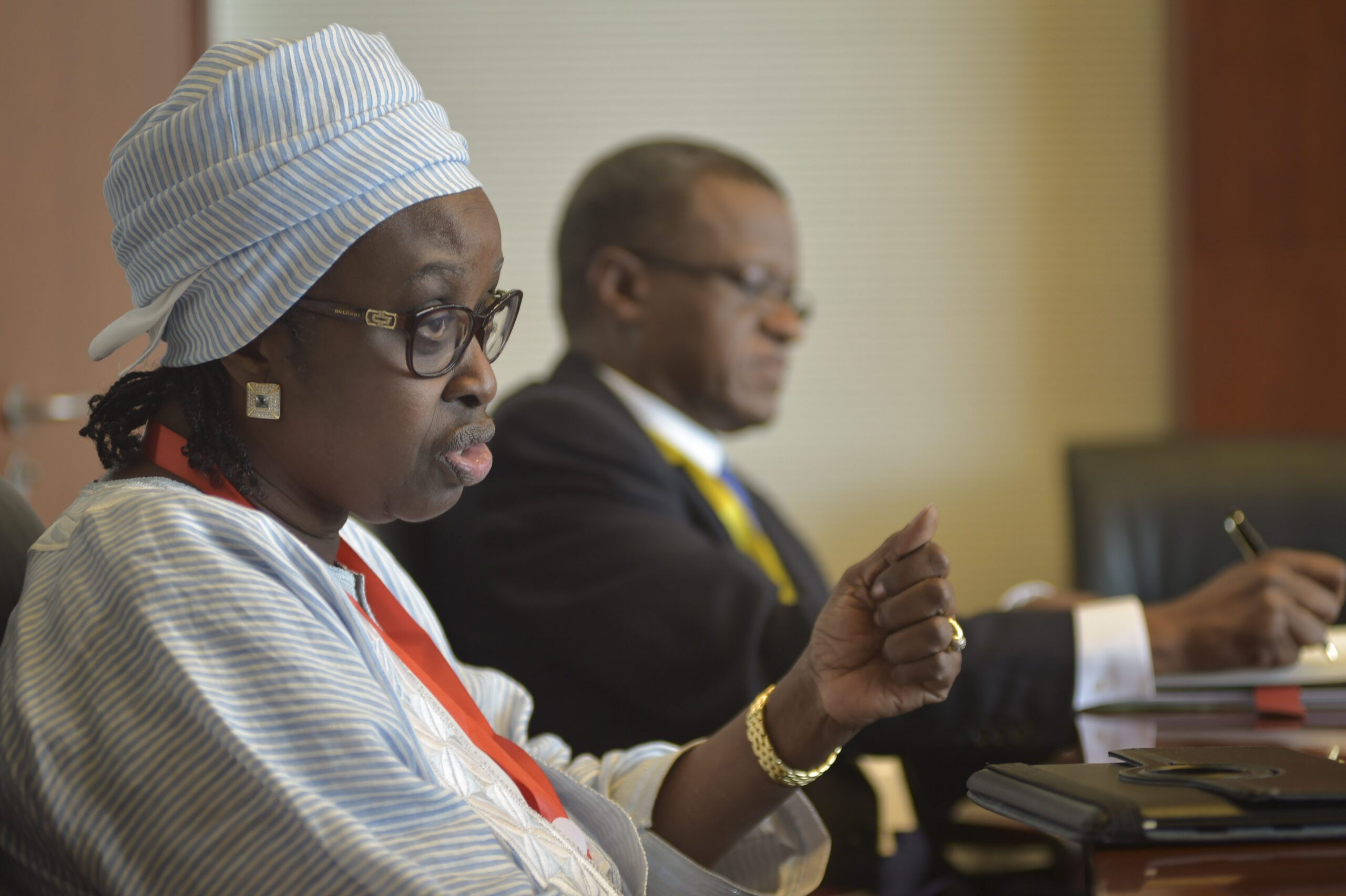
The recent adoption of the African Union Convention on Ending Violence Against Women and Girls (AU-CEVAWG) in February 2025 marks not just a significant milestone in human rights law in Africa, but the culmination of a decades-long policy journey pioneered by Madame Benita Diop, the now former African Union Special Envoy on Women, Peace, and Security (2014-2025), President of the African Union ECOSOCC Gender Cluster, co-convener of the African Women’s Leadership Network (AWLN) and founder of the Femmes Africa Solidarité (FAS). Her decades of dedicated leadership, advocacy and diplomatic ingenuity illuminate not only the unique, multi-layered African human rights legal regime built over time—starting from the African Charter on Human and Peoples Rights (1981) to the current AU-CEVAWG (2025)—but also demonstrates the immense resilience and strategic endurance required in the struggle to achieve women’s rights across the Continent.
An International and Regional History of African Human Rights Jurisprudence
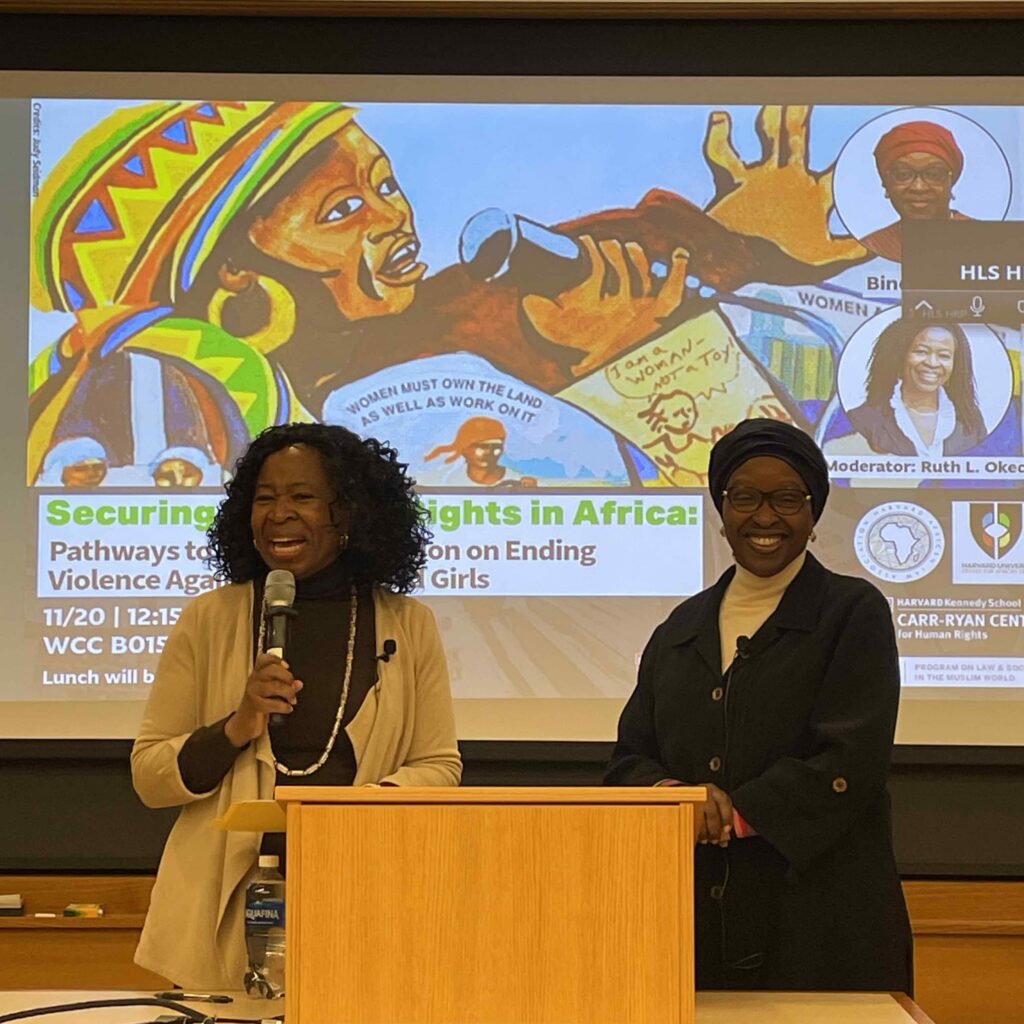
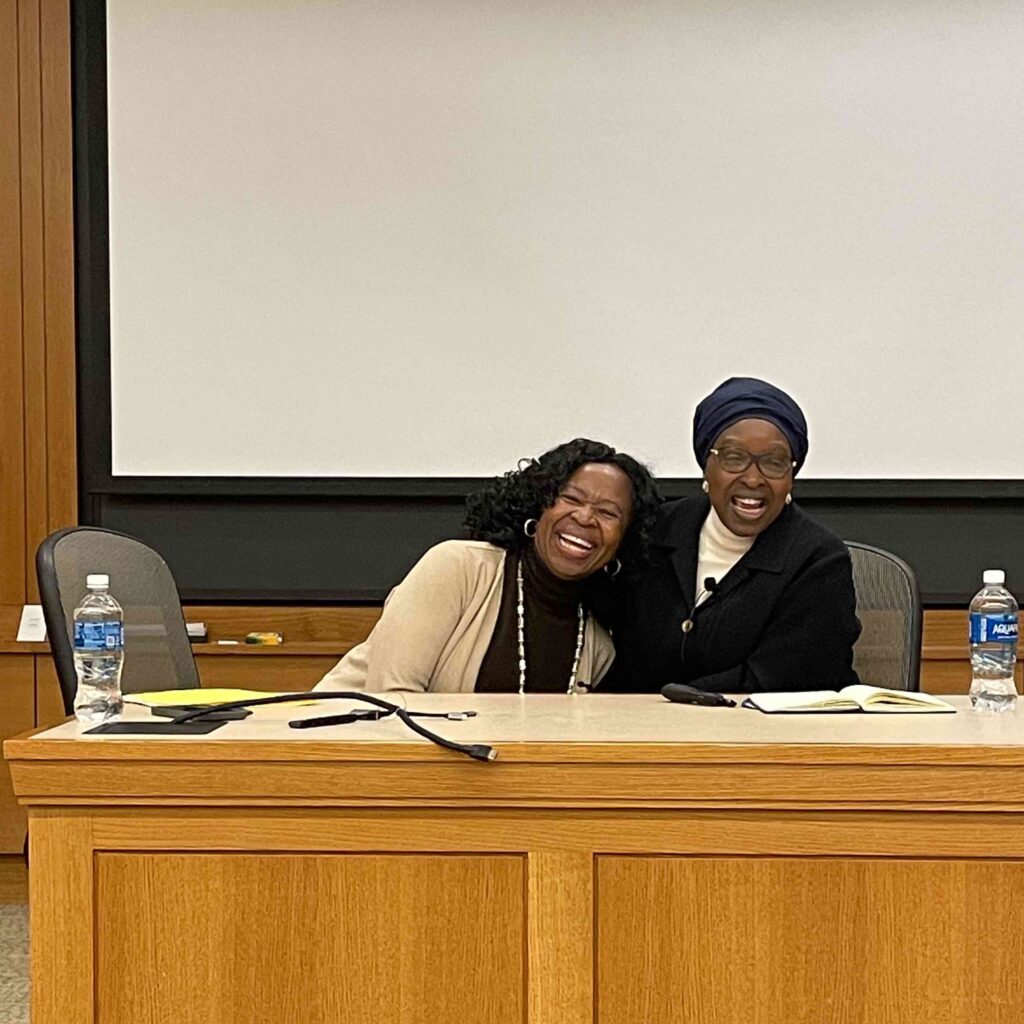
Professor Ruth L. Okediji (moderator) and Madame Bineta Diop (guest speaker) at an event on Securing Women’s Rights in Africa: Pathways to the AU Convention on Ending Violence Against Women and Girls.
At an event convened by the Human Rights Program at Harvard Law School and the Carr-Ryan Center for Human Rights at the Harvard Kennedy School, Madame Diop grounded the African human rights legal story in the universalist tradition, beginning with the1948 Universal Declaration of Human Rights (UDHR). Importantly, her retelling revealed a critical pattern: women’s rights were initially a secondary, often sidelined, concern, even with the subsequent adoption of the legally-binding UN Convention on the Elimination of All forms of Discrimination Against Women (CEDAW) in 1979.
This international context framed the Continent’s own human rights law and framework. Madame Diop highlighted the architects of human rights, including British human rights advocate and Secretary General of the International Committee of Jurists Niall MacDermot and Senegalese jurist Justice Kéba Mbaye. Mbaye, the former Vice-President of the International Court of Justice who sought to create an instrument reflective of post-independence Africa, championed an expansion of jurisprudence from individual rights to peoples’ rights, incorporating communal values, mutual responsibility, and the rights to self-determination and development. This broader view was embodied in the African Charter on Human and Peoples’ Rights (1981), also known as the Banjul Charter. For these jurists, the Charter was a profound legal exercise of the domestication and expansion of human rights norms in the African context. Yet, as Madame Diop noted, even this pioneering Charter was limited. It was largely male-dominated and offered limited scope for addressing specific women’s rights violations. This institutional gap became the mandate for the next wave of legal advocacy in Africa focused primarily on women’s rights.
Mainstreaming Women’s Rights: Towards the Maputo Protocol
The next key legal milestone was the 2003 adoption of the Protocol to the African Charter on Human and Peoples’ Rights on the Rights of Women in Africa (the Maputo Protocol). This achievement was a result of persistent, strategic legal and political mobilization led by women’s rights organizations and advocacy groups in Africa, including the Femmes Africa Solidarité (FAS). Following its adoption, the Protocol became one of the most comprehensive human rights treaties globally, mandating extensive women’s rights from political participation to reproductive health to the elimination of harmful practices like Female Genital Elimination (FGM). Its bold provisions on women’s bodily autonomy and reproductive rights (Article 14) were particularly revolutionary, reflecting the acute realties faced by women in conflict zones, often in direct contradiction to conservative international pressures.
Today, the Maputo Protocol enjoys widespread legal acceptance, having been ratified by 46 of the 55 African Union Member states. This near-universal ratification is a profound legal commitment that underscores Africa’s leadership in gender justice. Regardless of the level of progress in getting the Protocol negotiated and ratified, the challenge of implementation looms large. For Madame Diop, the normative expression of the Protocol, especially regarding accountability and reporting, is a constant battle.
Domestic Violence: From Peace Tables to the Home
The urgency for the new AU-CEVAWG arose from the recognition that even the Maputo Protocol did not fully address the pervasive issue of domestic and intimate partner violence—a crisis that was significantly exacerbated by the Covid-19 pandemic and attendant measures requiring extensive hours in private domestic spaces. For the women’s rights advocates, including Madame Diop, this reality required a sharp pivot to tackle violence that happens in domestic spaces. This led to a crucial strategic shift in the African women’s rights movement: incorporating positive masculinity into the institutional framework, championed by AU leaders like President Cyril Ramaphosa of South Africa as a necessary component to bring men into the room and shift cultural norms.
Towards New Horizons: The AU VAWG Convention
The result of this strategic legal and political push, involving a wide range of players including lawyers, judges, youth and traditional leaders across the Continent, was the adoption of the AU-CEVAWG in February 2025. This new treaty is a landmark achievement, providing a more focused and comprehensive legal tool to address women’s rights than the broad UN-developed CEDAW or even the previous AU-developed Maputo Protocol. Some of the progressive legal obligations of signatories include mandating states to enact and enforce laws fighting all forms of violence in private and public spaces, as well as in cyberspace (Article 5); naming and recognizing femicide (Article 1); and ensuring victim-centered approaches in the justice system (Article 6). The convention’s adoption represents a powerful African-led solution to a global problem setting a precedent for other regional bodies to do the same.
Perhaps the most novel legal provision included in the Convention is the Positive Masculinity Agenda (Article 1 & 6(e)). Madame Diop highlighted that during the advocacy and drafting of the Convention, emphasis was placed on addressing domestic violence by engaging the very people who were most reluctant to discuss it: men. Women’s rights advocates knew that progress could not be achieved by advocating only for themselves; they had to involve men as well and move the issue from the private and unspoken domains of the home into the public and institutional ones. Following this strategy, women’s rights are framed as peoples’ rights, involving men as allies and drawing them into the movement to address societal constraints that tend to part instead of bind all people together.
The Kinshasa Declaration of 2021 and the subsequent Men’s Conference demonstrated this unprecedented institutional commitment to engaging men and boys as allies. This was a critical political maneuver, bringing powerful male leaders, some of whom witnessed violence against women and girls in conflict zones, into the women’s rights movement to challenge harmful norms and practices. As the primary operational chair of the AU High Level Presidential Initiative on Positive Masculinity in Leadership to End Violence Against Women and Girls in Africa, Madame Diop witnessed and oversaw this novel approach, which also received international backing by several United Nations institutions including UN Women, UNDP and UNFPA.
For leaders like Madame Diop, this Convention serves as a wakeup call for Africa to own her destiny. It’s a powerful pushback against an international system that often fails to recognize or celebrate African women’s achievements, sometimes even pitting normative instruments against each other. The true test for the Convention’s success now lies in its ratification and implementation, as it requires 15-member states to deposit their instruments of ratification to enter into force. As of now, seven member states have chosen to sign the Convention, namely Angola, Burundi, Djibouti, the DRC, Ghana, Liberia and the Gambia. African women, organized and resolute, are ready for the next phase, challenging national governments and their societies that may look to social and religious exemptions and budgetary hurdles to limit progress. These are mere humps, not blocks, to the Convention’s adoption.
After over a decade serving as the African Union Special Envoy on Women, Peace and Security, the adoption of the AU-CEVAWG in February 2025 marks a fitting historic capstone to Madame Diop’s mandate. From her appointment in 2014, Madame Diop vowed to close the gap between policy and reality and to bring women’s voices from the ground to the highest diplomatic tables. This Convention is not a trophy for Madame Diop, but a personal testament to the collective power she championed. It validates the relentless push alongside women’s rights champions such Ellen Johnson Sirleaf and Sahle-Work Zewde to develop the draft Convention, until it progressed to a full-fledged legal instrument, negotiated and signed.
For Madame Diop, broadcasting her work, whether at Harvard or on the Continent, is to demonstrate to the world that in spite of the multitude of challenges—infrastructural or otherwise—African women have the conviction and the collective will to legislate their own safety. The Convention is undeniable proof that women’s rights work in Africa is progressing, with young people poised to inherit and enforce such an enormous legal victory. This is the legacy of Benita Diop’s mandate.
Rosemary Karoro LL.M. ’20 is an S.J.D. candidate at Harvard Law School specializing in international trade and the political economy of law in Africa. Her doctoral dissertation, which focuses on continental governance and the African Continental Free Trade Area (AfCFTA), builds on her extensive coursework in global law and economic development in her academic journey. Prior to her doctoral studies, she worked in legal practice and human rights advocacy in Uganda.
Views expressed on Harvard Human Rights Reflections are those of the individual authors and do not necessarily reflect the opinions or positions of the Human Rights Program or Harvard Law School.