WASHINGTON — In a momentous decision for global trade and the limits of executive power, the U.S. Supreme Court ruled 6-3 on Friday that President Donald Trump overstepped his authority by unilaterally imposing sweeping tariffs under a 1977 emergency powers law. The ruling effectively dismantles the “reciprocal” tariff framework that has been the hallmark of the administration’s second-term economic strategy.
The decision, authored by Chief Justice John Roberts, clarifies that the executive branch cannot use the International Emergency Economic Powers Act (IEEPA) to levy taxes without explicit permission from Congress.
The Limits of “Emergency” Power
The legal battle centered on whether a president can define trade deficits or social issues—such as the fentanyl crisis—as “national emergencies” to justify across-the-board import taxes. While the administration argued the IEEPA gave the President broad flexibility to “regulate” commerce, the Court’s majority remained skeptical.
“The Constitution’s grant of the taxing power to Congress is not a suggestion,” Chief Justice Roberts wrote. He emphasized that for the President to impose tariffs, he must “point to clear congressional authorization,” noting that the IEEPA—traditionally used for targeted sanctions—makes no mention of the power to tax.
Immediate Impact: Refunds and Reversals
The ruling triggers a massive unwinding of the administration’s trade policy. As of February 20, 2026, the implications are shifting from legal theory to economic reality:
- The $175 Billion Liability: Economists from the Penn-Wharton Budget Model estimate the federal government may be required to refund over $175 billion to businesses that paid the IEEPA-based duties since they were enacted in 2025.
- Global Market Reaction: The U.S. dollar ticked lower following the news, while major international indices gained as the threat of a widening trade war with allies like Canada, Mexico, and India momentarily receded.
- The “Other” Tariffs: Importantly, the ruling does not affect tariffs imposed under separate laws, such as Section 232 (National Security) or Section 301 (Unfair Trade). Duties on steel, aluminum, and certain Chinese electronics remain in effect for now.
The Administration’s Plan B
Despite the judicial rebuke, the White House has signaled it will not abandon its “America First” trade goals. Treasury Secretary Scott Bessent indicated that the administration has “contingency plans” to maintain the tariff framework by shifting the justification to other legal statutes that have more specific procedural guardrails.
In a post on Truth Social, President Trump warned that the ruling would create a “complete mess” and potentially disrupt ongoing negotiations for new trade deals. However, for the 12 states and numerous trade groups that challenged the levies, the decision is a vital reassertion of the Separation of Powers.
Looking Ahead to 2027
With the Supreme Court now firmly establishing that “regulatory tariffs” cannot be used to raise revenue or address broad social grievances, the White House must navigate a more complex legislative path. As the 2026 tax season begins, the focus shifts to the U.S. Court of International Trade, where thousands of businesses are expected to file claims for their “one-cent” overpayments and multi-million dollar refunds.
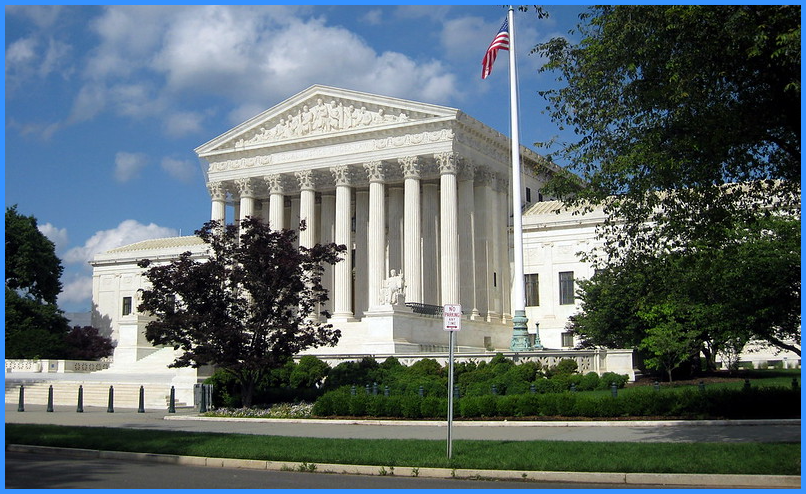
United-States-Supreme-Court-Picture-by-Wally-Gobetz