Markus Wagner, UK Centre for Ecology & Hydrology, Sandra Varga, University of Lincoln, and Richard Jefferson, former Natural England grassland specialist, discuss their article: Biological Flora of Britain and Ireland: Geranium sylvaticum
Wood crane’s-bill as a model species for pollination ecology and plant breeding systems
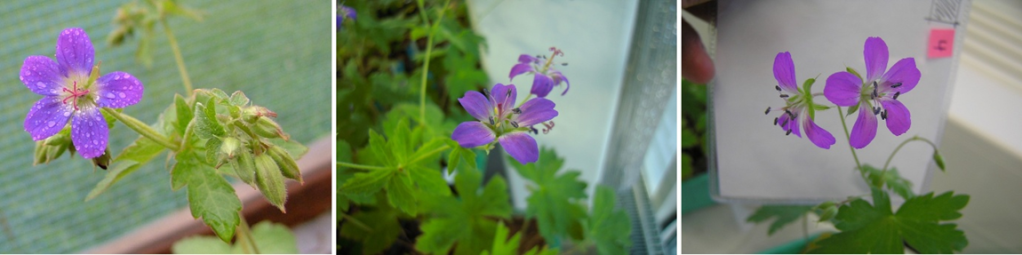
The structural adaptations of wood crane’s-bill (Geranium sylvaticum) to facilitate successful insect pollination have inspired a whole academic ecological field, that of pollination ecology. The naturalist Christian Konrad Sprengel (1750–1816) drew inspiration from his observations of these flowers, which became the foundation for his pioneering studies on the reproductive mechanisms of flowering plants, establishing him as one of the early founders of pollination biology. His observations ultimately inspired the writing of his 1793 landmark book ‘Das Entdeckte Geheimniss [sic] der Natur im Bau und in der Befruchtung der Blumen’ (‘The discovered secret of nature in the structure and fertilization of flowers’), as evidenced in its opening paragraph:
“When in the summer of 1787, I carefully examined the flower of wood crane’s-bill (Geranium silvaticum) [sic] flower, I found that the lower part of its petals was furnished with fine soft hairs, on the inside and on both margins. Convinced that the wise creator of nature has not brought forth even a single hair without a definite purpose, I reflected on what purpose these hairs might serve.”
He concluded that“If one assumes that the five nectar droplets in the flowers, secreted by the same number of glands, are intended as food for certain insects, one might similarly not consider it unlikely there would also be provisions for this nectar not to be spoiled by rain, and that these hairs were present for this purpose.”

Several decades later, Sprengel’s book influenced Charles Darwin’s studies into insect pollination, as described in his 1862 book ‘On the various contrivances by which British and foreign orchids are fertilised by insects’. Darwin’s evolutionary theory shifted our interpretation of such adaptations away from any divine plans and instead towards explaining them in terms of evolutionary ecology.
Another reproductive characteristic of wood crane’s-bill that has since attracted considerable attention and become the focus of intense evolutionary research is its gynodioecious breeding system, a rare but widely distributed sexual system found in about 1% of all flowering plants. This means that populations of wood crane’s-bill are typically made up both of hermaphrodite individuals, producing flowers that contain both female pistils and male stamens, and female individuals whose flowers are all female, which is achieved through complete reduction of the ten stamens characteristically found in hermaphrodite flowers. One key focus of research into the gynodioecious breeding system is how it can be evolutionarily stable, and wood crane’s-bill has been used as a model species for such research.
In rare instances, wood crane’s-bill individuals can also have both female and hermaphrodite flowers on the same plant. To complicate matters even further, hermaphrodite flowers have also been observed in which stamens are partially reduced, resulting in flowers with anywhere between one and nine functional stamens.
The British and Irish haunts of wood crane’s‑bill
In Great Britain, this cold-adapted species is characterized by a distinct northern distribution. There, its typically violet-blue flowers with their white centres add a quiet beauty to traditionally managed upland hay meadows.
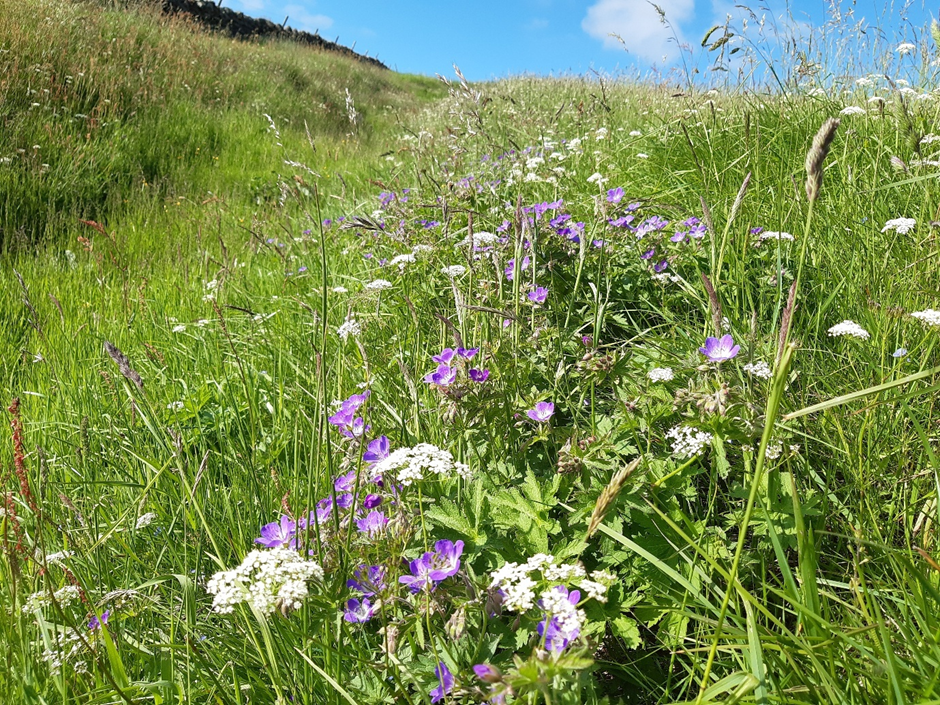
Being shade-tolerant, wood crane’s-bill occurs in some types of woodland, such as upland mixed ash woodland. Other British and Irish habitats include road verges, riverbanks, mountain rock ledges, ravine slopes, and the limestone pavements of the North Yorkshire Dales. In Britain and Ireland, wood crane’s-bill could be considered an upland equivalent of meadow crane’s-bill (Geranium pratense), the subject of another recent Biological Flora account.
Wood‑crane’s‑bill: A mountaineer and arctic explorer in its Eurasian range
Outside of Britain and Ireland, wood crane’s-bill has an extensive Eurasian native distribution range, extending from the south coast of Greenland in the west all the way to Siberia, and from southern Europe, Asia Minor, and the Caucasus/Iran, all the way up to well above the arctic circle.
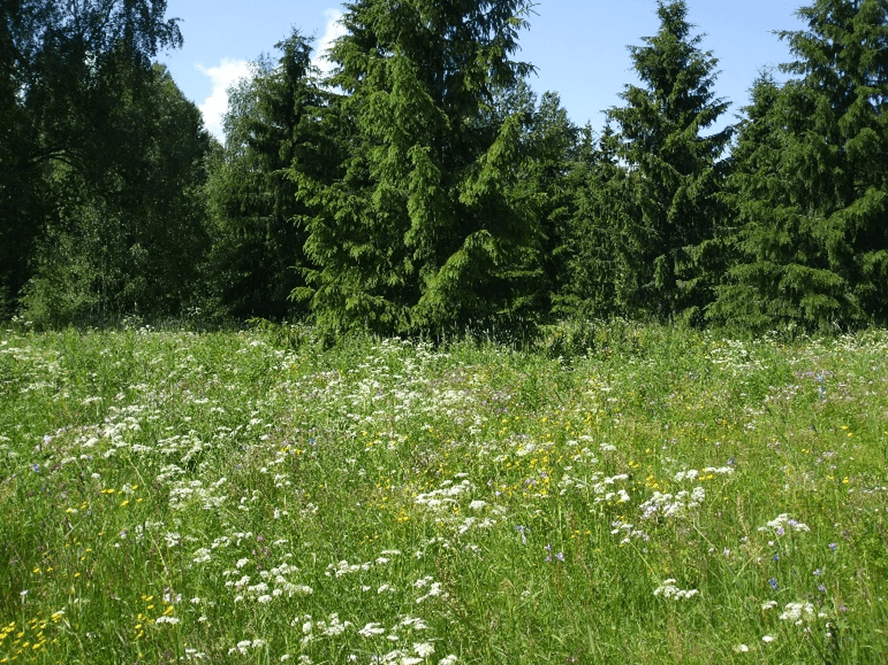
In its southern and central range parts, wood crane’s-bill is more of an upland species, with its highest recorded occurrence in the Alps at 2,650 m above sea level. In contrast, in its northern and easternmost range parts, it occurs down to sea level. Underlying its wide distribution is a certain adaptability also in terms of its growth. In its more climatically benign British habitats, wood crane’s-bill can grow up to 90 cm tall, whereas in harsher climes, for example, in Norwegian alpine grassland, plants barely reach 20 cm in height.
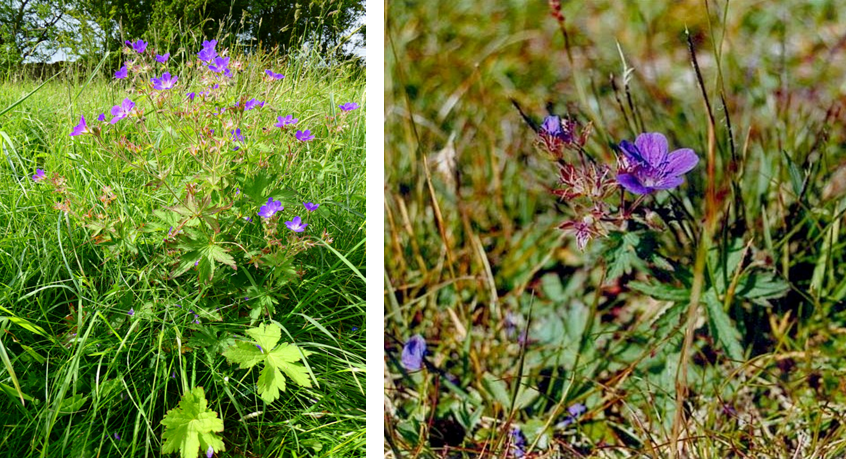
As a cold-adapted species, wood crane’s-bill is already, and will be more so in the future, affected by a changing climate that alters its geographic range and altitudinal distribution in Britain and Ireland, and across its Eurasian range. We as authors of this Biological Flora account hope that it will provide a useful resource for the future conservation of this species.