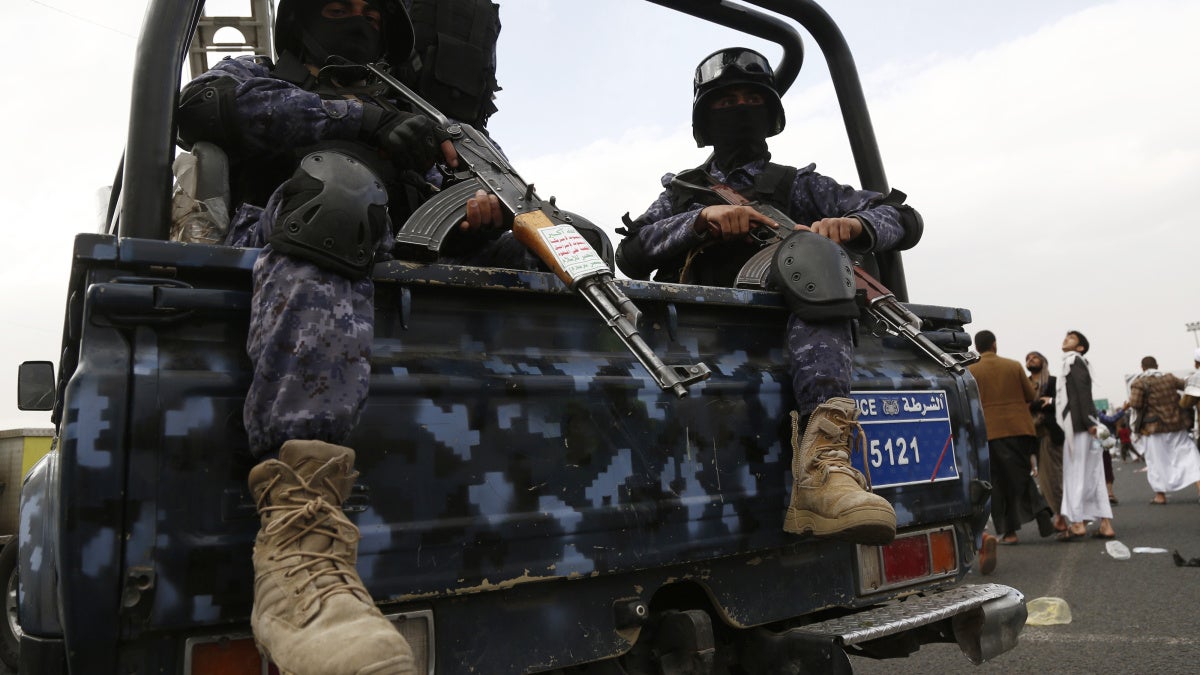
(Beirut) – Houthi authorities have arbitrarily arrested over 20 Christians in Yemen over the last three months, Human Rights Watch said today. The Houthis should immediately release them, along with the hundreds of others they are arbitrarily detaining across the areas of Yemen under their control.
“Rather than addressing the alarming rates of hunger that Yemenis are facing, the Houthis seem to only know how to arrest and detain people,” said Niku Jafarnia, Yemen and Bahrain researcher at Human Rights Watch. “The Houthis should stop detaining people, including members of the marginalized Christian community, and ensure that everyone in their territory have adequate access to food and water.”
Human Rights Watch spoke to two members of the Christian minority in Yemen who were collating information about the arrests and reviewed information shared online, including statements and social media posts.
Starting in late November and early December 2025, the Houthis began a campaign of arbitrary detention against Christians in Yemen. One Yemeni Christian interviewed and the National Council for Minorities in Yemen said that the Houthis initially arbitrarily detained seven Yemeni Christians at the start of December, and then later expanded their arrests on December 24, Christmas Eve. Another person from the Christian community said that two Christians had also been detained in late November.
Both people interviewed said that as of January 12, Houthi authorities had arbitrarily detained over 20 Christians from Sanaa, Ibb, and other governorates under Houthi control. One person interviewed knew of 24 people who were detained, while the other person knew of 21.
The first person said his number is based on his “communications with official Christians,” but that there may have been more detentions that he is unaware of. The national council stated that “dozens” have been detained as part of the campaign. Most of the detentions they described would appear to meet the definition of enforced disappearance.
“People were detained from streets, others from their houses,” the second person said. He added that in the cases they were aware of, authorities had not presented arrest warrants to any of those they were arresting. “The forces didn’t introduce themselves, we don’t know who they were. They raided houses, broke doors, and arrested people by force.” The people interviewed said that no reason has been given to detainees that would warrant their arrest.
The first person interviewed said that as far as he knew, none of those detained had any communication with their families, nor had the authorities provided their families with information about their whereabouts when asked. He said that some of those detained suffer from health problems, including heart disease and diabetes, that require medical care. He did not know whether they had received the care they needed.
The other person said he knew of two people who had been able to contact their families with short phone calls, but the others had not had any contact. “We are hidden communities, marginalized and targeted by all authorities in Yemen, including religious authorities,” he said. “[We are] pursued and persecuted by clerics and authorities, spread across various regions of Yemen.”
Enforced disappearances, in which the authorities detain a person and then refuse to acknowledge their whereabouts or situation when asked, are serious crimes under international law and are prohibited at all times under both international human rights law and international humanitarian law.
According to the United States Commission on International Religious Freedom, there were previously an estimated 41,000 Christians in Yemen, including Yemenis, refugees, and expatriates from abroad. However, the commission stated in 2025 that “the community has shrunk to only a few thousand” in recent years due to many fleeing as a result of the conflict. Exact figures are impossible to determine due to the lack of a census and the fear by many religious minorities of persecution.
In 2016, Human Rights Watch reported on the then-beginning conflict’s impacts on the Christian community, including attacks on individuals and Christian institutions. Since then, Houthi authorities, as well as other Yemeni authorities, have continued to abuse religious minorities in Yemen, including Christians, Jews, and Baha’is. As recently as 2023, Human Rights Watch documented the Houthis’ arbitrary detention and enforced disappearance of 17 members of Yemen’s Baha’i community, building on years of the Houthis’ systematic arrests of Baha’is.
The Houthis’ arrests of Christians also come on the heels of the Houthis’ arrests of hundreds of people across Houthi-controlled territory over the last year and a half, including UN workers, members of civil society, human rights defenders, journalists, and others exercising their right to free speech.
“The Houthis have made many claims that they are the champions of justice against Western oppression, and yet their continuous violations against their own people demonstrate the hollowness of these claims,” Jafarnia said. “Those who oppose injustice abroad should not be carrying out injustice at home.”