When your doctor thinks you might have an infection or an allergy, a simple blood test should give answers within hours. But for much of the world, that test can take days – or never happen at all. The problem is not usually the test itself, but an overlooked step between taking your blood and performing the diagnosis.
In most hospitals in high-income countries, separating plasma from blood is so routine that most people never think about it. A nurse takes your blood, sends it to the lab, and a machine called a centrifuge spins it at high speed to separate the liquid plasma from the cells. Lab staff then look for signs of infection, immune responses or bacteria, and your doctor uses those results to decide on treatment.
But centrifuges need electricity, regular checks and trained staff. When these things are not available or the lab is overwhelmed, testing slows down.
This doesn’t just affect rural clinics or refugee camps. This can also happen during busy winter months in emergency departments in wealthy countries. If plasma cannot be separated quickly with a consistent, high-grade quality, care is delayed even when fast tests are ready to use.
The scale of the issue became clear when my colleagues and I watched how doctors work day to day. A common pattern emerged as people with long-running, allergy-type symptoms were often told something like: “For now, try antihistamines, and if things get worse, we can arrange a test.” Tests were not avoided because they didn’t exist, but because they were too slow, too costly, or too far away.
A quiet bottleneck
This raised a basic question about healthcare: if diagnosis is the first step towards treatment, then why is it held back by cost, infrastructure and geography? The answer lies in sample preparation and testing – the quiet bottleneck at the centre of the process.
It was now clear the first biggest barrier to point-of-care testing was dependence on specialised equipment. The challenge became obvious: remove that dependency and testing could happen in the clinic or anywhere.
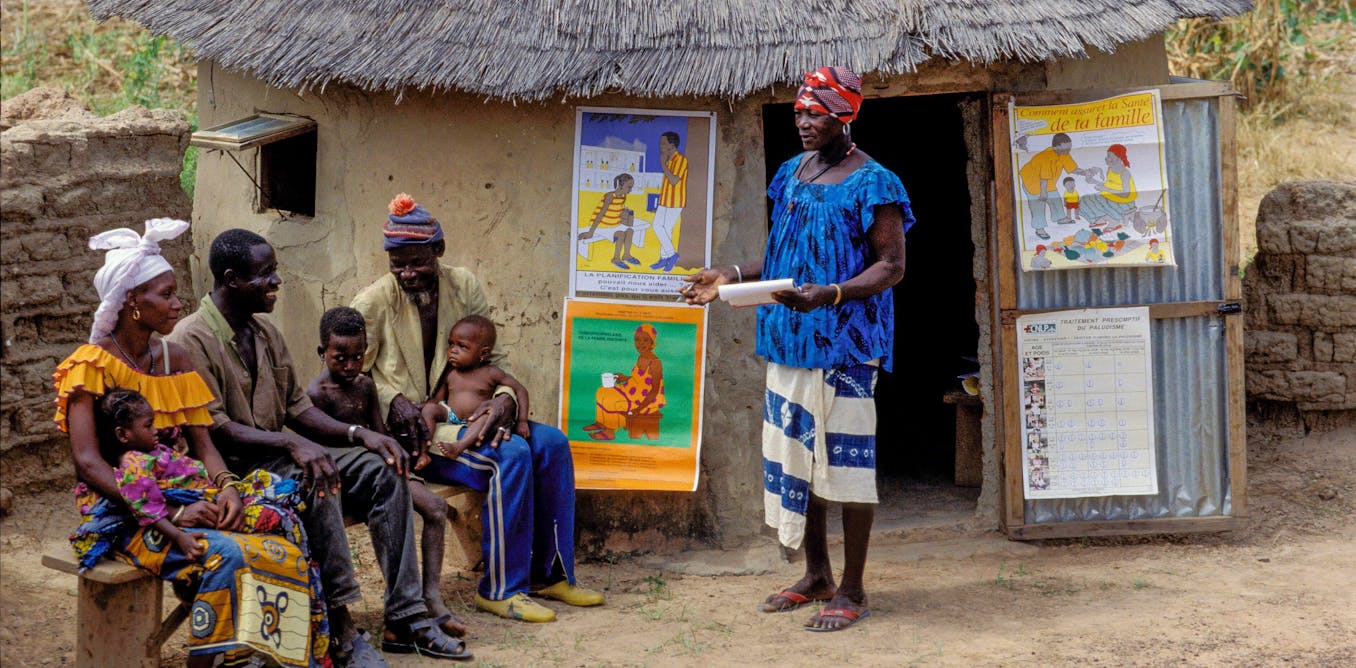
The problem appears in different ways in different countries, but the underlying pattern stays the same. In India, where I am based, many people can reach a doctor but avoid testing due to its delayed results and high costs. So, treatment is often based on symptoms.
During dengue surges in Brazil and Indonesia, tuberculosis care in rural South Africa, and COVID or RSV waves in the US and UK, care slowed not because tests were missing, but because samples relied on busy, centralised labs that patients or hospitals could not easily access.
In many field clinics and emergency health camps, teams have to depend heavily on equipment. A team might plan to run thousands of tests in a day, but they end up doing far fewer because someone has to separate plasma from every sample of blood before the test can even start.
A potential solution came from an unexpected place: paper towel. If you’ve ever dipped the end of a piece of paper towel in water, you will have noticed that the water “climbs” up the paper. My colleagues and I developed a device we call HemoSift that uses this principle (called “capillary action”) to separate red blood cells from the straw-coloured plasma (the part of blood needed for testing).
HemoSift uses capillary action to pull blood through tiny channels, and along the way something simple happens: plasma moves ahead while the red blood cells fall behind, the way faster and slower traffic sort themselves into different lanes. In under five minutes, it produces cell-free plasma with no pumps, no power and no moving parts.
Parth Shinde, CC BY
HemoSift has passed benchtop testing with blood-like fluids at the nanofabrication and microfluidics facility at IIT Bombay and has moved into early testing using donated patient blood samples. More samples are now being tested to build strong and reliable data.
HemoSift encourages us to rethink where diagnosis takes place. Instead of asking how to push more laboratory services into more locations, it asks why diagnosis needs to rely on a lab at all.
By removing the infrastructure barrier, rapid testing could reach places where it was previously impossible: rural health posts, mobile clinics, refugee camps, or overstretched emergency departments during outbreaks.
The aim of our device – which my colleagues and I are now developing at our startup, Tvashtr Biotech – is not to replace laboratories, but to widen the places where diagnosis can happen. With a simple plastic device, a healthcare worker could give a patient not only attention, but an answer – wherever they meet.
This article was commissioned in conjunction with Prototypes for Humanity, a global initiative that showcases and accelerates academic innovation to solve social and environmental challenges. The Conversation is the media partner of Prototypes for Humanity 2025.