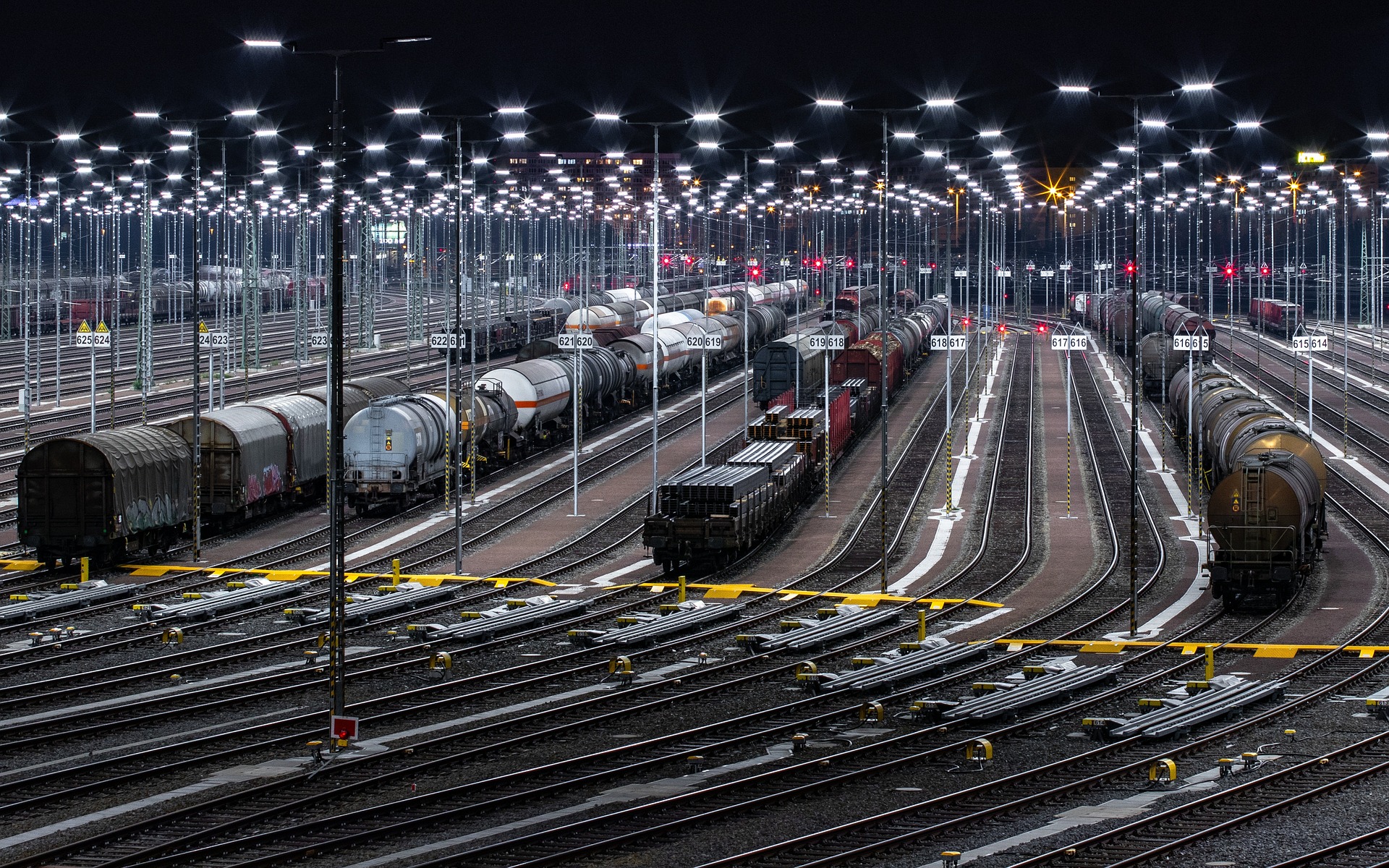
Rail freight across Europe is experiencing a significant downturn, losing market share to road transport even as overall freight volumes continue to grow. According to a recent analysis by SCI Verkehr, the sector’s modal share dropped to just 16.4% in 2023, marking a decline of nearly 2.5 percentage points in recent years.
📉 Key Challenges Undermining Rail Freight
- Declining demand for bulk goods: Traditional commodities like coal and steel—once core to rail freight—have seen reduced volumes due to industrial shifts and energy transitions.
- Infrastructure disruptions: Ongoing upgrades, particularly in Germany, have led to costly detours and unpredictable service, weakening rail’s competitiveness.
- Digital lag: While long-term projects like Digital Automatic Coupling (DAC) and ETCS are underway, slow implementation and high costs have limited short-term gains.
- Financial strain: Most national freight operators are operating at a loss. In 2024, DB Cargo posted a deficit of €0.52 per tonne-kilometre, while PKP Cargo reported a loss of €2.92/tkm.
🚚 Road Transport Gains Ground
Road freight continues to outperform rail in terms of cost, flexibility, and reliability, especially for short-haul and just-in-time deliveries. The disparity is exacerbated by underfunded rail infrastructure and stringent EU competition policies that limit state support for rail operators.
🔄 Intermodal Transport Offers Limited Relief
Intermodal freight—combining rail and road—has shown modest recovery, with a projected 4.7% increase in 2024 following a 7.3% decline in 2023. Growth is driven by container traffic from Eastern Europe and military shipments, but remains below pre-crisis levels.
🛠️ Outlook and Strategic Imperatives
Despite the European Union’s ambition to double rail freight’s modal share by 2030, current trends suggest only a 1.3% annual growth under favorable conditions. Experts warn that without targeted investment, regulatory reform, and accelerated digital adoption, rail freight risks falling further behind.
Train-tracks-freigth-rails Image-by-Alexander-Droeger-from-Pixabay