Argentina is experiencing increasing gender-based violence. But newly elected legislators taking office on December 10 have an opportunity to strengthen protections and violence prevention measures.
According to the Office of Domestic Violence (OVD) of Argentina’s Supreme Court, reports of domestic violence have increased, with at least 39 percent of cases involving severe or repeated violence, frequent episodes, or injuries indicating a high likelihood of ongoing harm. Feminist observatories also documented an alarming rise in femicides, reporting 29 in October alone, including transfemicides.
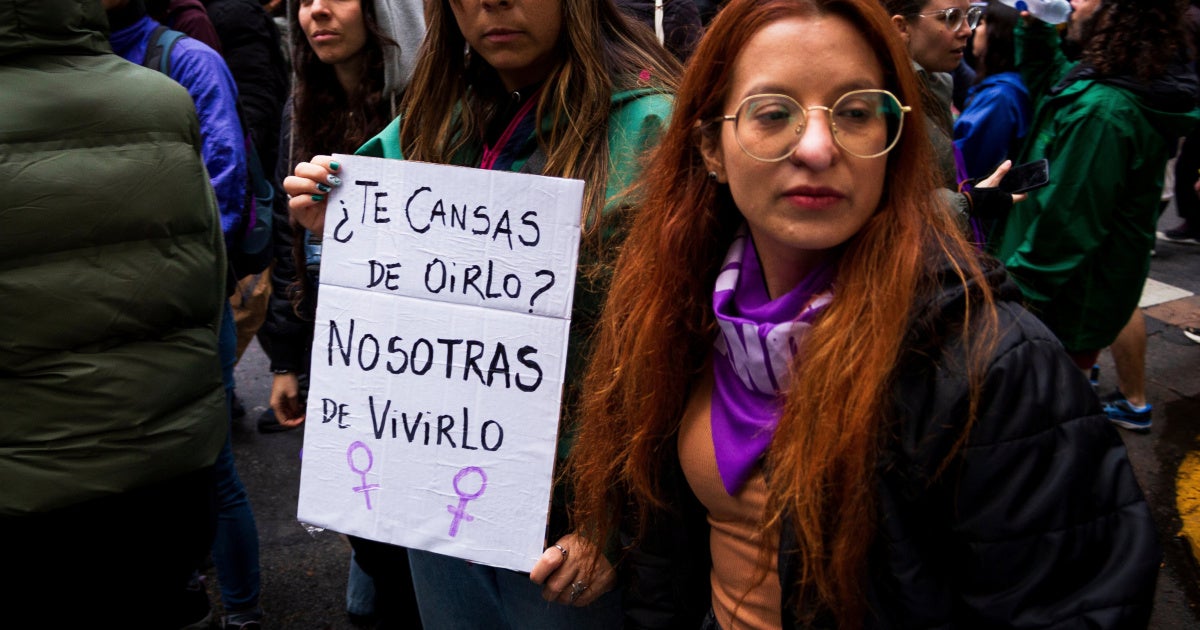
The national ombudsman’s office reports that a femicide occurs every 35 hours in Argentina. Recent victims include Brenda, Morena, and Lara, three women killed in a triple femicide in Buenos Aires. Feminist movements, including Ni Una Menos (Not One Less), have mobilized, demanding accountability and structural change.
Gender-based violence in Argentina is rooted in structural inequality and entrenched patriarchal norms, and the government has cut programs that sought to tackle the problem . Thirteen gender-related programs have been cut, dismissed as ideological, and the national budget for programs preventing and responding to gender-based violence fell 89 percent between 2023 and 2024. Programs that assist survivors such as Acompañar (Accompany) lost 90 percent of their budget, with coverage dropping from over 100,000 people in 2023 to just 434 in 2024. The proposed 2026 national budget would eliminate funding and reduce overall resources for violence prevention, sexual and reproductive health, and sexuality education by nearly 90 percent.
Meanwhile, Justice Minister Mariano Cúneo Libarona announced plans to remove femicide from the Penal Code, eliminating a framework aimed at preventing, investigating, and punishing gender-motivated killings. Security Minister Patricia Bullrich shockingly attributed the rise in femicides to so-called “excesses of feminism.” Statements like that shift blame from perpetrators to victims and contribute to normalizing gender-based violence. At the same time, President Javier Milei argued that femicide laws unfairly assign greater value to a woman’s life, a disastrous misunderstanding of how the femicide laws recognize gender-based violence as an aggravating factor.
The incoming legislature has a critical role to play in reversing Argentina’s backsliding, and action is needed. While the executive branch is primarily responsible for the budgetary and policy decisions that have worsened the crisis, incoming lawmakers can help prevent further harm to women, girls, and LGBT people.
Lawmakers should draft new protections, prevent the enactment of harmful measures, and ensure access to sexual and reproductive health services, including for survivors of violence.